

7‑Day Fresh‑Breath Plan for Dogs: At‑Home Checks and Quick Wins
7‑Day Fresh‑Breath Plan for Dogs: At‑Home Checks and Quick Wins
Introduction: How to Use This 7‑Day Plan
Bad breath can creep up quietly. A structured week gives you clarity fast. This plan focuses on simple, low-stress steps that fit real life. It avoids overwhelm and guesswork.
You will assess your dog’s mouth, start gentle cleaning, and introduce targeted chewing. You will also track a dog breath score, so changes feel measurable and objective.
What This Plan Covers and Who It Helps
This routine suits healthy adult dogs with mild to moderate mouth odour, and owners seeking an easy, evidence-informed start.
Reference Link: Consult Our Bad Breath Orientation Hub
For deeper context on causes, red flags, and priorities, use our broader bad breath orientation hub after completing this week.
Day 1: Score the Breath and Check the Mouth at Home
How to Create Your 0–5 Breath Scale
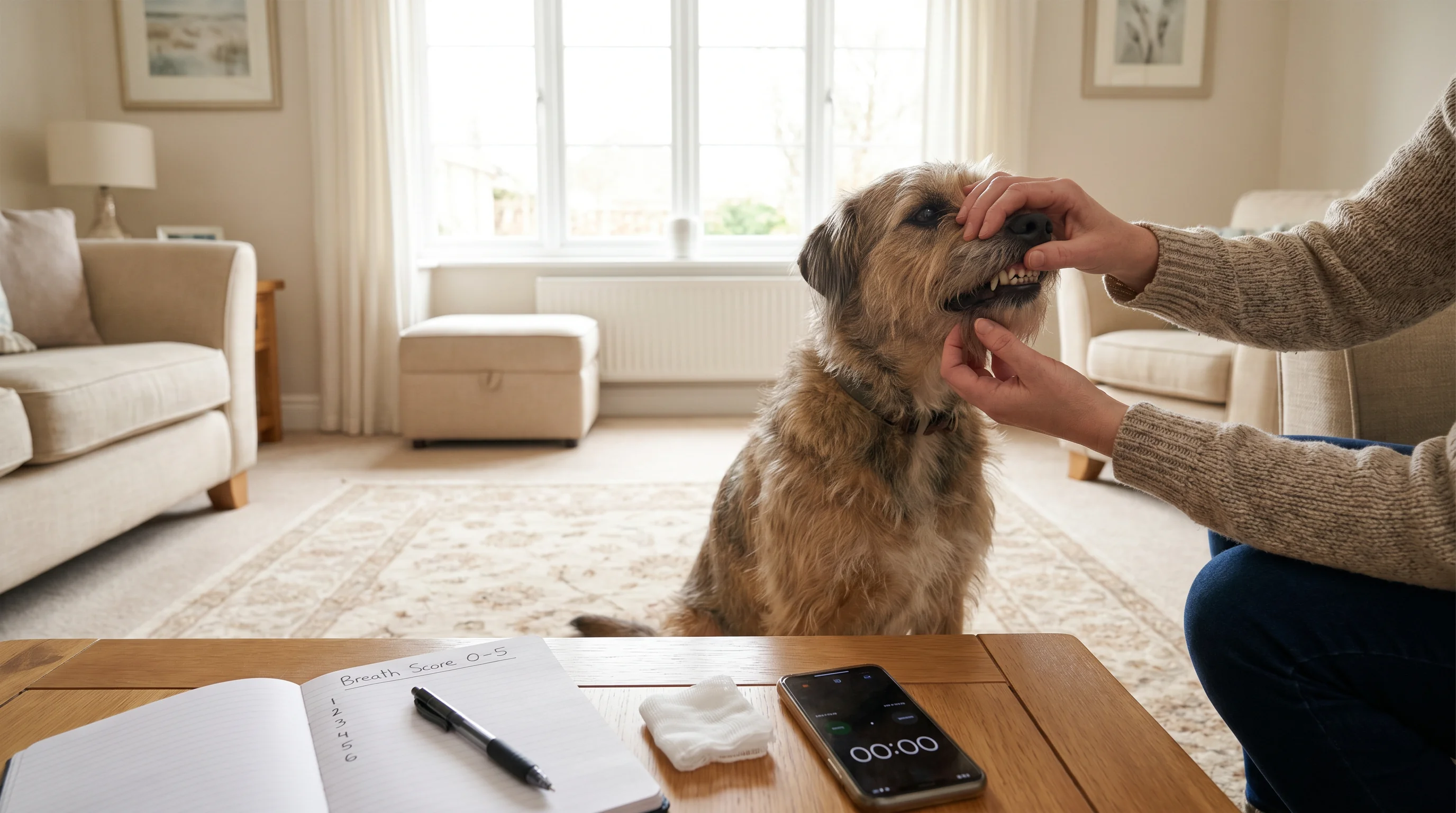
Create a simple scale: 0 = no odour, 5 = very strong. Smell from 5–8 cm, before snacks, at the same time daily. Record today’s dog breath score, plus notes on food and behaviour for consistency.
Safe Visual Check: Gums, Plaque, Objects, Pain
Perform an at-home dog dental check. Lift the lips calmly. Look for pink (not red) gums, visible plaque or tartar, lodged objects, or tenderness. Persistent inflammation and calculus are common in dogs and may relate to periodontal disease risk, especially without routine care[4].
Day 2: Gentle Cleaning Without Stress
Conditioning: Finger Wrapped in Gauze or Cloth
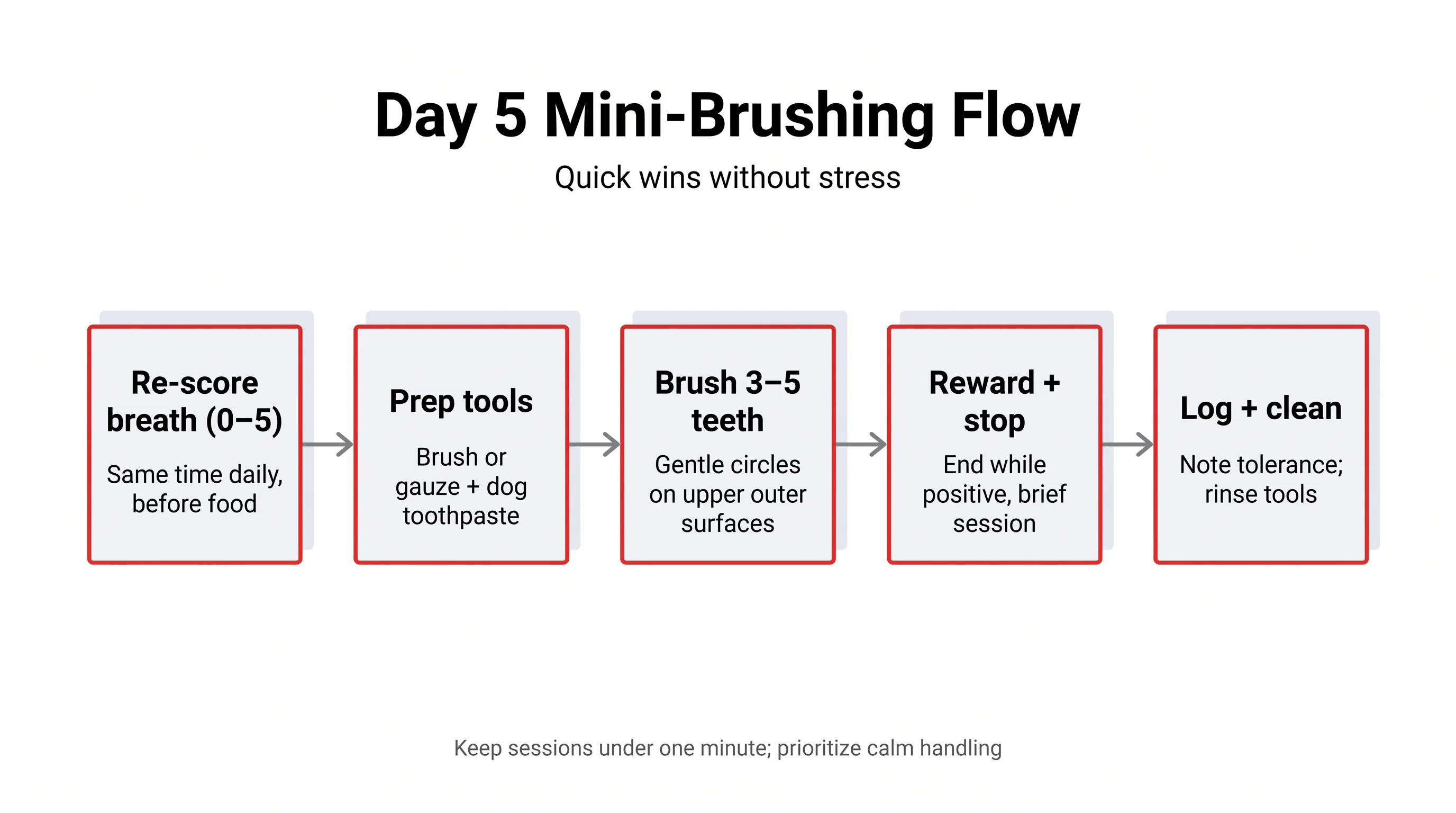
Pair handling with calm praise. Introduce a finger wrapped in clean gauze. Touch the outer surfaces of a few teeth, then stop. Keep sessions under one minute. End on a positive association.
Dog-Safe Paste and a 30–60 Second Technique
Use canine toothpaste, never human paste. Circle softly along the gumline for 30–60 seconds. Focus on upper canines and carnassials where plaque often accumulates. Brushing is widely recommended as core care in veterinary dental guidelines[3].
Day 3: Introduce a Dental Stick (e.g., Gently Dently)
Size, Frequency and Supervision
Select a product sized to your dog’s weight. For many dogs, one stick daily is a practical start. Always supervise chewing and offer on a clean surface. In the UK, choose dog dental treats UK with clear calories and feeding guidance.
Texture and Shape: Why They May Help with Plaque
Chews with ridges and a moderate density encourage chewing contact on tooth surfaces, which may help reduce plaque and halitosis compared with no chew at all[1]. Many owners find Gently Dently- Fresh Breath Mint Dental Treats a helpful option to start with. Introduce Gently Dently dental sticks alongside brief brushing for a balanced dog bad breath routine.
Day 4: Bowl and Water Adjustments
Bowl Hygiene: Daily Wash and Materials
Wash bowls daily in hot, soapy water. Consider stainless steel or ceramic over porous plastics. A cleaner feeding environment may reduce unwanted odour compounds lingering near the mouth.
Fresh Water and Non-Sticky Chews
Refresh water twice daily. Offer chews that do not smear or stick heavily to teeth. This supports saliva flow and avoids residues that could harden into tartar over time.
Day 5: Breath Check + Brief Brushing
Re-Score and Compare
Repeat your dog breath score under the same conditions as Day 1. Note any change in intensity, flavour notes, or timing. Small improvements count. Keep entries consistent and factual.
Micro-Brushing: 3–5 Teeth per Session
Short, frequent touches beat marathon sessions. Brush three to five teeth, focusing on upper outer surfaces. Reward immediately. Consistent small wins often build tolerance and better technique over a fortnight[3].
Day 6: Functional Chewing and Digestive Rest
Choose Natural, Lower-Fat Chews
Opt for natural chews of appropriate size and moderate hardness. Lower-fat options may be gentler on digestion. Seek transparent sourcing and avoid overly sticky textures that can cling to teeth.
Avoid Snack Overload and Monitor Stools
Balance treat calories with meals. Overfeeding may disrupt digestion and indirectly affect breath. If stools soften after new chews, pause for 24–48 hours and reassess tolerance before resuming.
Day 7: Re‑Score, Log and Maintenance Plan
How to Record Changes in Breath and Gums
Score breath, snap a quick gum photo, and add notes on plaque visibility and tolerance. Compare against Day 1. Objective entries make the at-home dog dental check more reliable over time.
Progression: Daily, Three Times Weekly, or Sticks Only
If your dog accepts brushing, aim for daily or three times weekly. If brushing remains stressful, maintain dental sticks plus gentle gauze rubs. Reassess weekly until you find a sustainable routine.
Quick Decision Guide
If X Situation, Then Y Action (7 Scenarios)
- If breath worsens suddenly, schedule a vet exam and pause new chews.
- If gums bleed lightly once, rest 48 hours and use softer gauze before retrying.
- If your dog resists brushing, reduce to five seconds and pair with a lick mat.
- If stools loosen after new treats, halve frequency or switch to a simpler chew.
- If plaque is heavy on molars, prioritise brushing contact there three times weekly.
- If your dog gulps sticks, choose a larger size or a slower-feeding chew holder.
- If you see a chipped tooth, stop all hard chews and consult your vet promptly.
For red-flag symptoms and triage, see our broader guidance in Bad Breath in Dogs: Causes, Risks and an Action Plan for Fresher Breath.
Practical Safety Boundaries
Stop Signals and When to Consult the Vet
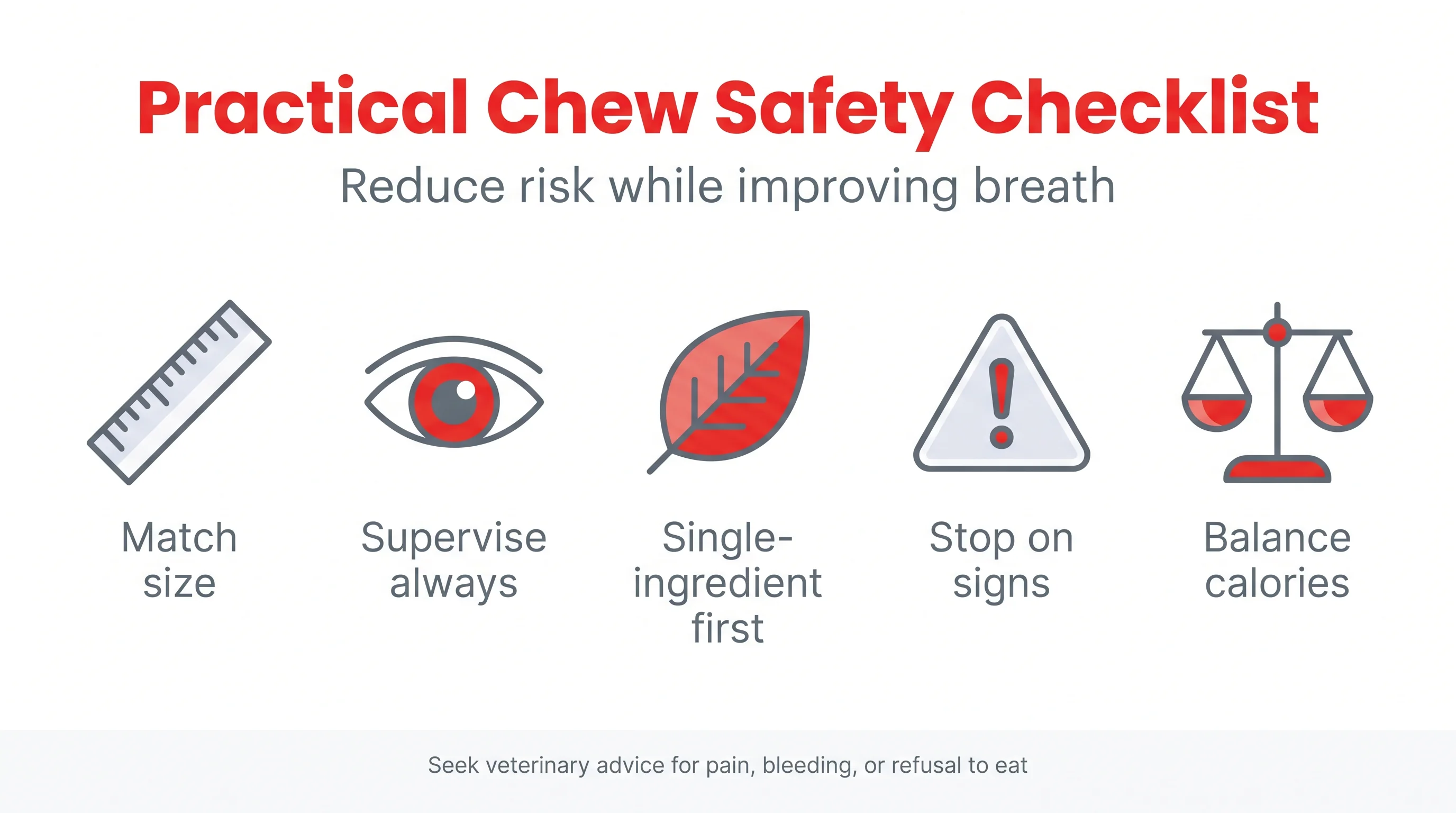
Stop immediately if you see gum bleeding that persists, tooth fractures, pawing at the mouth, or refusal to eat. Seek veterinary advice for strong, sudden halitosis or visible oral pain.
Sizes, Allergies and Choking Risk
Match chew size to bodyweight and jaw strength. Introduce single-ingredient items first to monitor sensitivities. Supervise all chewing. For choosing safer textures and densities, compare options in Natural Chews vs. Synthetic Sticks: Safer Choices for Fresher Dog Breath.
How to Monitor: 7–14 Days and 4–8 Weeks
Short-Term Metrics: Breath, Visible Plaque, Tolerance
Across 7–14 days, track dog breath score, gum redness, and visible plaque at the gumline. Note tolerance to brushing and chews. If technique needs structure, see stepwise guidance in Build a Daily Dental Routine for Dogs: Brush, Chew, Treat.
Medium-Term Metrics: Gums, Calculus, Habits
Across 4–8 weeks, look for steadier breath, fewer yellow-brown deposits, and improved acceptance of brushing. Evidence suggests cumulative plaque control supports gingival health when practices are consistent[3].
State of the Evidence
What Evidence Suggests about Brushing and Chews
Veterinary guidelines support regular brushing as a primary method to disrupt plaque and maintain gingival health[3]. Randomised studies report dental chews may reduce halitosis and plaque indices versus controls, supporting their role as an adjunct when used consistently[1].
Where Evidence Is Limited or Dog-Dependent
Ingredients such as seaweed derivatives have shown promise in reducing plaque and calculus in some dogs, but responses may vary by individual and product formulation[2]. Periodontal risk also differs by breed, age, and home care patterns[4].
Frequently Asked Questions
How do I create a reliable breath score for my dog?
Use a 0–5 scale: 0 means no smell, 5 means very strong. Score it at the same time each day, from about 5–8 cm away from the muzzle, before giving snacks. Add quick notes about food and brushing.
How often should I use a dental stick during this plan?
For most dogs, 1 stick per day is a common guideline. Adjust based on your dog’s size and daily calorie intake. Always supervise your dog and choose a size appropriate for their weight.
Can I replace brushing with chews?
Regular brushing can reduce plaque more directly. Chews and dental sticks can support oral hygiene by helping with mechanical cleaning, but they usually do not replace brushing.
When should I see a vet about bad breath?
If the bad breath is sudden and very strong, there is gum bleeding, pain, tooth loss, persistent drooling, or it does not improve after 2–4 weeks of home care, consult your vet.
Do mint dental sticks improve breath?
Mint can provide temporary freshness. Evidence suggests that the shape and texture that encourage chewing may help reduce plaque, which could improve breath with regular use.
Resources and Next Readings
Useful Internal Linking Within the Cluster
For a broader decision framework, start with Bad Breath in Dogs: Causes, Risks and an Action Plan for Fresher Breath. If your dog has food sensitivities, see Bad Breath with Sensitive Stomachs or Allergies: How to Freshen Safely. To understand deposits, read Plaque vs. Tartar in Dogs: What’s Causing the Smell and How to Reduce It. If warning signs appear, consult When Is Dog Bad Breath a Red Flag? Symptoms You Shouldn’t Ignore.
Complete this one‑week routine with confidence and patience. Keep your notes objective and your sessions short. Small, repeated actions often compound into meaningful change. If progress stalls, refine one variable at a time—technique, chew choice, or frequency—and reassess after two weeks.
References
- MQ Carroll et al. (2020). Effects of novel dental chews on oral health outcomes and halitosis in adult dogs. Journal of animal …. View article
- J Gawor et al. (2018). Effects of Edible Treats Containing Ascophyllum nodosum on the Oral Health of Dogs: A Double-Blind, Randomized, Placebo-Controlled Single-Center Study. Frontiers in veterinary …. View article
- B Niemiec et al. (2020). World small animal veterinary association global dental guidelines. Journal of small …. View article
- C Wallis et al. (2020). A review of the frequency and impact of periodontal disease in dogs. Journal of small animal practice. View article