

Bad Breath in Dogs: Causes, Risks and a Fresher-Breath Plan
Bad Breath in Dogs: Causes, Risks and a Fresher-Breath Plan
Dog breath should not make you step back. Persistent odour signals something worth addressing. It can be simple, or it can be serious. Acting early protects comfort and long‑term dog dental health.
This guide explains what dog halitosis really means and what to do first. You will learn how to spot red flags, understand plaque and tartar in dogs, and choose safe, natural dog dental treats and routines.
What bad breath in dogs really means
Understand: common dental and non-dental causes at a glance
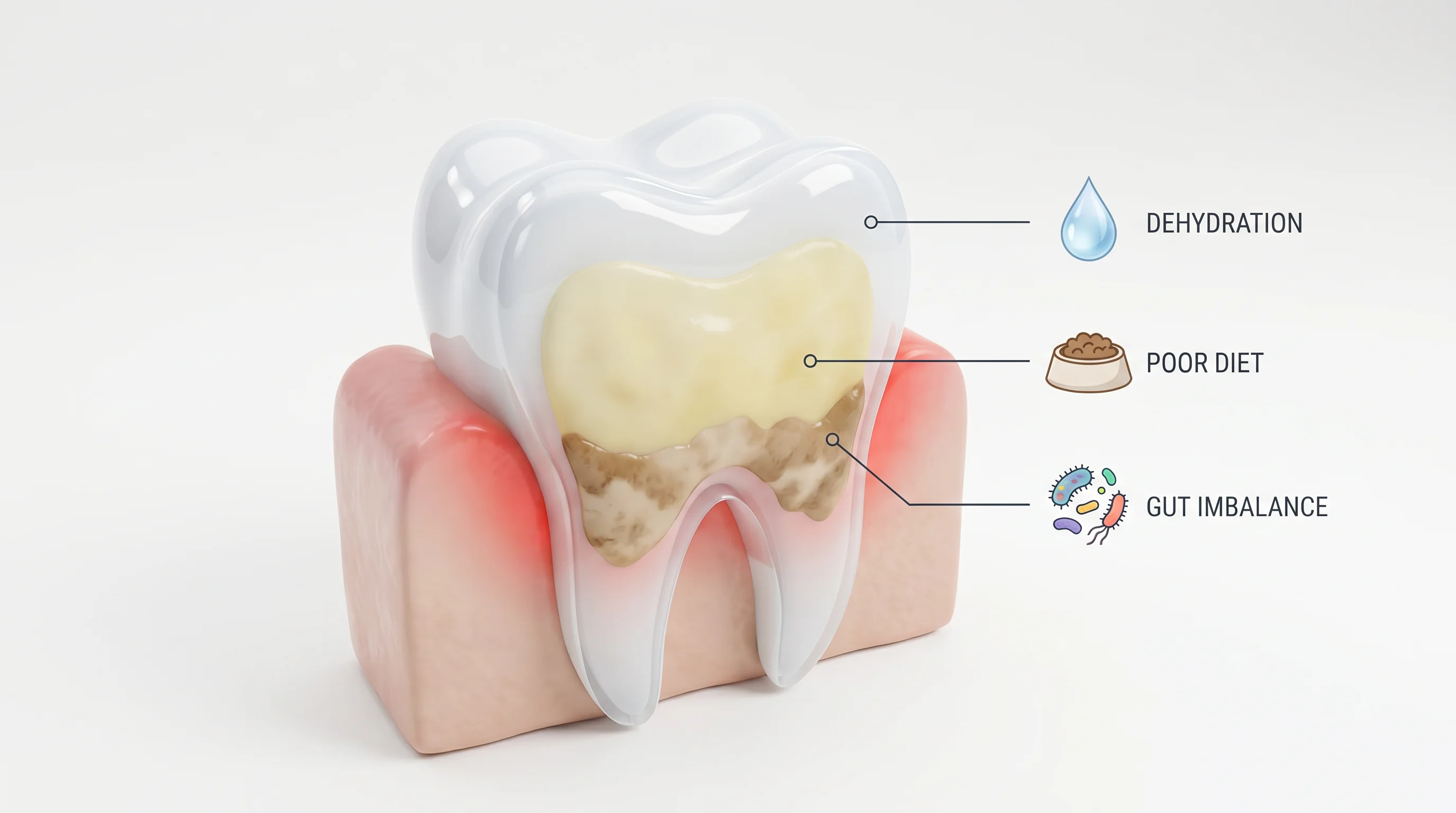
Most dog breath smells start in the mouth. Soft plaque hosts bacteria. It mats along the gumline, traps food, and inflames gums. Left unchecked, it hardens into tartar and worsens odour.
Non‑dental contributors exist. Diet quality, dehydration, gut imbalance, and certain metabolic conditions can intensify smells. Foreign objects lodged in the mouth or a fractured tooth can also drive sudden dog halitosis.
Do not: self-diagnose medical conditions or start treatments
A strong smell alone cannot distinguish dental from systemic issues. Avoid over‑the‑counter fixes or harsh cleans without guidance. Seek professional assessment if you are unsure what you are seeing.
What to prioritise first for fresher breath
Understand: simple at‑home checks and a one‑week tidy‑up plan
Start with basics. Check for stuck debris, obvious gum redness, or cracked teeth. Refresh water access. Review current food quality and feeding habits. Establish a gentle, consistent dental routine before adding extras.
For a practical roadmap, see Quick at‑home breath test and 7‑day fresh‑breath routine. It outlines simple checks and quick wins to stabilise daily care without guesswork.
Do not: jump to supplements or harsh cleans before basics
Do not mask odour while ignoring cause. Perfumed sprays, strong antiseptics, or abrupt diet changes can backfire. Build a steady foundation first, then layer vetted options if needed.
Top 3 actions to get on track
- Inspect the mouth gently and note changes in gums, teeth and tongue.
- Reinforce daily basics: fresh water, quality diet, and a soft‑start dental routine.
- Escalate to a veterinary exam promptly if breath is suddenly or severely worse.
When dog bad breath is a red flag
Understand: patterns and symptoms that warrant a veterinary exam
Prioritise a vet visit if odour is extreme, changes rapidly, or persists despite baseline care. Watch for bleeding gums, visible pus, facial swelling, tooth fractures, drooling, pawing at the mouth, or mouth pain.
Whole‑body clues also matter. Sudden weight loss, reduced appetite, increased thirst or urination, or lethargy paired with foul breath warrants timely evaluation. Learn the key signs in When dog bad breath is a red flag: symptoms you shouldn’t ignore.
Do not: delay seeking vet advice if breath changes suddenly
Rapid shifts can signal infection, a foreign object, or systemic illness. Timely exams protect comfort and prevent complications. Do not wait for home remedies to work if severity escalates.
Understanding dental causes: plaque, tartar and routine care
Understand: how soft plaque becomes hard tartar and why texture matters
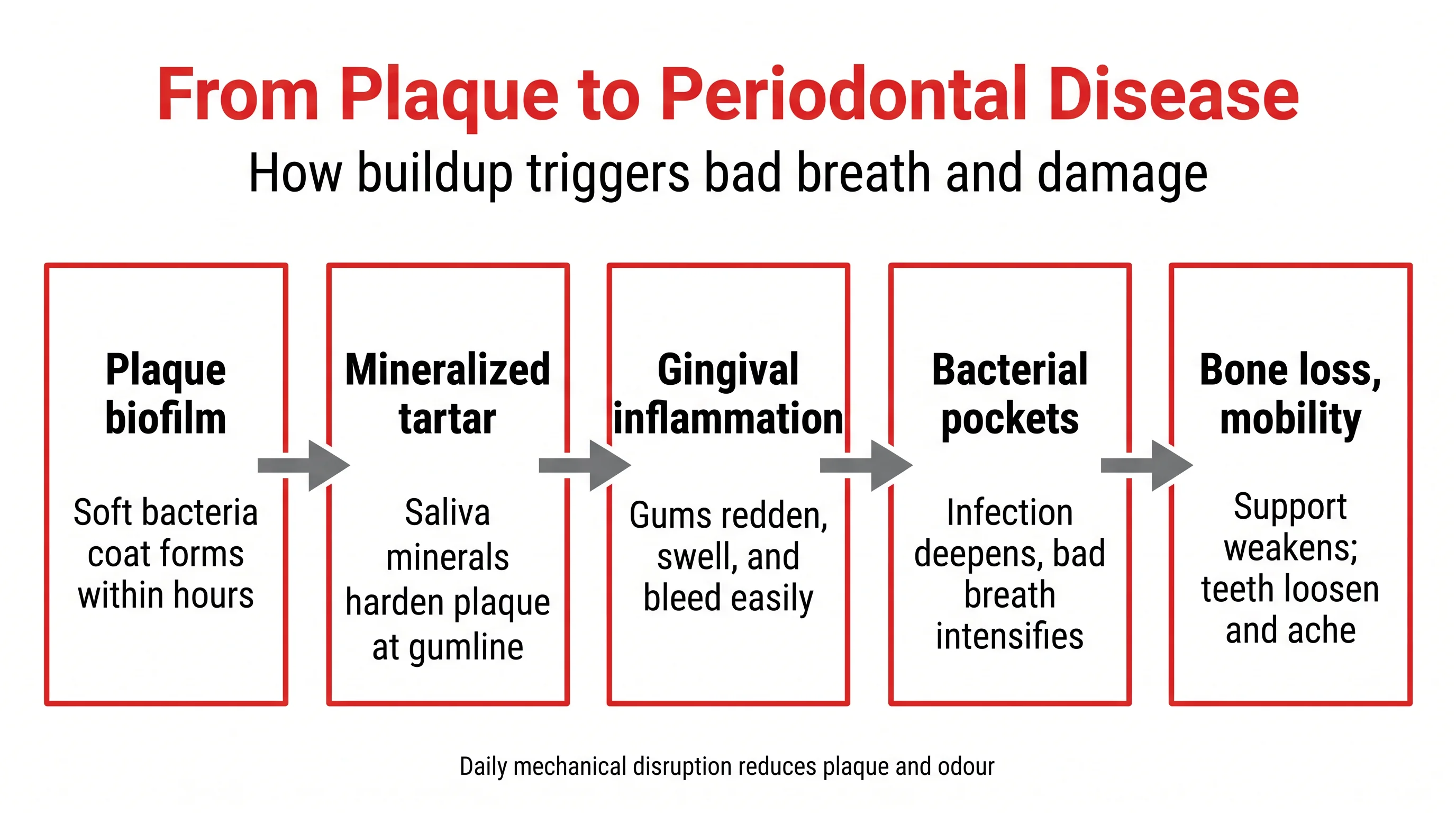
Plaque forms quickly as a soft, sticky biofilm. Minerals in saliva then harden it into tartar, which irritates gums and harbours odour‑producing bacteria. Rough, irregular surfaces retain more plaque.
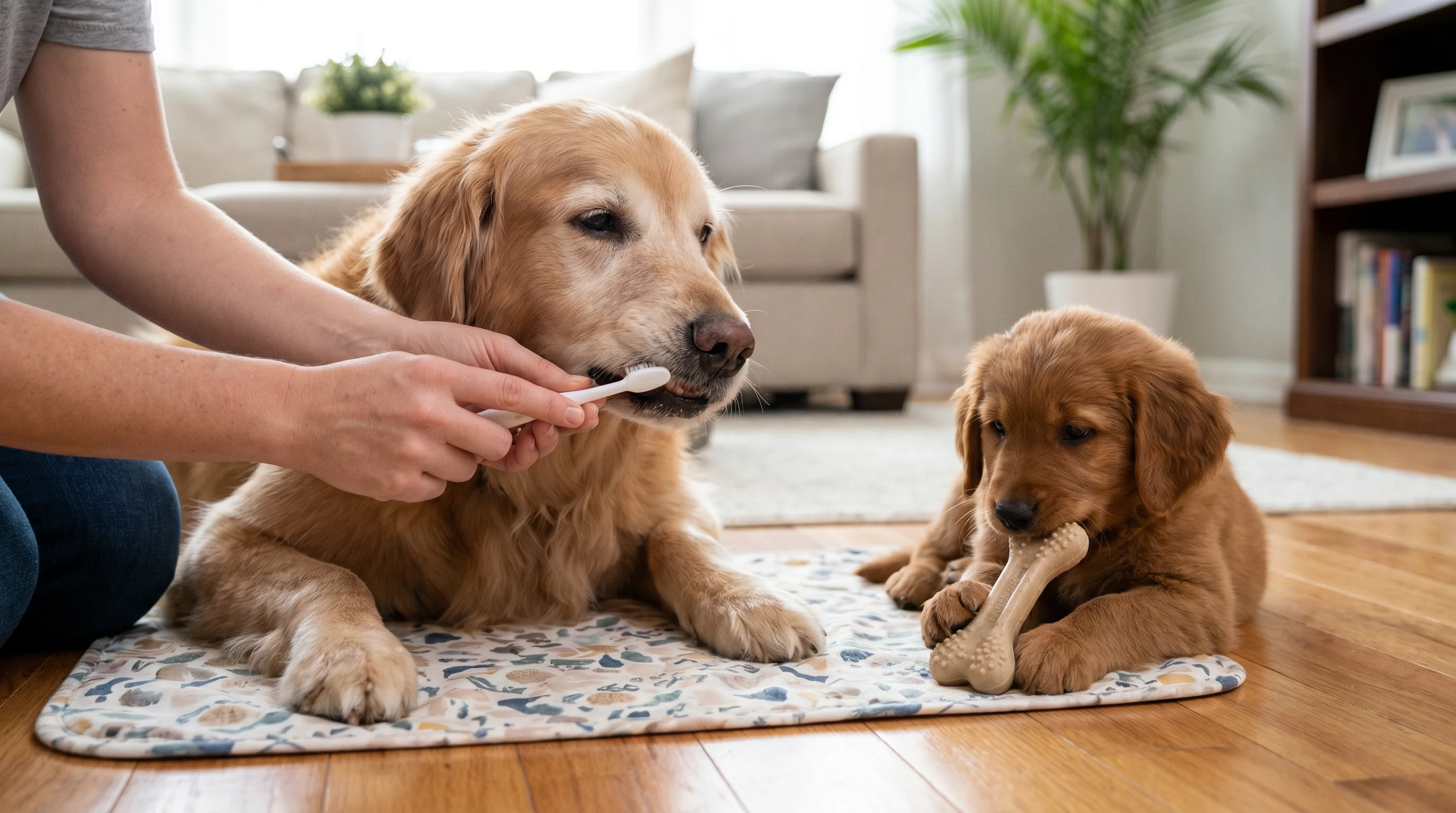
Mechanical disruption is key. Gentle brushing and safe chewing textures reduce plaque accumulation and associated malodour. Clinical research shows daily dental chews can reduce calculus, plaque, gingivitis, and bad breath in dogs.[1]
Microbiome‑aware approaches are emerging. Certain probiotics have been reported to improve halitosis and reduce plaque indices in dogs.[4] Early studies also suggest postbiotics may help reduce canine halitosis as part of a multimodal plan.[3]
Once tartar establishes, only professional scaling removes it safely. Home care focuses on prevention and gentle disruption of new plaque, not on chiselling hardened deposits.
Build a routine that sticks. For a simple framework, see Daily dental routine: brush, chew, treat (with UK‑friendly products).
For a deeper primer, read Dental plaque vs. tartar: how to tell and what actually works.
Do not: attempt deep cleaning or scaling at home
Picking at tartar, using metal tools, or applying caustic gels risks gum injury and tooth damage. Professional equipment and monitoring are required for safety and comfort.
Diet and digestion: foods, habits and hydration
Understand: diet quality, protein sources and feeding habits that help
Consistent, high‑quality nutrition supports cleaner mouths by reducing residue and improving gut health. Appropriate protein sources, avoided fillers, and steady feeding routines can reduce odour‑causing substrates.
Some bioactives are under study. Polyphenols have shown potential to mitigate canine halitosis through deodorisation mechanisms and microbial modulation, though product‑by‑product efficacy varies.[2]
Hydration matters. Ample fresh water supports saliva flow and natural cleansing. Slow, mindful eating and appropriate chew time enhance mechanical cleaning and digestion. Explore drivers to avoid in Food, protein sources and additives that worsen dog breath.
Do not: perform abrupt diet switches or restrict water
Sudden changes can upset digestion and worsen smell. Water restriction concentrates odours and stresses health. Make nutrition decisions deliberately, and keep water available at all times.
Choosing chews and treats the smart way
Understand: safe textures, natural options and daily habit building
Think texture, size and chew style. The goal is controlled abrasion that disrupts soft plaque without cracking teeth. Natural dog dental treats with gentle ridges or flexible designs can aid daily maintenance.
Evidence supports mechanical debridement as a core strategy for reducing plaque and malodor.[1] Many pet owners find Gently Dently- Fresh Breath Mint Dental Treats helpful for this task.
Match the chew to your dog’s size and bite force. Prioritise items with a little “give” to protect enamel. For a safety overview, read Natural chews vs. synthetic sticks: safer choices for fresher breath.
Do not: use overly hard or synthetic items that can damage teeth
Avoid products that are rock‑hard, brittle, or easily splintered. Tooth fractures and gum trauma quickly transform a mild breath issue into a painful dental problem.
Age‑specific considerations and special cases
Understand: puppy teething, senior care and sensitivities
Puppies teethe and explore with their mouths. Choose softer, size‑appropriate textures and short, supervised sessions. For tailored guidance, see Puppy breath turned sour? Safe fixes for teething pups.
Seniors face higher periodontal risk and may have concurrent conditions. Gentle routines and regular checks are essential. Learn the nuances in Senior dogs and halitosis: gentle care and risk checks.
Sensitive stomachs, allergies or intolerances require careful selection of proteins and additives. Balance dental goals with digestive comfort using Managing bad breath with sensitive stomachs or allergies.
Do not: apply adult routines to puppies or allergy‑prone dogs
Do not scale intensity or chew hardness beyond what teeth and gums can tolerate. One‑size‑fits‑all approaches risk injury or digestive upset in vulnerable dogs.
Frequently Asked Questions
Why does my dog’s breath suddenly smell bad?
Sudden changes can stem from something stuck in the mouth, a broken tooth or a dietary change. If the smell is new, severe or paired with lethargy, drooling or pain, seek veterinary advice.
Can diet really improve dog breath?
Yes. Consistent, high‑quality nutrition, good hydration and suitable dental chews support a cleaner mouth and better digestion, which often reduces odour.
Are natural chews good for bad breath?
Appropriately sized, safe‑texture natural chews can help reduce soft plaque through mechanical action. Introduce gradually and supervise to ensure suitability for your dog.
How often should I focus on dental care for fresher breath?
Daily habits work best. Combine gentle brushing, an approved dental chew or treat, and routine checks for a sustainable, fresher‑breath plan.
When should I see a vet for my dog’s bad breath?
See a vet if breath is very foul, suddenly worse, or comes with weight loss, drooling, pawing at the mouth, bleeding gums, or changes in eating or drinking.
References
- SE Crowder et al. (2025). Effectiveness of a daily honeycomb-shaped dental chew in reducing calculus, plaque, gingivitis and malodor in dogs. Journal of …. View article
- H Li et al. (2026). The Control of Canine Halitosis By Sugar Cane Polyphenols: Effects and Potential Mechanisms. Journal of Agricultural and Food Chemistry. View article
- A Sordillo et al. (2026). Canine Halitosis Improved With a Postbiotic: A Validation Study. Journal of Veterinary Dentistry - journals.sagepub.com. View article
- KH Do et al. (2019). Effects of Weissella cibaria CMU on Halitosis and Calculus, Plaque, and Gingivitis Indices in Beagles. … veterinary dentistry. View article