

Bad breath with sensitive stomachs or allergies: how to freshen safely
Bad breath with sensitive stomachs or allergies: how to freshen safely
Bad breath is hard enough. It is tougher when every new chew risks a stomach upset. Sensitive dogs need a careful, methodical approach to breath freshening.
This matters because oral odour can stem from mouth or gut issues. The wrong treat can inflame both. In this focused guide, you will learn ingredient selection, lean fat targets, single‑protein logic, and safe trial steps tailored to bad breath dogs sensitive stomach scenarios.
The scenario: fresh breath without flare‑ups
Why halitosis can appear in sensitive dogs
Dog breath often reflects plaque, tartar, or gum inflammation. In sensitive dogs, digestive turbulence may add sulphur odours. Food intolerances can drive reflux, gas, or altered microbiome, intensifying smell.
Some dogs struggle with richer meats, mixed proteins, or high‑fat chews. Others show “dog bad breath allergies” patterns, where suspected allergens aggravate skin and gut together. The result is intermittent bad breath alongside soft stools or flatulence.
Focus for this guide: gentle ingredient choices and trial steps
We focus on low‑risk, low‑fat dog treats, single‑protein dog treats, and limited‑ingredient options. We pair them with a structured, 7–14 day introduction, then 4–8 week assessment. We emphasise textures and portion control that respect gut boundaries.
You will also find practical ranges, clear monitoring, and safety boundaries. The objective is fresher breath, fewer flare‑ups, and stable digestion.
Quick decision guide
If X, then Y: practical picks for everyday choices
- If stools are soft or gassy after rich chews, choose lean, air‑dried single‑protein pieces with fat under roughly 10%.
- If you suspect protein triggers, run a single‑protein treat trial. Keep all other foods unchanged.
- If crunchy textures cause gulping, switch to softer, ridged dental shapes. Control chew time and supervise closely.
- If grains seem problematic, try grain free dental treats with modest calories. Introduce gradually and log changes.
- If breath worsens after fish oils or fatty toppers, remove them. Reassess with lower‑fat chews and simpler ingredients.
- If you need extra cleaning power, add gentle mechanical textures twice weekly. Keep portions small to protect the gut.
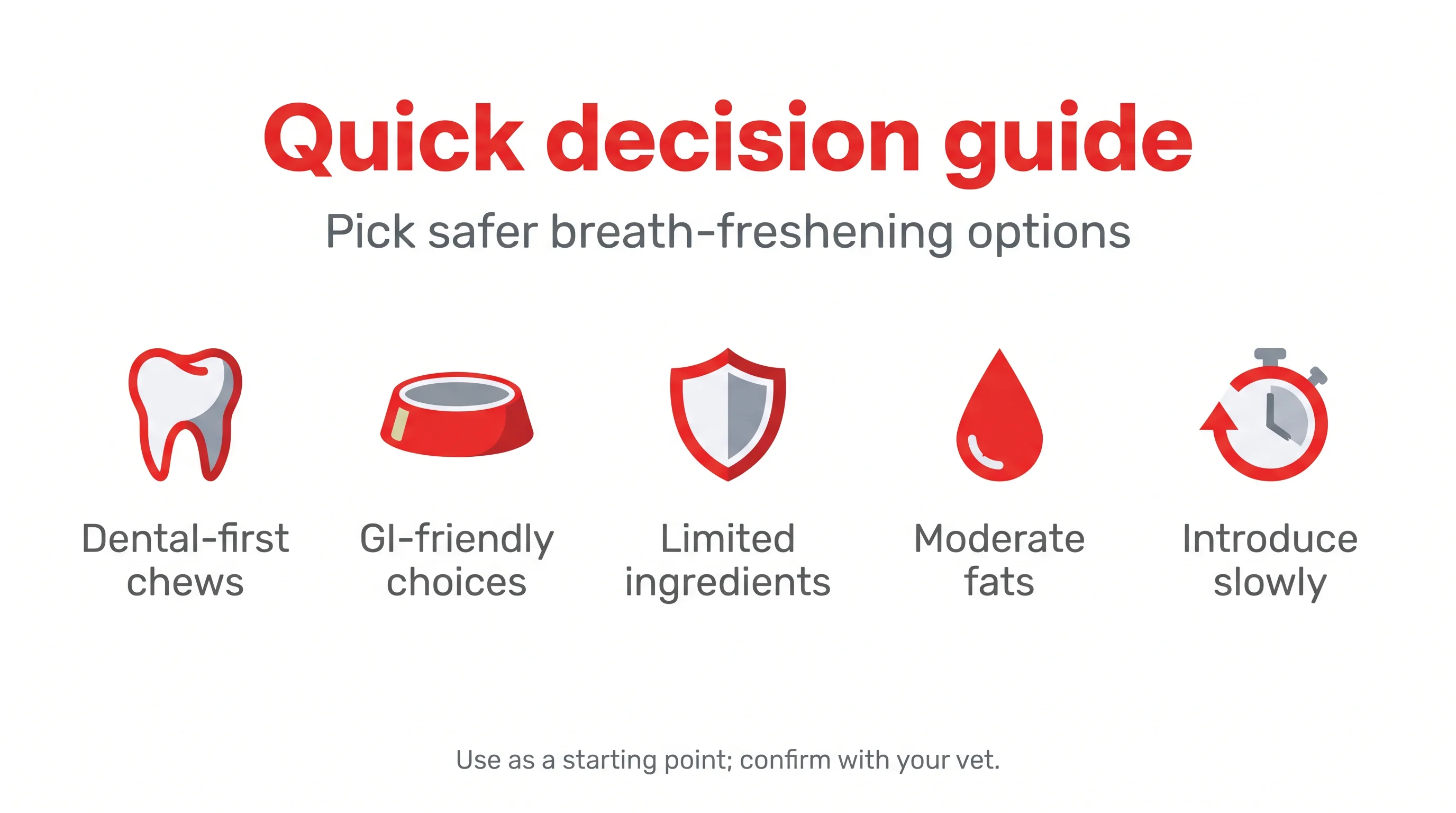
Selecting safer ingredients for GI sensitivities or suspected allergies
Single‑protein and limited‑ingredient principles
When dog bad breath overlaps suspected allergies, simplify. Select single‑protein dog treats using one primary animal protein, minimal binders, and no mixed meats. Limited‑ingredient products help you identify triggers while sustaining training routines.
Keep the base diet steady. Add only one new treat type at a time. Read labels to avoid hidden poultry fats or flavourings. For deeper context on how diet and additives influence odour, explore how diet, protein sources and additives influence breath in our resource on nutrition and malodour here.
Fat level targets and chew textures that may be gentler
For GI‑sensitive dogs, many owners start with treats at or below roughly 10% fat as‑fed. Very lean options can sit near 3–6% for jerky‑style pieces. Moderate options may land between 8–12%.
Avoid very fatty chews while assessing tolerance. Choose textures that encourage chewing without splintering or gulping. Softer ridges or moderately firm sticks can provide gentle abrasion with less gastric load than marrow‑rich bones.
Add‑ons that can help breath freshness
Breath support may include gentle mechanical cleaning, dog‑safe herbs like parsley or mint, and microbiome‑friendly approaches. Look for grain free dental treats if grains concern you. Keep essential oils out, and avoid xylitol.
Some owners find a vegan, gluten‑free dental chew fits exclusion trials. For example, many pet owners find Gently Dently- Fresh Breath Mint Dental Treats helpful for this task. Maintain small portions, introduce slowly, and track stool and breath changes.
How to run a low‑risk treat trial
7–14 day introduction plan
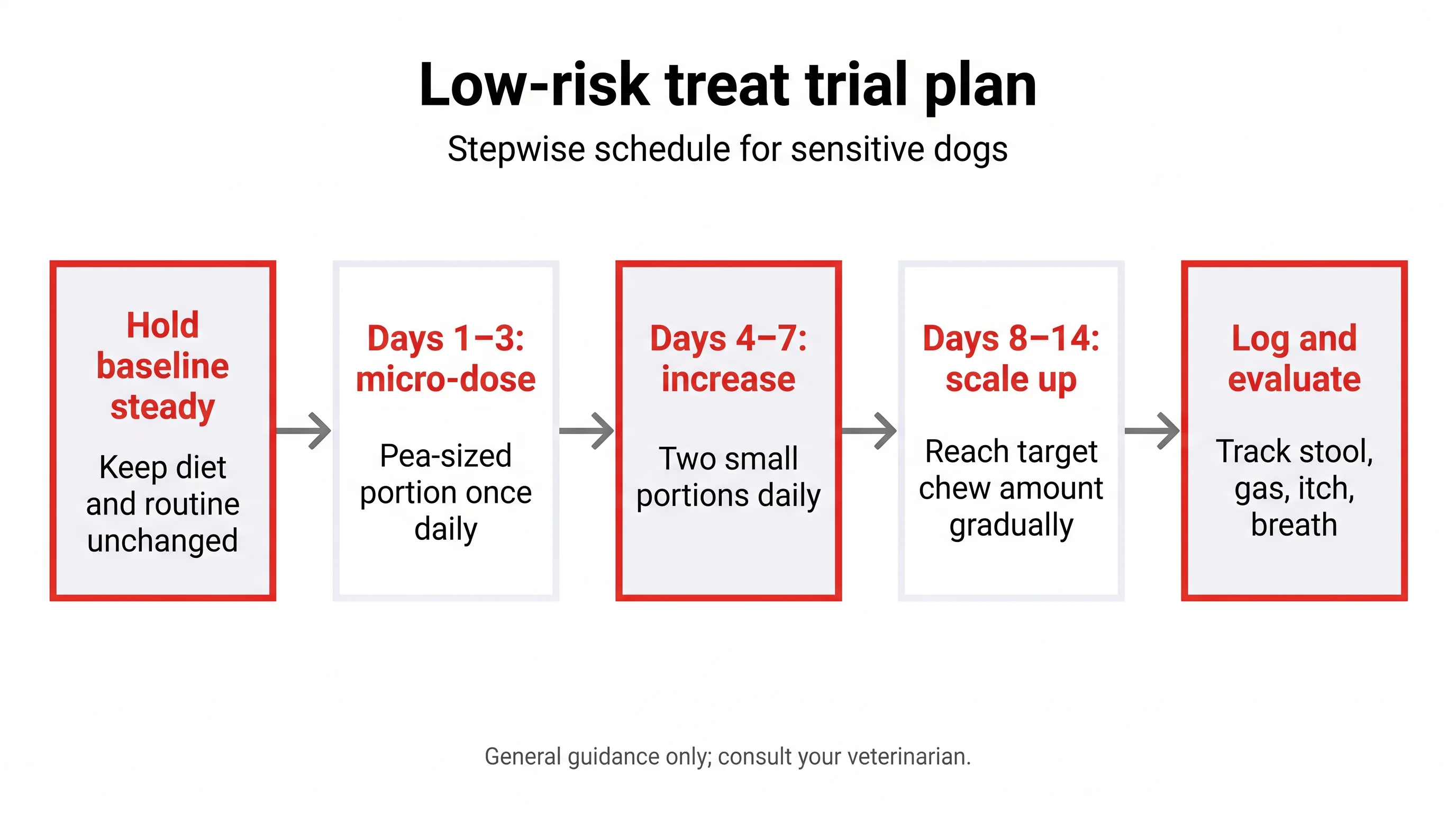
Start with one new treat category only. Days 1–3: offer a pea‑sized portion once daily. Days 4–7: step to two small portions daily. Days 8–14: scale to the intended daily amount.
Keep a log of stool score, gas, burping, lip‑licking, skin itch, and breath notes. Hold the main diet, supplements, and routine steady. This isolates the treat’s effect on both gut and odour.
What to pause or avoid during the trial
Pause mixed‑ingredient biscuits, rich bones, and multiple new chews at once. Avoid concurrent probiotic or herbal changes unless advised by a vet. Skip high‑fat toppers and strongly flavoured chews that may mask signals.
Stop any treat that produces repeated vomiting, diarrhoea, hives, or intense itch. Resume with a gentler, simpler option after the gut has settled fully.
Monitoring guidance: what to track and when
After 7–14 days: short‑term signals
Look for more neutral morning breath, firmer stools, reduced flatulence, and less lip‑licking or grass‑eating. Breath may begin improving within one to two weeks when mechanical cleaning is consistent.
If odour worsens, reassess fat level, protein choice, and portion size. Consider whether a softer texture reduced chewing time. For routine building blocks that stabilise progress, review a simple daily approach in our dental routine explainer here.
After 4–8 weeks: stability and step‑ups
Seek durable improvements: stable stool scores, minimal gas, and fresher breath across the day. At this stage, you may add a second compatible treat type or modestly increase chew frequency.
If progress plateaus, confirm brushing technique, re‑evaluate texture, and review dietary fats. If gum redness, calculus, or strong malodour persist, plan a veterinary dental check and consider broader diagnostics.
Practical safety boundaries
Portion sizes, chew time, and water access
Anchor daily treat calories under roughly 10% of total intake while trialling. For small dogs, that can be just a few tiny pieces. For larger dogs, remain moderate during assessment.
Supervise all chewing. Aim for steady gnawing rather than frantic gulping. Offer fresh water before and after chews to support swallowing and dilute odour‑causing residues.
When to stop and seek veterinary advice
Stop immediately if you see repeated vomiting, black or bloody stools, collapse, or facial swelling. Seek veterinary care for persistent halitosis, painful chewing, weight loss, or pancreatitis history.
Dogs with chronic GI disease or confirmed food allergy require tailored plans from a vet. Use cautious, evidence‑informed adjustments, and log every change carefully.
Evidence status: what research suggests
Oral health and texture
Evidence suggests that mechanical chewing may reduce plaque and malodour when used consistently with appropriate textures. Controlled studies have reported reductions in canine halitosis with daily dental chews compared with controls.[1]
Another trial found that a honeycomb‑shaped chew reduced calculus, plaque, gingivitis, and malodour, reinforcing that texture and routine matter for results.[2]
Digestibility and protein sources
For GI‑sensitive dogs, digestibility and ingredient simplicity are central. While research focuses on oral metrics, field experience shows that lower‑fat, limited‑ingredient chews reduce gastric burden. Introducing one protein at a time isolates tolerance.
In parallel, microbiome‑supporting strategies, including postbiotic concepts, have shown early reductions in halitosis scores by day seven in study settings, suggesting gut‑oral interplay.[3]
Herbals and breath aids
Herbal and botanical agents may complement mechanical cleaning. Emerging evidence on sugar cane polyphenols indicates potential deodorisation mechanisms for canine halitosis, though formulations vary and require careful selection.[4]
Use herbals conservatively. Avoid essential oils and sweeteners unsafe for dogs. Prioritise simple, proven textures first, then layer gentle adjuncts as tolerance allows.
Product fit: examples using natural buffalo options
Low‑fat, high‑protein training pieces
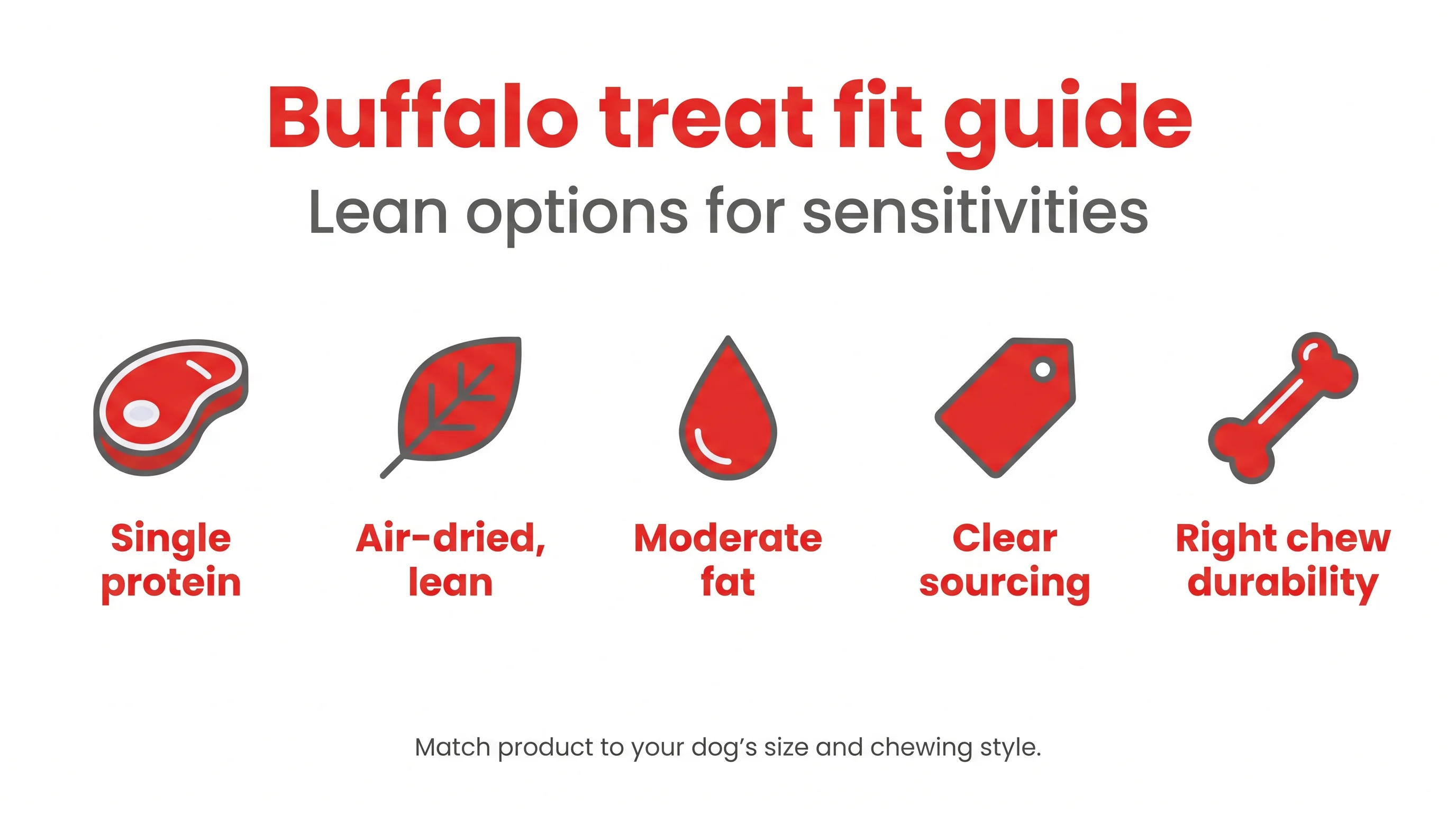
For sensitive dogs, look for lean, air‑dried buffalo morsels with simple recipes and visible protein sourcing. They deliver focus without rich fats. As a baseline, keep portions tiny during the first fortnight.
To compare material safety across chew formats, see our analysis of natural chews versus synthetics and how to judge durability and debris here. Match texture to your dog’s chewing style and gastric tolerance.
Long‑lasting chews and dental sticks
Longer chews may support abrasion if your dog gnaws steadily and swallows safely. Choose moderate density, limited‑ingredient sticks, ideally grain free dental treats if grains have previously caused issues.
Combine any chew plan with brushing and short daily routines for predictable results. Build a consistent cadence with our daily dental routine framework here. Look for natural dental chews UK options with transparent sourcing and recyclable packaging.
Frequently Asked Questions
Can dogs with sensitive stomachs use dental sticks for bad breath?
Yes, if you pick limited‑ingredient, grain‑free options with moderate calories and avoid common triggers. Introduce slowly over 7–14 days while monitoring stool and breath.
Do single‑protein treats help with suspected allergies and bad breath?
They may help you isolate triggers while supporting breath freshness. Choose one protein source and keep other new foods stable during the trial.
What fat percentage is suitable for sensitive dogs when choosing chews?
Many sensitive dogs do better with lower fat. As a starting point, target lean treats and avoid very fatty chews while you assess tolerance.
How long until I notice fresher breath after changing treats?
Some dogs show improvements in 1–2 weeks, especially with gentle dental textures. For more persistent cases, reassess at 4–8 weeks and consider a dental exam.
Is buffalo a good option for dogs with GI sensitivities?
Buffalo can be a lean, high‑protein option and is well liked by many dogs. Individual tolerance varies, so introduce gradually and monitor stool, skin, and breath.
Summary and next steps
Recap your plan and where to learn more
For bad breath dogs sensitive stomach situations, simplify first. Choose single‑protein, limited‑ingredient treats. Keep fats modest. Introduce one change over 7–14 days. Log stool, gas, skin, and breath. Build a steady brushing‑plus‑chew routine.
If odour persists or GI signs flare, pause and reassess texture, portion, and ingredients. When in doubt, speak to your vet. For broader context on oral versus gut causes and vet criteria, see our core guide to causes and next steps.
References
- MQ Carroll et al. (2020). Effects of novel dental chews on oral health outcomes and halitosis in adult dogs. Journal of animal …. View article
- SE Crowder et al. (2025). Effectiveness of a daily honeycomb-shaped dental chew in reducing calculus, plaque, gingivitis and malodor in dogs. Journal of …. View article
- A Sordillo et al. (2025). A novel Postbiotic reduces canine halitosis. Animals. View article
- H Li et al. (2026). The Control of Canine Halitosis By Sugar Cane Polyphenols: Effects and Potential Mechanisms. Journal of Agricultural and Food Chemistry. View article