

Build a Daily Dental Routine for Dogs: Brush, Chew, Treat
Build a Daily Dental Routine for Dogs: Brush, Chew, Treat
A small, repeatable routine can transform your dog’s breath and protect teeth. Consistency matters more than complexity. Aim for simple steps you can keep doing daily.
Bad breath and plaque begin quietly. They progress faster than most owners expect. This guide shows a low-friction, practical sequence integrating brushing, an appropriate chew, and a breath-freshening treat. You will learn timing, frequency, and monitoring cues that fit real life.
Why this routine matters for dog breath and oral health
The 3-part model: brush, chew, treat
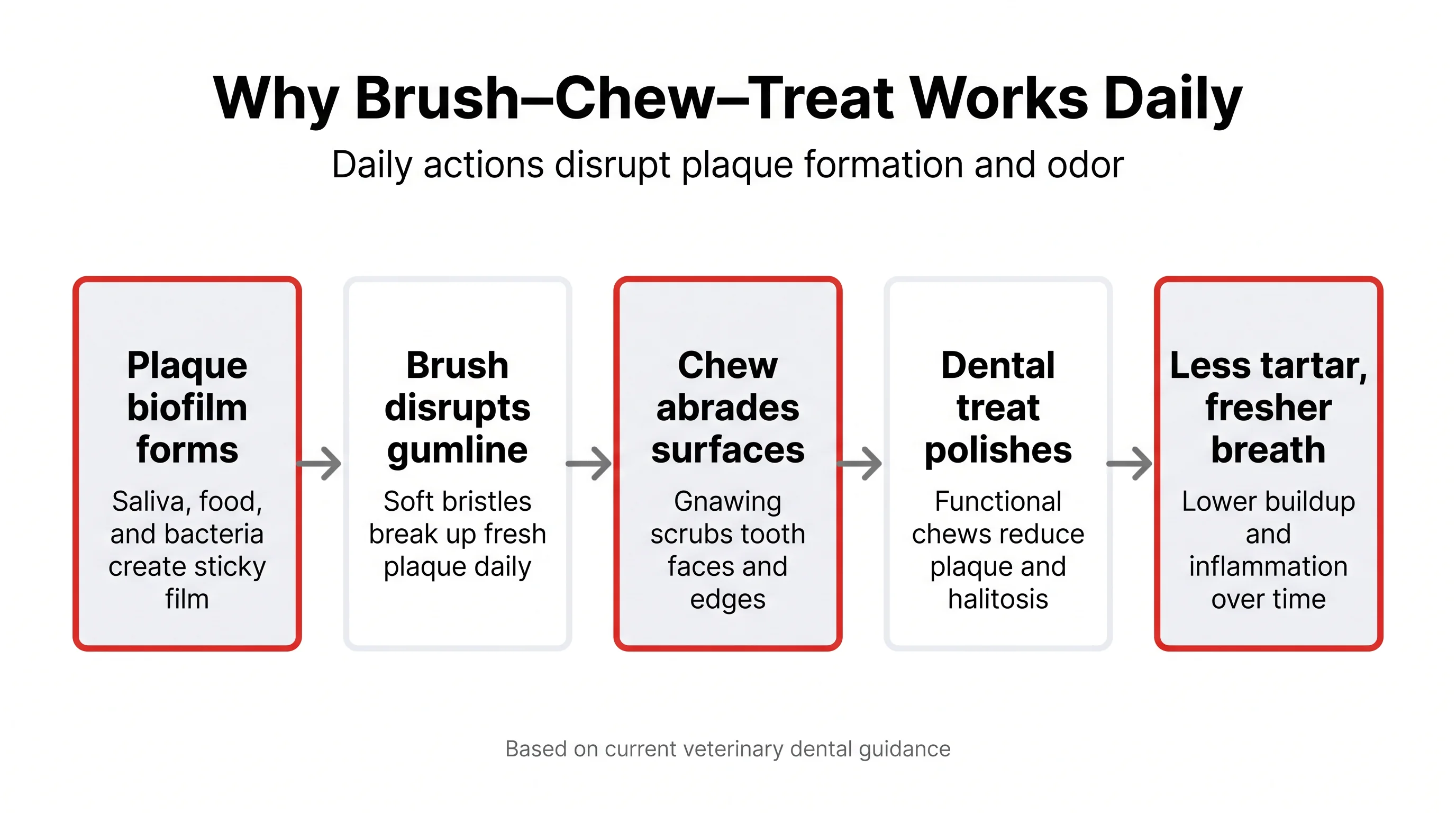
Think in three layers. Brushing disrupts soft plaque along the gumline. A natural chew adds mechanical abrasion on tooth surfaces. A dental treat finishes the day, freshening breath and rewarding calm participation.
How plaque forms and why daily friction helps
Saliva, food particles, and bacteria form a sticky biofilm within hours. This soft plaque hardens into tartar if left undisturbed. Daily friction from brushing and chewing interrupts plaque accumulation before it mineralises. For deeper context, see the difference between plaque and tartar and our main bad breath guide.
Quick decision guide: what to do in common scenarios
If X then Y actions for the next 2–4 weeks
- If mornings are rushed, then brush for 60–90 seconds in the evening, and use a dental treat afterward for reinforcement.
- If your dog resists brushing, then start with fingertip wipes for 5–7 days, add toothpaste taste-training, and progress to a soft brush gradually.
- If breath smells stronger after meals, then schedule the chew 60–90 minutes post‑feeding and brush at a different time of day.
- If your dog gulps chews, then choose a larger, denser, slow‑consumed option and hold one end for controlled gnawing.
- If gums look mildly red, then reduce chew intensity, prioritise gentle brushing, and reassess in 10–14 days.
- If stools become soft with new chews, then halve chew time, increase water access, and reintroduce slowly over one week.
- If tartar is already heavy, then book a dental check, keep brushing daily, and use chews only after your vet confirms suitability.
Step-by-step: build a low‑friction daily routine
Morning: brief brush + water check
Do a quick gumline brush using a dog‑safe toothpaste. Aim for 30–60 seconds per side. Reward calmly after. Refill water bowls and check cleanliness, as hydration supports saliva flow and dog oral hygiene.
Afternoon: size‑appropriate natural chew
Offer a single, supervised natural chew for 10–20 minutes. Choose a size your dog must gnaw, not swallow. Evidence suggests dental chews can reduce plaque and odour when used regularly.[1]
Evening: dental treat and breath check
Finish with a ridged dental treat to freshen dog breath. Many owners find Gently Dently- Fresh Breath Mint Dental Treats helpful for this task. Note any changes in breath intensity and gum appearance, and record brief observations.
Weekly: gum inspection and log
Once a week, lift lips and inspect the gumline. Look for redness, swelling, or brown calculus. Note brushing frequency, chew duration, and treats used. Brief logs help you adjust the routine rationally.
Choosing safe, effective natural chews
Match chew to size, age and chewing style
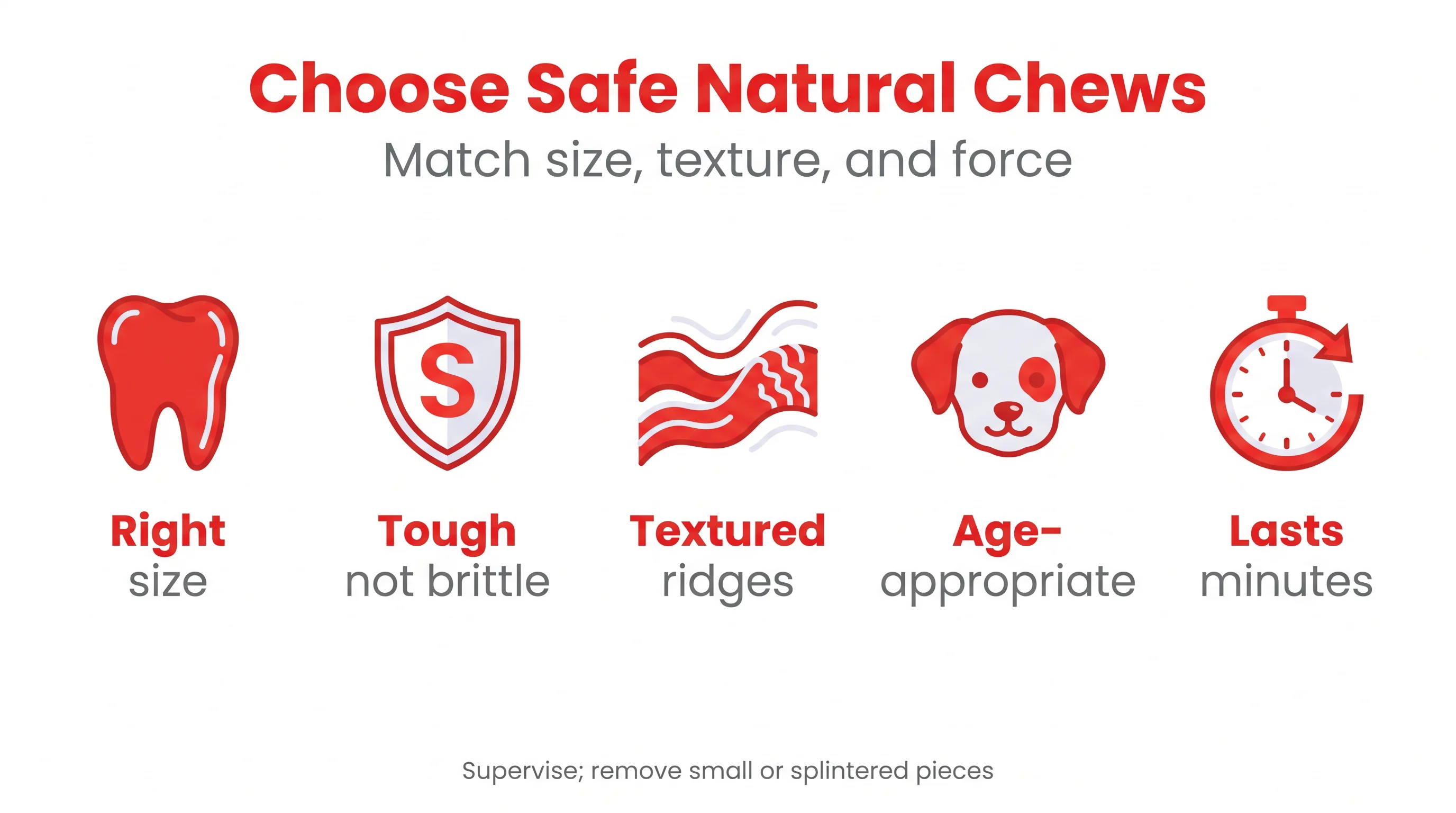
Pick natural dog chews for dental health that suit mouth size and bite force. Puppies and seniors may need softer, gentler textures. Power chewers require sturdier options that resist snapping yet allow abrasion.
Texture, shape and duration considerations
Look for ridges or fibrous textures that scrub without cracking teeth. The chew should outlast several minutes of steady gnawing. Compare natural options with synthetics to understand safety trade‑offs in our guide to natural chews vs. synthetic sticks.
Evidence status: what research suggests
Brushing frequency and plaque control
Daily brushing tends to provide the most consistent plaque disruption. Every‑other‑day brushing may still help but often yields slower improvements. Focus on gentle technique at the gumline, where bacteria concentrate in early disease.
Chews and dental sticks for mechanical abrasion
Randomised trials indicate that dental chews can meaningfully reduce plaque, calculus, gingivitis, and halitosis in adult dogs when used consistently over weeks.[1][3] Recent work also reports multi‑site tooth measurements showing improvements in oral health outcomes with a novel chew protocol.[2]
Breath freshness and diet factors
Studies suggest chews may reduce volatile sulphur compounds linked to malodour and can shift oral microbiota toward more favourable profiles.[2][4] Diet composition may also influence breath. For broader dietary drivers, see our analysis of proteins, additives, and odour.
Monitoring: what to observe at 7–14 days and 4–8 weeks
Short‑term signals
Within 7–14 days, expect better cooperation with the dog teeth brushing routine, slightly fresher breath, and less plaque along easily brushed edges. If you need a structured check, use the 7‑Day Fresh‑Breath Plan as a prompt.
Medium‑term outcomes
By 4–8 weeks, gums may look less red, and breath may be noticeably improved, particularly with consistent chew use.[1][2] If tartar bands persist near the gumline or breath remains strong, reassess chew choice and brushing frequency, and consider a professional check.
Practical safety boundaries
Brushing dos and don’ts
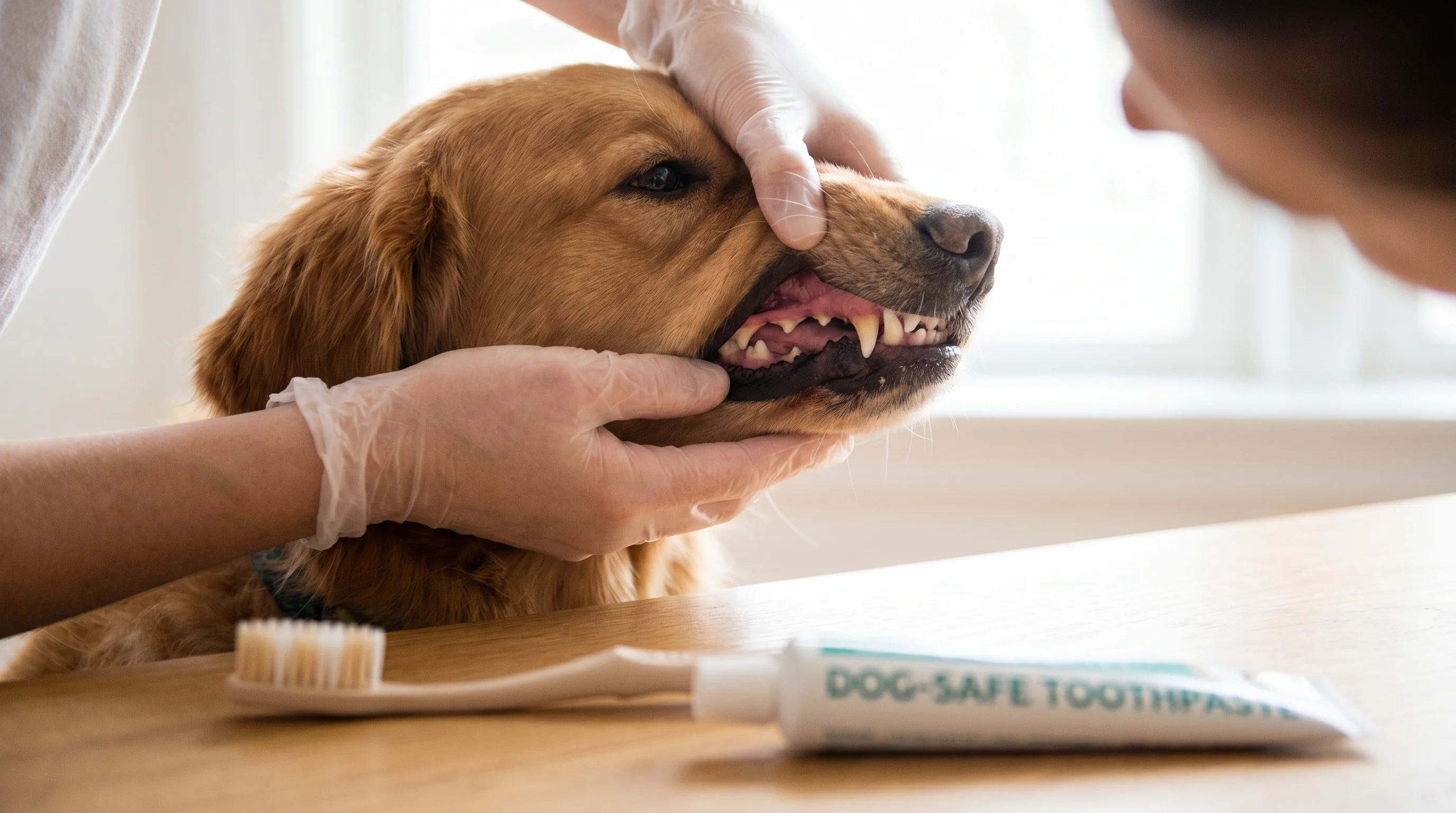
Do use a soft brush or fingertip brush with dog‑safe toothpaste. Do angle bristles into the gumline. Do stop if you see pain. Don’t use human toothpaste. Don’t scrub aggressively on exposed roots.
Chew safety and supervision
Supervise every chew session. The piece should be larger than the mouth width. Avoid very hard items that risk fractures. Remove small or splintered pieces. Offer fresh water nearby, and limit enthusiastic gulping.
Treat usage and calorie budgeting
Dental treats for dogs count toward daily calories. Adjust meal portions to maintain a healthy weight. Check analytical constituents and feeding guidance. If using multiple rewards, downsize each to protect daily energy balance.
Troubleshooting common hiccups
Dog resists brushing
Pair toothpaste flavour with calm praise. Begin with brief lip lifts and touch‑and‑treat repetitions. Progress to gentle brushing motions over several sessions. Short, positive reps build trust faster than one long attempt.
Soft stools after new chews
Reduce chew time, spread sessions across the week, and introduce slowly. Increase water availability. If sensitivity continues, switch chew type or texture. For broader guidance on sensitive digestion, see fresh‑breath strategies for sensitive stomachs.
Persistent halitosis despite routine
Escalate to a veterinary assessment if odour remains strong at 4–8 weeks or you notice pain, drooling, bleeding gums, or loose teeth. Learn red‑flag symptoms in our guide to when bad breath signals a problem.
References and further reading
Standards, vet resources and related guides
For deeper context on plaque progression and action planning, explore the main bad breath guide, our explainer on plaque versus tartar, the comparison of natural chews and synthetic sticks, and diet‑related odour factors in what might be making breath worse.
Frequently Asked Questions
How often should I brush my dog’s teeth?
Daily brushing tends to offer the most benefit for plaque control, with every‑other‑day as a workable minimum. Start with 30–60 seconds per side and build up gradually.
Do natural chews replace brushing?
Chews may support mechanical plaque reduction but generally do not replace brushing. They work best as a complement alongside a dog‑safe toothpaste routine.
Which dental treats help with bad breath?
Dental sticks with ridges and breath‑freshening ingredients may help reduce plaque and odour when used consistently. Check size guidance and analytical constituents.
How do I know a chew is the right size?
Pick a chew larger than your dog’s mouth width so it cannot be swallowed whole. Match density to chewing style: softer for puppies/seniors, sturdier for power chewers.
When should I see a vet for bad breath?
If breath remains strong after 4–8 weeks of routine, or you notice pain, drooling, loose teeth, bleeding gums, or behaviour changes, seek veterinary assessment.
Bringing it together: A realistic daily dental routine for dogs blends a gentle brush, a well‑matched natural chew, and a breath‑freshening treat. Keep steps short, repeatable, and supervised. Track changes at two and six weeks. Adjust density, frequency, and rewards to sustain progress and protect long‑term oral health.
References
- MQ Carroll et al. (2020). Effects of novel dental chews on oral health outcomes and halitosis in adult dogs. Journal of animal …. View article
- PM Oba et al. (2024). Effects of a novel dental chew on oral health outcomes, halitosis, and microbiota of adult dogs. Journal of animal …. View article
- A Mateo et al. (2020). Evaluation of efficacy of a dental chew to reduce gingivitis, dental plaque, calculus, and halitosis in toy breed dogs. Journal of Veterinary …. View article
- PM Oba et al. (2021). Dental chews positively shift the oral microbiota of adult dogs. Journal of animal …. View article