

Chicken Sensitivity in Dogs: Hidden Sources and Safer Alternatives
Chicken Sensitivity in Dogs: Hidden Sources and Safer Alternatives
Chicken sensitivity can derail even careful feeding plans. It hides behind vague labels and mixed-protein recipes. Many dogs react differently, which makes choices feel uncertain.
This guide helps you act with confidence. You will learn how to spot hidden poultry derivatives, reduce cross-contact risks, and choose single protein dog treats safely. You will also find practical monitoring steps and safety boundaries to protect progress.
Why chicken sensitivity is tricky: one dog, one decision
Typical signs that suggest chicken may be the issue
Common clues include persistent itch, red ears, paw licking, and recurrent ear debris. Soft stools, flatulence, or vomiting after meals may also appear. Some poultry allergy dogs show dull coat, perianal irritation, or scooting. Patterns linked to chicken exposure build the clearest case.
How cross‑contact and mixed proteins complicate trials
Even “no-chicken” products may carry trace poultry proteins from shared lines. DNA surveys have detected undeclared chicken in some commercial foods, highlighting contamination risks.[2] For clarity, run a strict single-protein trial and consult how to run a vet‑supervised elimination diet for structure and record‑keeping.
Hidden chicken sources to watch on labels
Ingredient terms that may signal poultry derivatives
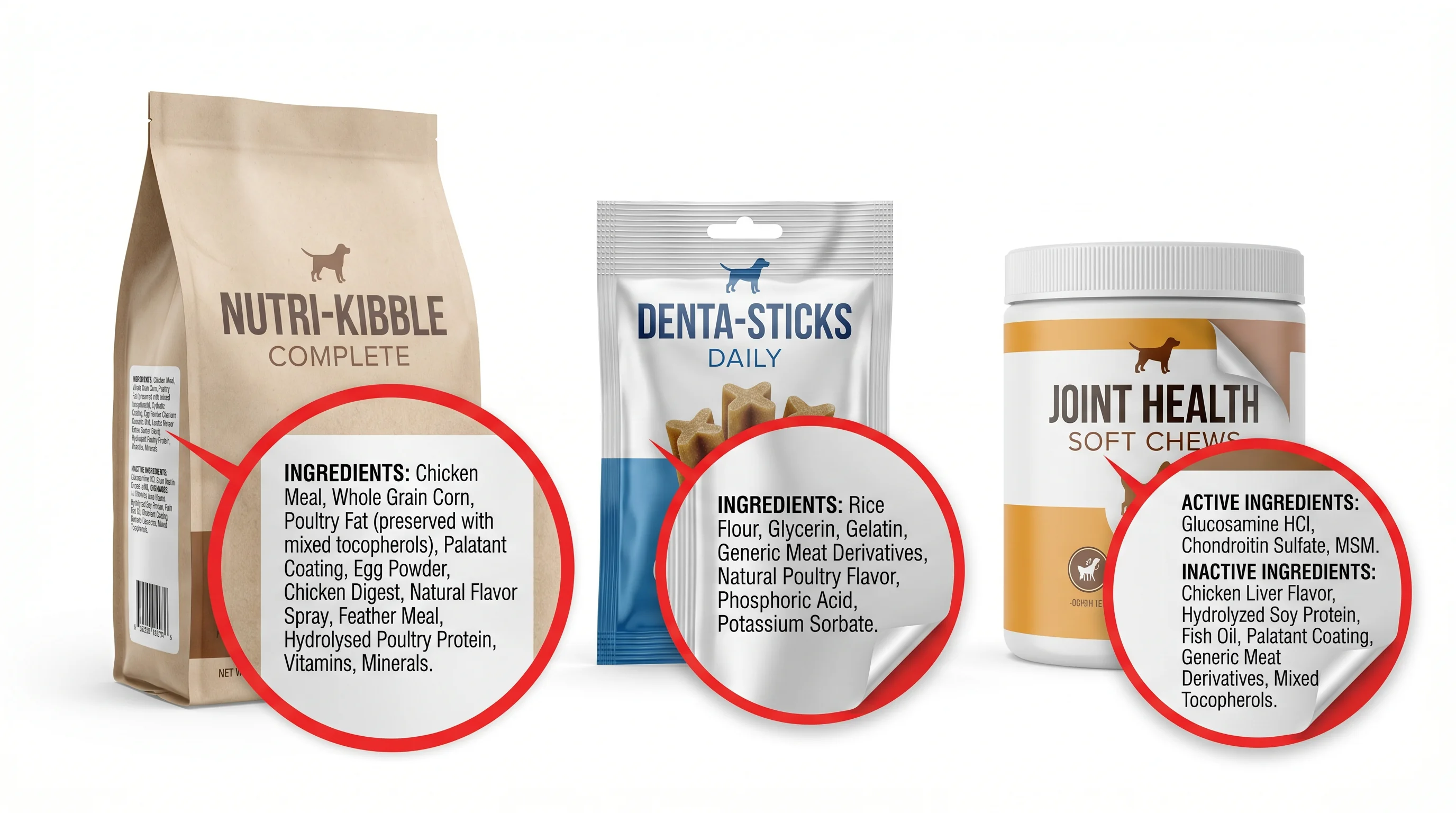
Watch for hidden chicken ingredients such as poultry fat, chicken meal, chicken digest, hydrolysed poultry protein, feather meal, egg powder, and generic “meat derivatives.” Even purified fats may retain trace proteins that matter in sensitive dogs.[2]
Non‑food items: supplements, palatants and sprays
Palatant coatings, flavour sprays, and soft chews for supplements may include poultry digests. Training treats, dental sticks, and toppers often use mixed meat derivatives. When in doubt, ask manufacturers about species specificity, shared equipment, and allergen controls.
Quick decision guide: if X, do Y
5–7 situations and clear actions for safe choices
- If a label lists “poultry” generically, choose a named, single-species product instead.
- If itching increases after a new treat, stop immediately and document timing.
- If hydrolysed poultry is present, select a non‑poultry, single-protein option for trials.
- If facilities process chicken and beef, request written allergen controls or switch brands.
- If a daycare or trainer uses treats, supply your own chicken free dog treats.
- If progress stalls, simplify to one verified protein and water only for 3–5 days.
- If severe gut signs emerge, contact your vet and pause all novel items.
How to choose alternatives more safely: single proteins and traceability
Recommended single proteins (buffalo, lamb, fish, rabbit)
Single-protein dog treats made from non‑poultry species reduce variables. Buffalo, lamb, fish, and rabbit are frequent choices for hypoallergenic dog treats UK seekers. Learn more about suitability in Is Buffalo a Good Novel Protein for Dogs with Food Allergies?. As an example during trials, some owners use Buffalo Meat Jerky - Dog Treats because it is a defined, single protein.
Label checks: composition, analytics and manufacturing
Confirm the composition lists only one named animal protein with no poultry derivatives. Review analytical constituents for fat levels that match your dog’s needs. Ask about manufacturing lines and cleaning protocols. For deeper guidance, see How to Read Dog Treat Labels for Allergy Safety.
Practical safety boundaries
Transition and quantities
Introduce any new single-protein treat gradually over 3–5 days. Most dogs do best when treats stay below 10% of daily calories. Break larger items into measured portions. Offer water only during trials to simplify interpretation.
Common risks to avoid (cooked bones, excessive fat)
Avoid cooked bones due to fracture and obstruction risks. Be cautious with fatty skins and trimmings, which may trigger digestive upset. Choose air‑dried or gently baked low‑fat options when managing sensitive stomachs and skin.
What to monitor and when: 7–14 days and 4–8 weeks
Early indicators of tolerance
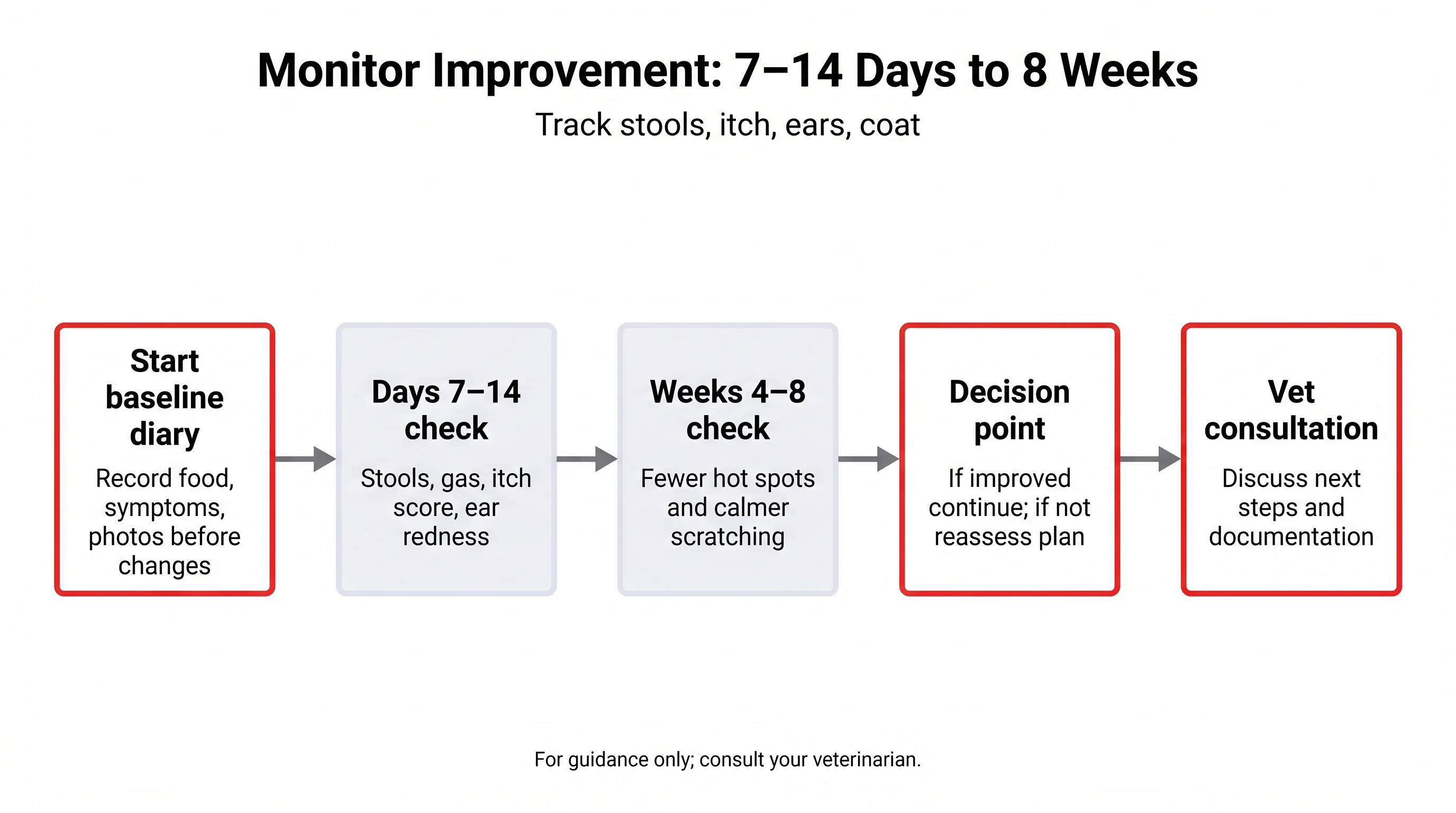
Within 7–14 days, watch stool consistency, gas levels, and itch intensity. Keep a daily diary with a 0–10 itch score and note ear redness, paw chewing, and sleep quality. Many veterinarians rely on structured elimination and re‑challenge for clarity.[1]
Medium‑term progress markers
Over 4–8 weeks, look for fewer hot spots, calmer nighttime scratching, and improved coat gloss. Ear debris should reduce and stools normalise. When stability holds, plan controlled reintroduction steps to confirm triggers and broaden options gradually.
State of the evidence
What the literature suggests about canine food allergies
Veterinary literature supports elimination diets and structured challenges as core tools for diagnosing food hypersensitivity in dogs.[1] Studies have also identified undeclared chicken DNA in some dog foods, indicating hidden exposure risks that complicate trials.[2]
Where evidence is limited or individual‑dependent
Allergy tests, including prick and patch formats, can assist but vary by dog and require confirmation via diet and challenge.[3] Antigen‑specific IgE profiles suggest possible cross‑reactivity across poultry species, reinforcing a cautious non‑poultry approach during trials.[4]
Chicken‑free purchasing checklist
Final steps before adding a new product
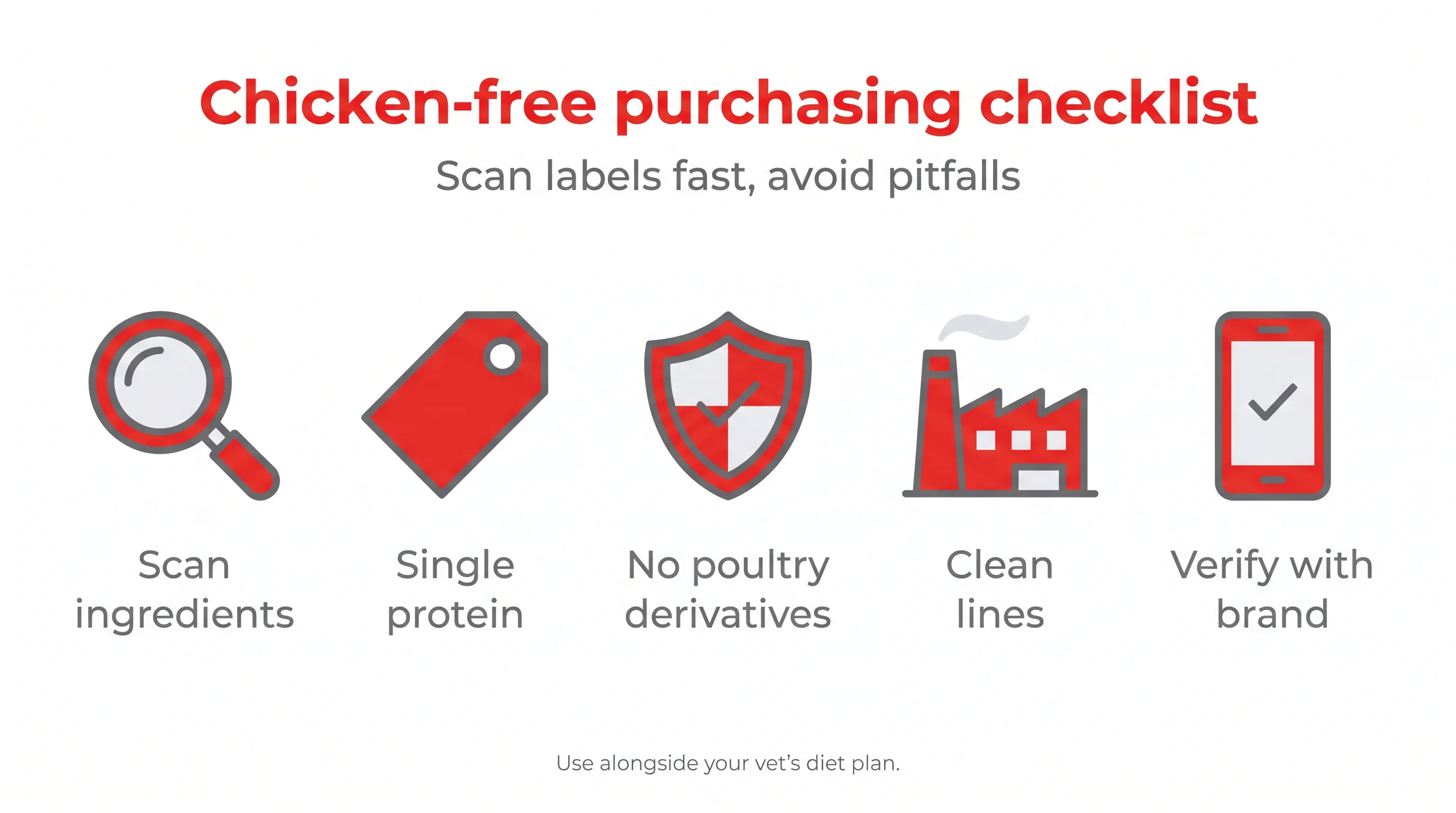
- Confirm a single named species with no generic “poultry,” “meat,” or “animal” terms.
- Verify no chicken fat, digest, hydrolysates, egg, or feather meal.
- Ask about shared lines, allergen cleaning, and supplier traceability.
- Start with a small pack and test in isolation from other variables.
- Record stool, itch, ears, and any changes over two weeks.
- Retain batch codes and receipts for follow‑up with the manufacturer.
Related resources
Return to the food allergies orientation hub
For broader context on diagnosis, trial structure, and long‑term planning, visit our food allergies orientation hub. You can also explore label reading and elimination tips linked above to support a safer, simpler path forward.
Frequently Asked Questions
What ingredients hide chicken in dog foods and treats?
Look for terms like poultry fat, chicken meal, chicken digest, hydrolysed poultry protein, egg powder, feather meal and generic meat derivatives. Flavour sprays and palatants may also contain poultry.
How long should a chicken elimination trial last?
Many vets suggest a strict single‑protein, chicken‑free trial for 6–8 weeks. Some dogs show changes in 2–3 weeks, but skin issues often need longer to settle.
Are buffalo treats suitable for chicken‑sensitive dogs?
Buffalo is a single, non‑poultry protein and may suit many dogs. Check labels for cross‑protein contamination, added palatants, or mixed‑protein facilities.
Can dogs react to poultry fat if it’s purified?
Some dogs may still react because trace proteins can remain. If sensitivity is suspected, choose products that specify non‑poultry fats and single‑protein sourcing.
Is hydrolysed poultry protein safe for sensitive dogs?
Hydrolysis may reduce allergenicity, but not all dogs respond the same. If previous reactions occurred, consider non‑poultry, single‑protein options during trials.
Conclusion
Managing chicken sensitivity is about clarity, not complexity. Strip out hidden poultry derivatives, reduce cross‑contact, and rely on verified single proteins. Monitor methodically and adjust with care. With precise label checks and cautious trials, most owners can identify safer, consistent options for their dogs.
References
- HA Jackson (2023). Food allergy in dogs and cats; current perspectives on etiology, diagnosis, and management. Journal of the American Veterinary Medical …. View article
- W Biel et al. (2022). Detection of chicken DNA in commercial dog foods. BMC veterinary …. View article
- J Possebom et al. (2022). Combined prick and patch tests for diagnosis of food hypersensitivity in dogs with chronic pruritus. Veterinary …. View article
- SA Baumann et al. (2020). Food antigen-specific IgE in dogs with suspected food hypersensitivity. … Praxis Ausgabe K …. View article