

Diet, protein sources and additives: what’s making your dog’s breath worse?
Diet, protein sources and additives: what’s making your dog’s breath worse?
Bad breath often starts in the bowl, not the toothbrush. Subtle choices around proteins, starches, fats and additives can shift mouth odour quickly.
Understanding these triggers matters because diet interacts with oral bacteria and plaque. This guide pinpoints likely culprits and shows how to run a safe, focused elimination trial for fresher breath.
Why diet can change breath odour
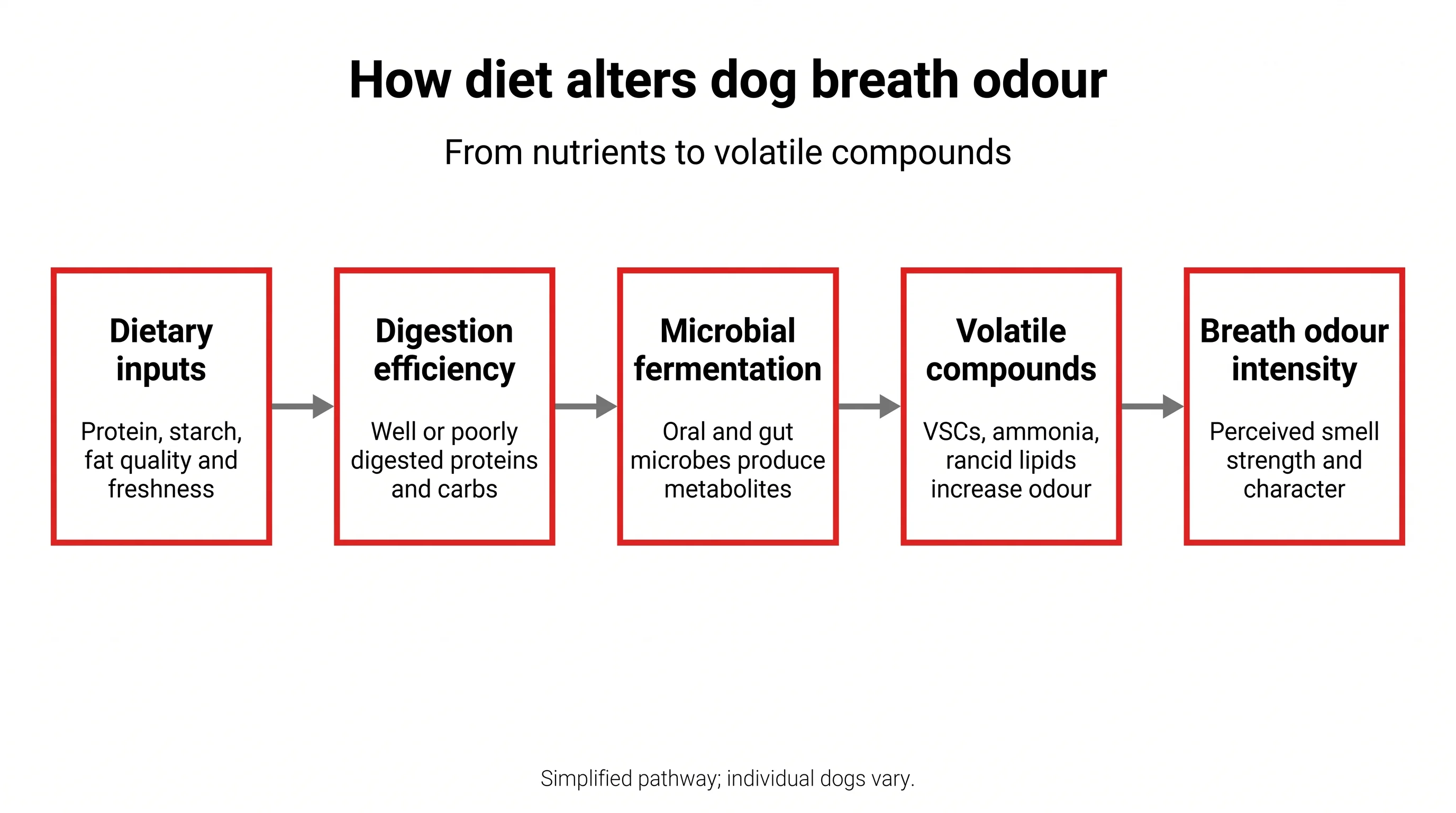
Diet influences the substrates oral and gut microbes ferment. Specific nutrients can leave residues or create volatile compounds that smell fishy, sulphurous, rancid or sweet.
Protein quality vs. quantity: ammonia and sulphur notes
Poorly digested proteins may increase ammonia and volatile sulphur compounds. Higher-quality, single-source proteins for dogs and breath control often reduce these odours without cutting essential amino acids.
Starch residues and oral bacteria
Sticky, fermentable starches coat teeth and fuel bacteria that build plaque. This can intensify halitosis, particularly with high starch dog food halitosis patterns after meals.[4]
Fats, oxidised oils and rancid odours
High-fat diets or snacks can raise mouth-coating lipids. Oxidised oils contribute rancid notes; fresher, lower-fat choices may reduce lingering oily films.
Artificial flavours, sweeteners and colourants
Additives causing dog bad breath often relate to sweet, sticky matrices or intense palatants. Some dogs show sensitivity to colourants or strong flavour blends that alter saliva and plaque dynamics.
Spot the culprits: common dietary triggers
Map odour notes to ingredients and timing. Then adjust one lever at a time to confirm cause and effect.
Fish meals and fish oil timing (fishy notes)
Fishy breath in dogs diet trials often spikes after fish-heavy meals. Oxidised fish oil or dosing near brushing can accentuate temporary fish notes.
Low‑digestibility proteins and offal balance
Rendered meals or excess offal may increase sulphur compounds. Switching to higher-digestibility, single-protein foods can temper rotten-egg odours without sacrificing protein adequacy.
High‑starch kibble dust and soft treats
Powdery kibble dust clings to teeth and feeds plaque. Soft, high-starch treats create persistent films that amplify sweet or yeasty smells post-meal.[1]
Sugar alcohols and intense flavour blends
Polyols and strong palatants can alter mouthfeel and odour. Some combinations intensify sweetness or maskier notes without reducing bacterial drivers.
Quick decision guide
Use this snap logic to choose your first adjustment. Then confirm with a short, controlled trial.
If breath smells fishy soon after meals, then reduce fish inputs and separate fish oils from dental time
Limit fish meals to two or three per week and refresh oils frequently. Dose oils away from brushing and chewing to avoid compounding temporary fish odour.
If breath smells like rotten eggs, then trial higher‑digestibility single‑protein foods
Choose a clearly named protein with minimal by-products. Monitor for reduced sulphur notes and steadier stools that indicate improved digestibility.
If breath is yeasty or sweet, then cut soft, high‑starch treats and brush daily
Swap sticky snacks for air-dried options that do not paste onto teeth. Pair with daily brushing and textured chews to disrupt plaque films.[3]
If breath worsens on new colourful treats, then choose additive‑light, natural options
Drop bright colours and heavy palatants for simpler ingredient decks. This may reduce lingering artificial notes and sticky residues.
If dog is on high‑fat snacks, then switch to lean, air‑dried proteins
Prefer low fat high protein dog treats with under 10–12% fat as fed. Lean, air-dried textures minimise greasy films and promote mechanical cleaning.
If plaque builds despite brushing, then add textured dental chews and increase water intake
Evidence suggests dental chews can reduce halitosis and shift oral microbiota favourably. Ensure fresh water access to support saliva and rinse effects.[1][4]
If vomiting, drooling or severe halitosis appears, then seek vet assessment before diet trials
Sudden or intense odour can signal dental disease or systemic issues. Prioritise professional examination before making dietary changes.
Run a safe 2–4 week elimination trial
Keep the plan simple. Change one major variable and standardise the rest to reveal clear patterns.
Choose one base protein and keep everything else consistent
Select a single, named protein with clear sourcing. Maintain the same brand, format and feeding times for the trial period.
Remove high‑starch, sticky treats and strong flavours
Eliminate soft chews, bakery-style bites and colourful snacks. This limits fermentable residues and removes confounding palatants.
Use simple, low‑fat, single‑ingredient chews
Air-dried meats or plant-based dental textures can assist without pasting the teeth. Many owners find Gently Dently- Fresh Breath Mint Dental Treats useful between brushings to reduce plaque films.
Track breath, stool, skin and energy daily
Use a 0–5 odour scale, note post-meal spikes and stool changes. Stability indicates tolerance; improvements suggest the trigger was correctly identified.
Monitoring guidance: what to watch
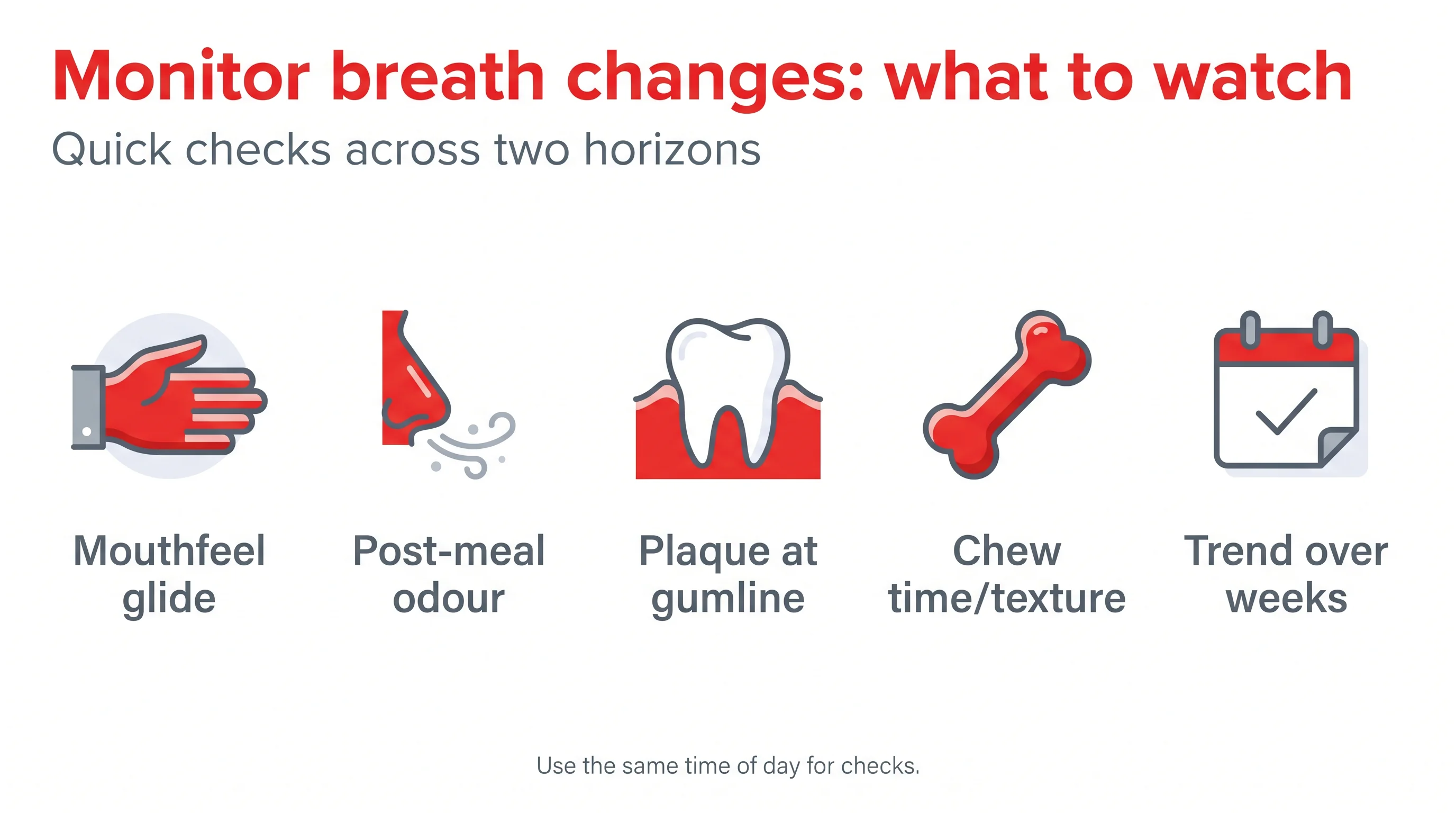
Measure progress at two horizons. Short-term mouthfeel changes and medium-term plaque trends both matter.
After 7–14 days: plaque feel, odour intensity, post‑meal spikes
Gently feel incisor edges for slime versus clean glide. Note whether odour peaks immediately after meals reduce with lower starch and improved textures.[3]
After 4–8 weeks: sustained odour change, tartar build‑up, GI tolerance
Assess whether fresh-breath gains hold across weeks. Confirm tartar accumulation slows and stools remain consistent, indicating good digestibility and tolerance.[4]
Record‑keeping: odour scale, food log, chew usage, brushing frequency
Log protein source, fat level, starch type and additives. Include chew duration and brushing days to link behaviours with odour outcomes.[1]
Practical safety boundaries
Fine-tune safely. Protect digestion and teeth while you test changes methodically.
Avoid abrupt changes in dogs with pancreatitis risk; prefer low‑fat
Transition over 5–7 days, keeping dietary fat modest. Choose lean proteins and avoid rich trimmings or oily extras during trials.
Introduce one change at a time; maintain complete nutrition
Do not drop essential nutrients while testing odour. If using home-prepared food, consult a vet nutritionist to meet all requirements.
Supervise chews; choose appropriate size and hardness
Match chew density to jaw strength to reduce fracture risk. Supervise sessions and remove small fragments to avoid choking.
Hydration and dental hygiene alongside diet changes
Encourage water intake and daily brushing for additive benefits. Chewing plus brushing shows greater halitosis improvements than kibble-only diets in controlled trials.[3]
When to pause and consult a vet
Stop trials if pain, bleeding gums, weight loss or persistent vomiting occur. Seek assessment for dental disease or systemic causes before resuming changes.
What the evidence suggests
Research informs practical steps. While each dog is individual, trends help guide choices and expectations.
Oral bacteria thrive on fermentable carbs; texture aids mechanical cleaning
Chews can disrupt plaque and reduce halitosis compared with kibble-only controls. Texture-driven abrasion and altered microbiota may contribute to improvements.[4][1]
Protein digestibility may influence volatile sulphur compounds
Higher-quality proteins appear to reduce sulphurous notes by limiting putrefactive substrates. Selection of digestible protein sources may support fresher breath.
Oxidised fats can contribute to rancid odours
Storing oils carefully and choosing lower-fat snacks may reduce rancid mouth odours. Minimising oxidised lipids limits lingering greasy films.
Additives and palatants: mixed evidence; individual sensitivity varies
Some botanicals, like green tea extracts, can inhibit periodontal pathogens and reduce halitosis in studies. Responses vary, so monitor individual outcomes.[2]
Ingredient checklists and label reading
Target clarity and simplicity. Transparent sourcing and straightforward formulations reduce guesswork when you troubleshoot breath odour.
Analytical constituents to prioritise
Look for moderate protein with named sources, controlled fat and low ash. Aim for simple carbs and reasonable fibre to avoid sticky, fermentable residues.
Red flags: vague meals, sugar alcohols, colourants
Be cautious with “meat and animal derivatives,” heavy palatants and bright dyes. Polyols and syrups can create sticky matrices and sweet residues.
Better choices: single‑protein, air‑dried, low‑fat treats
Single-ingredient, air-dried options assist cleanliness by reducing stickiness. These protein sources for dogs and breath hygiene often pair well with daily brushing routines.
How natural buffalo treats may fit
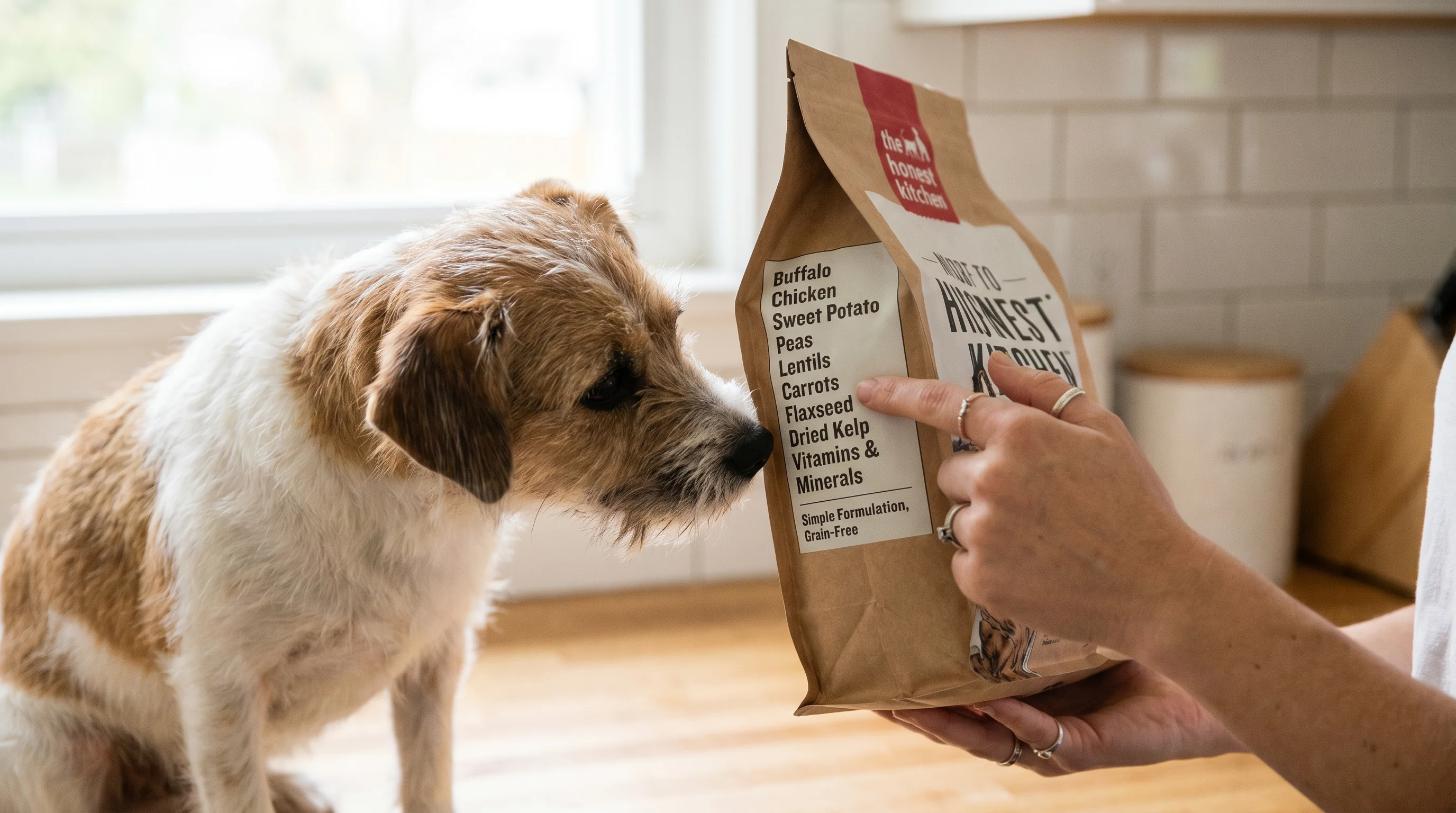
Natural, air-dried buffalo options typically deliver dense protein with less surface stickiness. Their texture can encourage chewing time and assist with plaque disruption.
High‑protein, typically lower‑fat options for cleaner chew sessions
Lean buffalo cuts may support odour control compared with oily snacks. Reduced fat limits rancid films while preserving satisfying chew time.
Air‑dried texture and simpler ingredient decks
Air-drying concentrates flavour without heavy palatants or colours. Simpler inputs reduce confounding additives when you test dietary odour triggers.
Frequently Asked Questions
Can high‑starch diets make my dog’s breath worse?
Evidence suggests fermentable carbohydrates may fuel oral bacteria and plaque. Reducing sticky, high‑starch foods and improving dental hygiene may support fresher breath.
Do fish oils cause fishy dog breath?
Fish oils can leave a temporary fishy note, especially if oxidised or given near brushing time. Using fresh products and dosing away from dental care may help.
Is bad breath always a diet problem?
No. Gum disease, retained baby teeth, GI issues and systemic illness can contribute. If odour is severe, sudden or persists despite trials, seek veterinary assessment.
Which treats are less likely to stick to teeth?
Air‑dried, single‑ingredient, low‑fat protein treats tend to be less sticky than soft, high‑starch snacks. Texture that encourages chewing may support plaque reduction.
How long should an elimination diet for breath last?
A 2–4 week focused trial may show early changes, with 4–8 weeks providing a clearer pattern. Adjust one variable at a time and keep records.
Conclusion: pull it all together
Odour shifts usually trace back to a few levers: protein digestibility, starch stickiness, fat freshness and additive load. Adjust one factor, track outcomes, and then re‑introduce strategically to confirm causality. Build support with brushing and textured chews, and record clear before‑and‑after notes. For a broader map of causes, risks and decision steps, revisit our root causes and prioritisation framework. With methodical changes and careful monitoring, fresher breath becomes a repeatable result rather than a lucky streak.
Further reading: Explore daily care approaches in Build a Daily Dental Routine for Dogs: Brush, Chew, Treat, compare chew options in Natural Chews vs. Synthetic Sticks: Safer Choices for Fresher Dog Breath, and understand deposits in Plaque vs. Tartar in Dogs: What’s Causing the Smell and How to Reduce It. For quick wins, try The 7‑Day Fresh‑Breath Plan: At‑Home Checks and Quick Wins.
References
- PM Oba et al. (2021). Dental chews positively shift the oral microbiota of adult dogs. Journal of animal …. View article
- C Ohira et al. (2025). … green tea significantly inhibits the growth of periodontal pathogen Porphyromonas gulae and ameliorates the gingivitis and halitosis caused by periodontal …. International …. View article
- PM Oba et al. (2024). Effects of a novel dental chew on oral health outcomes, halitosis, and microbiota of adult dogs. Journal of animal …. View article
- MQ Carroll et al. (2020). Effects of novel dental chews on oral health outcomes and halitosis in adult dogs. Journal of animal …. View article