

Food Allergies in Dogs: The Owner’s Orientation Guide
Food Allergies in Dogs: The Owner’s Orientation Guide
Food allergies can be confusing, emotional, and expensive. You are not alone in seeking clarity.
Getting the basics right saves time and protects your dog’s comfort. This guide shows what to prioritise, how vets typically proceed, and how to choose safer treats and foods with confidence.
Start here: what to prioritise first
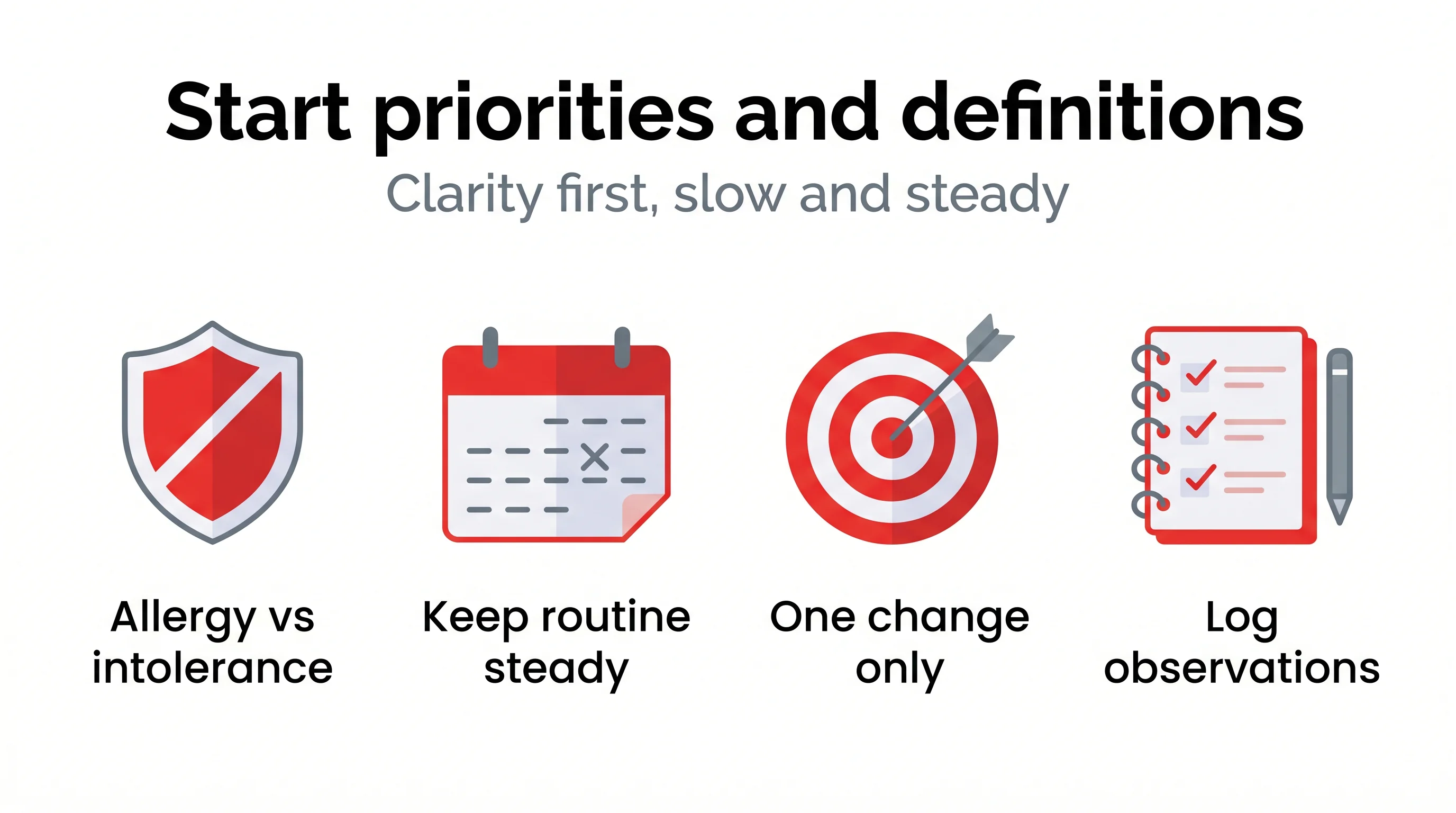
Begin by distinguishing Food allergy vs food intolerance. Keep your dog’s routine steady while you gather observations. Make one change at a time, and record everything you feed, including treats and chews.
Understand: allergies vs intolerances are different; keep it simple first
Food allergies involve the immune system. Intolerances are non-immune reactions. The early goal is clarity, not speed. Consistency across main meals and treats prevents confusion and helps your vet interpret patterns.
Do not: switch multiple foods or start supplements yet
Stacking changes makes patterns impossible to read. Hold off on supplements, flavoured medications, and new treats until you have a plan. Keep packaging and note exact product names for later review.
Top 3 actions now
- Stabilise the diet and treats; change only one variable at a time.
- Document dog food allergy symptoms, timing, and every ingredient fed.
- Book a vet check to align on a structured next step.
Route: link to Food allergy vs food intolerance: what’s the difference?
For quick diagnostic cues, read Food allergy vs food intolerance.
How to spot it (without over‑diagnosing)
Understand: typical signs cluster around skin, ears and gut
Dog food allergy symptoms most often appear as:
- Itching that does not follow seasons.
- Red paws, face rubbing, or recurrent ear infections.
- Soft stools, gas, or intermittent vomiting.
These signs overlap with other conditions. Confirming the cause requires a structured process rather than guesswork. In confirmed cases, non‑seasonal itch, otitis, and gastrointestinal signs are common presentations.[1]
Do not: assume one episode equals an allergy
Single bouts of diarrhoea, a random rash, or a day of scratching rarely prove an allergy. Patterns across time and exposures matter more than isolated incidents.
Route: link to Common signs of food allergies in dogs (itching, ear infections, soft stools)
Compare your observations with our checklist: Common signs of food allergies in dogs (itching, ear infections, soft stools).
When to see a vet (and what they’ll likely suggest)
Understand: vets rule out parasites and environmental triggers first
Veterinary teams typically start by excluding fleas, mites, skin infections, and environmental allergies. This avoids unnecessary diet changes and keeps the diagnostic path efficient and humane.
Do not: start elimination diets without a plan
An unstructured attempt risks false conclusions. Agree the protein source, treat policy, and review points with your vet before you start.
Route: link to Itch vs. tummy troubles: distinguishing food triggers from environmental ones
If your dog’s signs fluctuate with seasons or environments, consider this decision aid: Itch vs. tummy troubles: distinguishing food triggers from environmental ones.
Diagnosis pathway (overview, not a how‑to)
Understand: a structured elimination trial is the gold standard
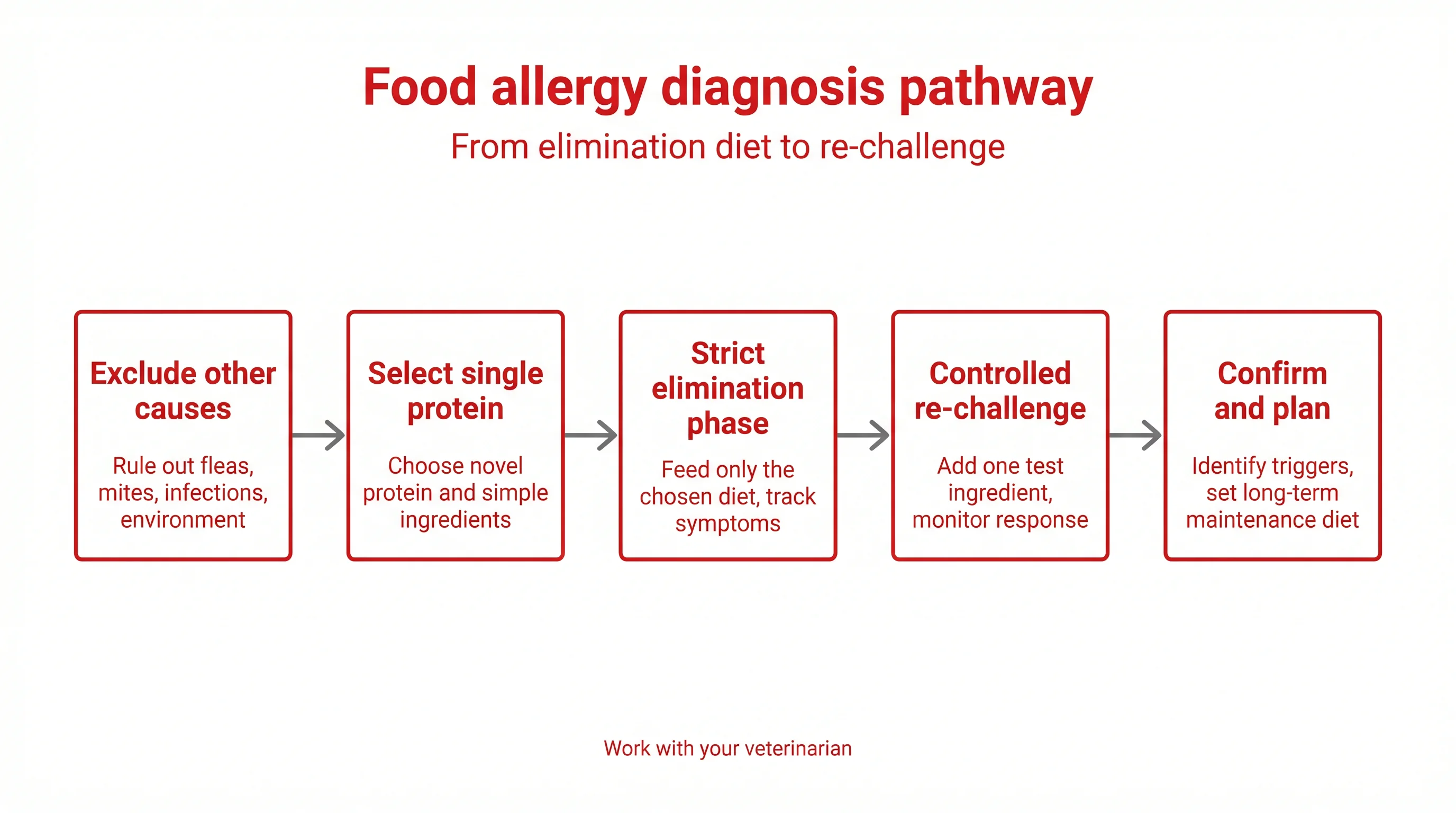
After ruling out other causes, veterinarians rely on an elimination diet followed by controlled re‑challenges to confirm a food allergy. This remains the practical diagnostic standard for dogs.[2]
Do not: mix proteins or change treats mid‑trial
Cross‑contamination and surprise ingredients derail results. Keep a single‑protein plan for food and treats, and verify flavourings in medications.
Route: link to How to start an elimination diet safely (with your vet)
For a stepwise framework, start here: How to start an elimination diet safely (with your vet). It explains selecting proteins, setting rules, and avoiding common pitfalls.
Feeding during trials: safer choices and label literacy
Understand: single‑protein, simple ingredient lists reduce risk
During an elimination diet for dogs, keep ingredient panels short and transparent. Choose single‑protein foods and novel protein dog treats that clearly match the planned diet. Some owners consider insect‑based options; early evidence suggests certain insects can be tolerated in allergic dogs, but individual responses vary.[3] A practical example is selecting buffalo‑only chews; many owners find Buffalo Meat Jerky - Dog Treats useful when they need a simple, single‑protein option.
Do not: rely on ‘hypoallergenic’ as a guarantee
“Hypoallergenic dog treats” is not a promise of zero risk. Manufacturing practices, flavour coatings, and ambiguous terms can mislead. Read labels, contact brands when unsure, and prioritise verified single‑protein products.
Route: link to Low‑risk treat choices during an elimination trial; Reading dog treat labels when your pet has allergies; Buffalo as a novel protein: when it helps, when it doesn’t
For practical selection rules, see Low‑risk treat choices during an elimination trial, and sharpen your label skills with Reading dog treat labels when your pet has allergies. Considering buffalo? Read Buffalo as a novel protein: when it helps, when it doesn’t.
Common triggers note: Poultry derivatives hide under many names. If chicken is suspect, review this guide: Managing chicken‑sensitive dogs: hidden poultry pitfalls.
After diagnosis: maintaining progress without over‑restricting
Understand: stable routines and controlled reintroductions matter
Once stable, add foods back one at a time with clear observation goals. Confirmation requires measured provocations, not guesswork, to prevent unnecessary long‑term restrictions and keep nutrition balanced.[2]
Do not: rush variety or add extras too quickly
Multiple reintroductions at once erase your ability to link cause and effect. Preserve clarity by changing only one element per phase.
Route: link to Transitioning off the elimination diet: reintroductions and long‑term maintenance
For a long‑term framework, read Transitioning off the elimination diet: reintroductions and long‑term maintenance.

Common mistakes and misconceptions
Understand: popular myths that derail progress
- “A blood or hair test can diagnose food allergy.” These tests are unreliable for diagnosis in dogs; structured diet trials remain essential.[2]
- “Novel equals safe.” Any protein can become a trigger; novelty only reduces prior exposure risk.
- “Immunotherapy is a solved problem.” Experimental approaches such as sublingual immunotherapy show promise, but evidence is preliminary and not yet standard care.[4]
Do not: chase quick fixes or over‑supplement
Excess supplements, frequent food changes, and vague “sensitivity” kits often confuse the picture. Commit to a plan with your vet and stay consistent to generate reliable answers.
Frequently Asked Questions
What’s the difference between a dog food allergy and intolerance?
Allergies involve the immune system and often show as itchy skin or ear issues. Intolerances are non‑immune and more likely to cause digestive upset. A vet‑guided trial clarifies which it is.
Which foods most commonly trigger dog food allergies?
Common triggers include chicken, beef, dairy and some grains. Hidden poultry derivatives can also cause problems in sensitive dogs, so read labels carefully.
Do I need a special test to confirm a food allergy?
Blood or hair tests are unreliable for diagnosis. A structured elimination diet, planned with your vet, is considered the practical standard.
Can my dog still have treats during an elimination diet?
Yes, but only treats that match the chosen single protein and avoid cross‑contamination. Keep ingredient lists short and consistent with the trial diet.
How long until I see improvement after diet changes?
Timelines vary. Focus on consistency and one controlled change at a time. Your vet will advise on a reasonable review window for your dog.
References
- HA Jackson (2023). Food allergy in dogs and cats; current perspectives on etiology, diagnosis, and management. Journal of the American Veterinary Medical …. View article
- S Tiffany et al. (2019). Assessment of dog owners' knowledge relating to the diagnosis and treatment of canine food allergies. The Canadian …. View article
- CGL Cesar et al. (2024). An assessment of the impact of insect meal in dry food on a dog with a food allergy: A case report. Animals. View article
- D Matias et al. (2026). Food Allergy in Companion Animals: Integrating Traditional Diagnostics with Emerging Approaches. Applied Sciences. View article