

Food allergy vs. food intolerance in dogs: quick diagnostic clues
Food allergy vs. food intolerance in dogs: quick diagnostic clues
When your dog itches or has tummy upsets, it is hard to know what to change first. Acting on the wrong hunch can delay relief.
This post clarifies immune allergies versus non‑immune intolerances in dogs. You will learn home triage logic, a safe trial approach, and clear monitoring checkpoints. For a broader overview, start with our main guide to food allergies in dogs.
One decision: allergy or intolerance—how to triage at home
Immune vs non‑immune: what’s happening in the body
Food allergies are immune‑mediated adverse reactions, often driven by hypersensitivity to specific dietary proteins. They tend to cause itch, skin inflammation, and recurrent ear issues. Gastrointestinal signs may also occur, yet pruritus is common. Controlled food elimination and re‑challenge remain the reference approach to diagnosis in veterinary practice, because many laboratory tests lack reliability for definitive diagnosis[3].
Food intolerances are non‑immune reactions. They include enzyme deficiencies, such as lactose intolerance in dogs, or reactions to diet composition, like high‑fat meals. Intolerances typically cause digestive upset without immune‑driven itching. Serum or saliva antibody tests have low positive predictive value and are not recommended to diagnose adverse food reactions in dogs[4].
Typical symptom patterns owners can log in a week
Track timing and pattern. Canine food allergy signs often persist regardless of meal fat content and may include year‑round itching or ear debris. Gastrointestinal signs can appear as variable stool quality.
Dog food intolerance symptoms commonly cluster within hours of specific items. Watch for gas, urgency, diarrhoea, or audible gut sounds after rich leftovers, new treats, or dairy. Note which meals cause flare‑ups and which do not.
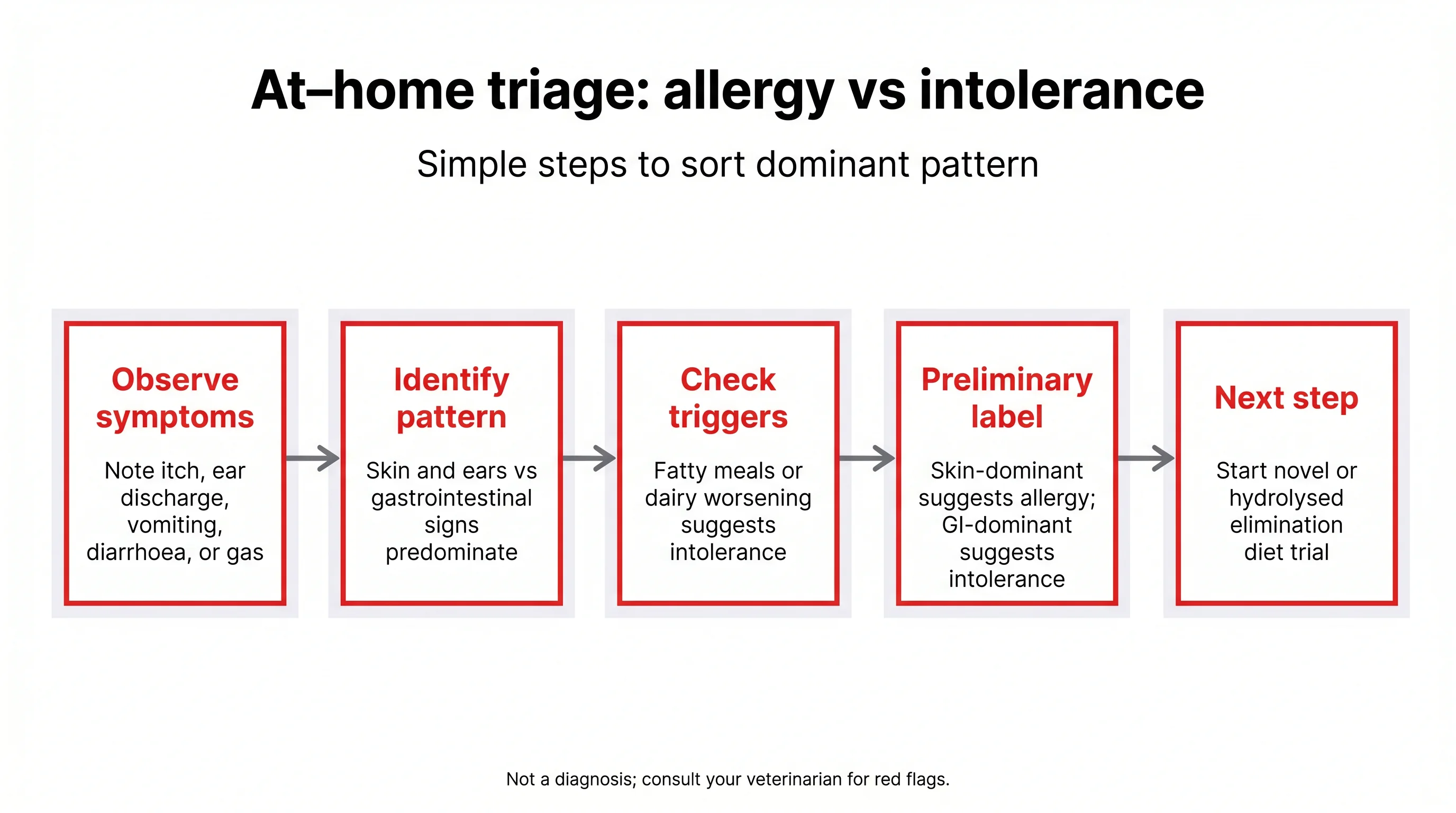
Quick decision guide: if X, then Y
Seven high‑yield scenarios owners face
- If itch worsens after any complete food, but fat level varies, suspect allergy. Begin a structured elimination trial and log changes.
- If diarrhoea or gas follows high‑fat scraps, lower fat and monitor. Choose low fat dog treats for sensitive stomachs while you assess.
- If soft stools follow milk or ice cream, consider lactose intolerance in dogs. Remove dairy for two weeks and reassess.
- If ears flare yet stools remain normal, think immune involvement. Discuss an elimination diet with your vet.
- If symptoms settle when fed a single brand and return with mixed treats, tighten control. Eliminate extras and retest.
- If skin signs wax and wane with seasons, investigate environmental triggers as well. Use a symptom diary to separate patterns.
- If vomiting or severe lethargy occurs after rich meals, stop fatty foods and consult your vet urgently.
How to run a low‑risk elimination trial
Choosing a novel or hydrolysed protein
Pick a protein and carbohydrate your dog has never eaten, or use a veterinary hydrolysed diet. The goal is to avoid immune recognition of previous triggers. Evidence supports elimination‑challenge as the most reliable diagnostic pathway for adverse food reactions in dogs[3].
For step‑by‑step structure, see our dog elimination diet guide: How to Run a Vet‑Supervised Elimination Diet for Your Dog. Choose a simple formula with clear labeling and no hidden proteins, and plan to feed it exclusively.
Keeping everything else constant (including chews and scraps)
Consistency makes or breaks the trial. Keep treats, chews, table scraps, supplements, and dental items aligned with the test protein or paused. Even small deviations can confound results and extend the process.
For compliant snacks, review Safe Treats During an Elimination Trial: What’s In, What’s Out. If in doubt, remove the item. Reintroduce it later in a controlled challenge phase only.
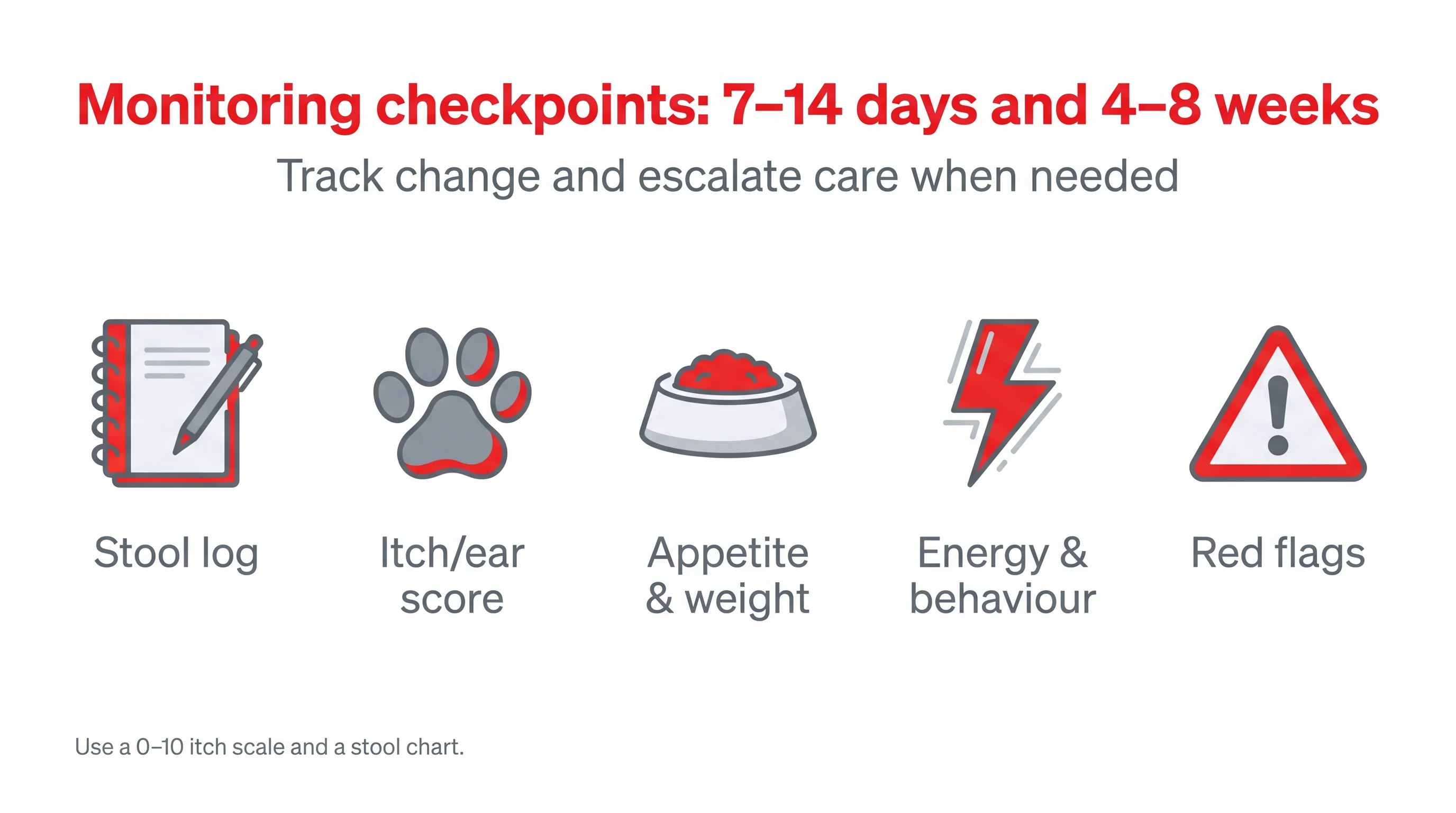
Monitoring: what to check at 7–14 days and 4–8 weeks
Short‑term GI checkpoints
Within 7–14 days, many intolerance‑related gut signs may improve if the trigger is removed. Monitor stool frequency, urgency, and consistency using a simple scoring scale. Track gas and burping across similar feeding windows.
Stable or improved stools suggest you are on the right track. Worsening diarrhoea, blood, or persistent vomiting requires a veterinary visit. Record exact foods, amounts, and timings to identify dose‑response patterns.
Skin and ear checkpoints over longer windows
Allergy‑related itch, skin redness, and otitis often require 4–8 weeks to assess meaningfully after diet change. Patience is essential. Veterinary literature indicates skin signs typically need several weeks before notable change is evident[3].
Rate daily pruritus on a 1–10 scale. Photograph problem areas weekly in consistent lighting. Reduction in flare frequency or intensity points toward dietary contribution.
Practical safety boundaries
When to stop the trial and call your vet
Stop and seek veterinary advice if there is persistent vomiting, diarrhoea with blood, severe lethargy, or abdominal pain. High‑fat intolerance may escalate into pancreatitis in susceptible dogs. Early assessment reduces risk.
If itch rapidly escalates or ear discharge becomes malodorous and painful, contact your clinic. Concurrent infections often need medical management alongside diet trials to avoid confounding outcomes.
Avoiding common pitfalls (hidden proteins, high‑fat triggers, dairy)
Hidden poultry or mixed fish proteins appear in some “flavour” listings. Read labels line‑by‑line and confirm cooking aids and capsules. To build confidence, consult How to Read Dog Treat Labels for Allergy Safety.
Minimise high‑fat triggers while testing. Trim fatty trimmings and avoid creamy sauces. For suspected lactose intolerance in dogs, exclude milk and opt for more tolerable options later, tested individually in small amounts.
Evidence snapshot: what’s well supported vs emerging
What veterinary literature supports today
Elimination‑challenge remains the diagnostic cornerstone for adverse food reactions, because clinical response to diet is more reliable than most testing panels in dogs[3]. Reviews highlight immune mechanisms behind many canine food allergies, with clinical correlation between specific allergens and signs in affected dogs[1].
Testing for food‑specific antibodies in saliva or serum has low predictive value and is not recommended as a standalone diagnostic tool for dogs[4]. Clinical trials consistently rely on diet restrictions and re‑challenge to confirm culpable ingredients.
Areas where evidence is developing
Combined skin prick and patch approaches have been explored for dogs with chronic pruritus. Early work suggests potential, yet false positives and variability limit routine use, so trials remain exploratory in practice[2].
Research is also developing around microbiome shifts and specific fat tolerances. Owners should expect refined guidance over time, but core elimination‑challenge methodology remains the most dependable clinical pathway.
Ingredient examples that may help sensitive dogs
Lower‑fat, single‑protein treats and why fat level matters
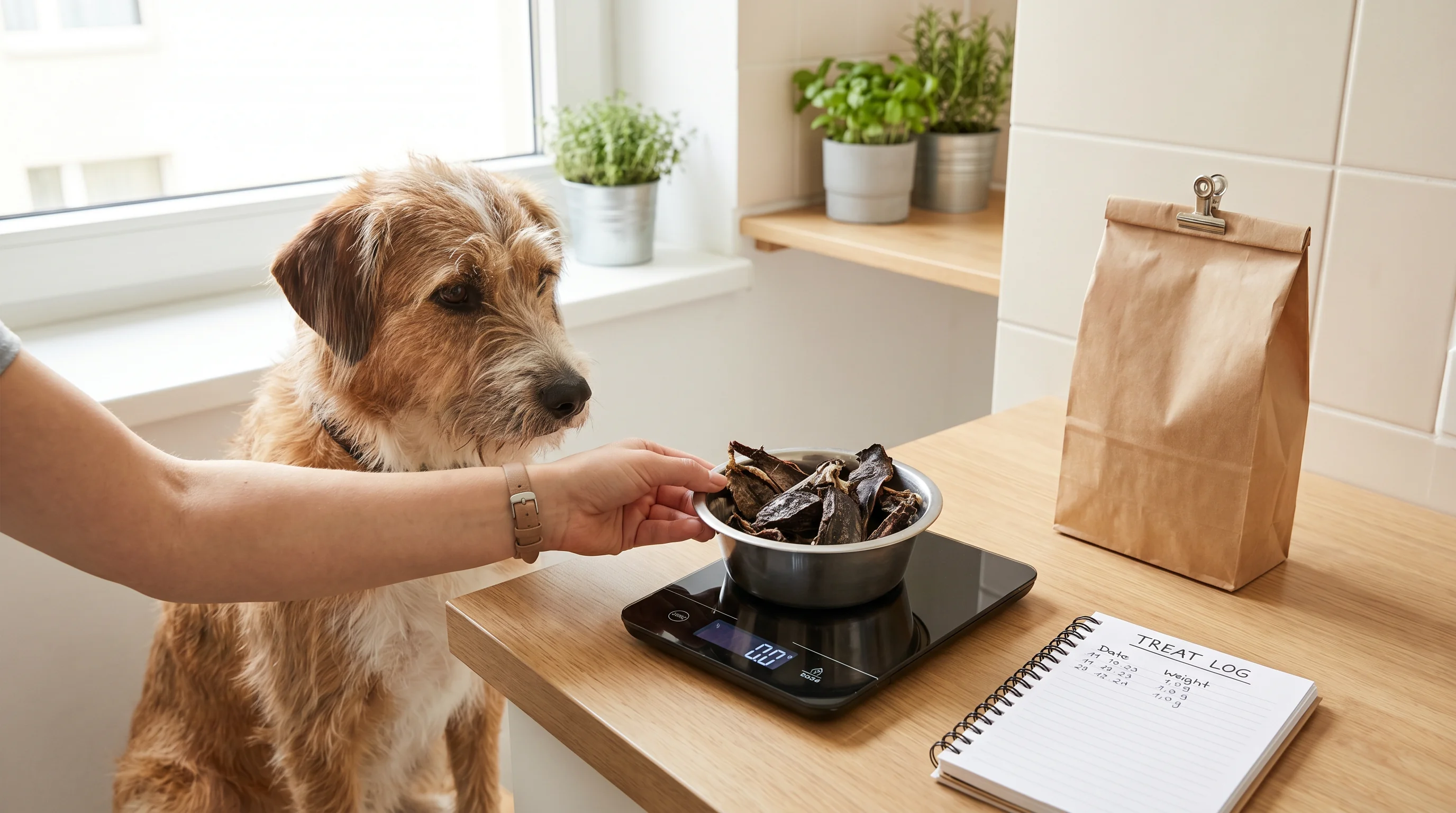
For sensitive stomachs, choose lower‑fat, single‑protein treats to reduce post‑snack diarrhoea risk. Keep ingredient lists short and transparent. A lean, air‑dried option can deliver protein without overloading fat metabolism.
Many pet owners find Buffalo Lung Steaks - Dog Treats helpful for this task, because their simple composition and light texture align with controlled trials while offering a high‑protein, low‑fat profile that may suit sensitive dogs.
Texture and dental options that are gentle on tummies
Light, crunchy textures are often easier on digestion than greasy chews. Select single‑protein dental options with modest fat and avoid added flavour coatings. Introduce one item at a time and watch for changes over 48 hours.
If trialing buffalo as a novel protein, review whether this species fits your dog’s history in Is Buffalo a Good Novel Protein for Dogs with Food Allergies?. Always match treat proteins to your chosen elimination diet.
Frequently Asked Questions
How can I tell if my dog has a food allergy or an intolerance?
Allergies often involve itching, skin or ear issues and can persist regardless of meal fat. Intolerances more often cause gut signs like diarrhoea or gas shortly after eating specific items, especially high‑fat meals or dairy.
How long should an elimination diet last for dogs?
Many vets suggest 6–8 weeks for skin signs to settle. Some gastrointestinal signs may improve within 7–14 days if the trigger is removed, but re‑challenge is needed to confirm.
Can dogs be lactose intolerant?
Yes. Many adult dogs produce less lactase, so milk and some dairy can cause gas or diarrhoea. Hard cheeses and yoghurt may be better tolerated, but responses vary.
Do high‑fat foods cause intolerance symptoms in dogs?
High‑fat meals may trigger diarrhoea or pancreatitis risk in susceptible dogs. If loose stools follow fatty scraps or rich treats, lower‑fat options may help while you consult your vet.
Should I stop all treats during an elimination diet?
Yes, unless a treat exactly matches the trial protein and carbohydrate or is a suitable hydrolysed option. Even small extras can confound results.
Summary: log, simplify, test—then step up care
Your next read: our main guide to food allergies in dogs
Distinguishing food allergy from intolerance starts with clear logs and strict simplicity. If GI signs track to fat or dairy, suspect intolerance. If itch persists across diets, prioritise an elimination trial.
Choose a novel or hydrolysed base, keep everything else constant, and monitor at 7–14 days and 4–8 weeks. If red flags appear, pause and consult your vet. When ready to reintroduce foods in a structured way, build your plan with Reintroduction After the Elimination Diet: Building a Long‑Term Plan. Consistency, patience, and precise observation will guide your next steps.
References
- HA Jackson (2023). Food allergy in dogs and cats; current perspectives on etiology, diagnosis, and management. Journal of the American Veterinary Medical …. View article
- J Possebom et al. (2022). Combined prick and patch tests for diagnosis of food hypersensitivity in dogs with chronic pruritus. Veterinary …. View article
- J Hardy et al. (2022). Diagnosis and management of adverse food reactions in dogs and cats. In Practice. View article
- LU Vovk et al. (2019). Testing for food-specific antibodies in saliva and blood of food allergic and healthy dogs. The Veterinary …. View article