

How to Read Dog Treat Labels for Allergy Safety
How to Read Dog Treat Labels for Allergy Safety
Allergic dogs need clarity, not guesswork. Labels can protect your dog or quietly hide problem ingredients. The difference is knowing exactly how to read what matters and ignore what does not.
This matters because small treats can derail elimination diets and trigger avoidable flares. Below you will learn a focused, step‑by‑step label‑reading framework for ingredients, single‑protein verification, derivatives terminology, analytical constituents, and additive flags. Visit our food allergy hub for dog owners for broader context and diagnostics.
Why label reading matters for allergic dogs
Hidden allergens and cross-contact risks
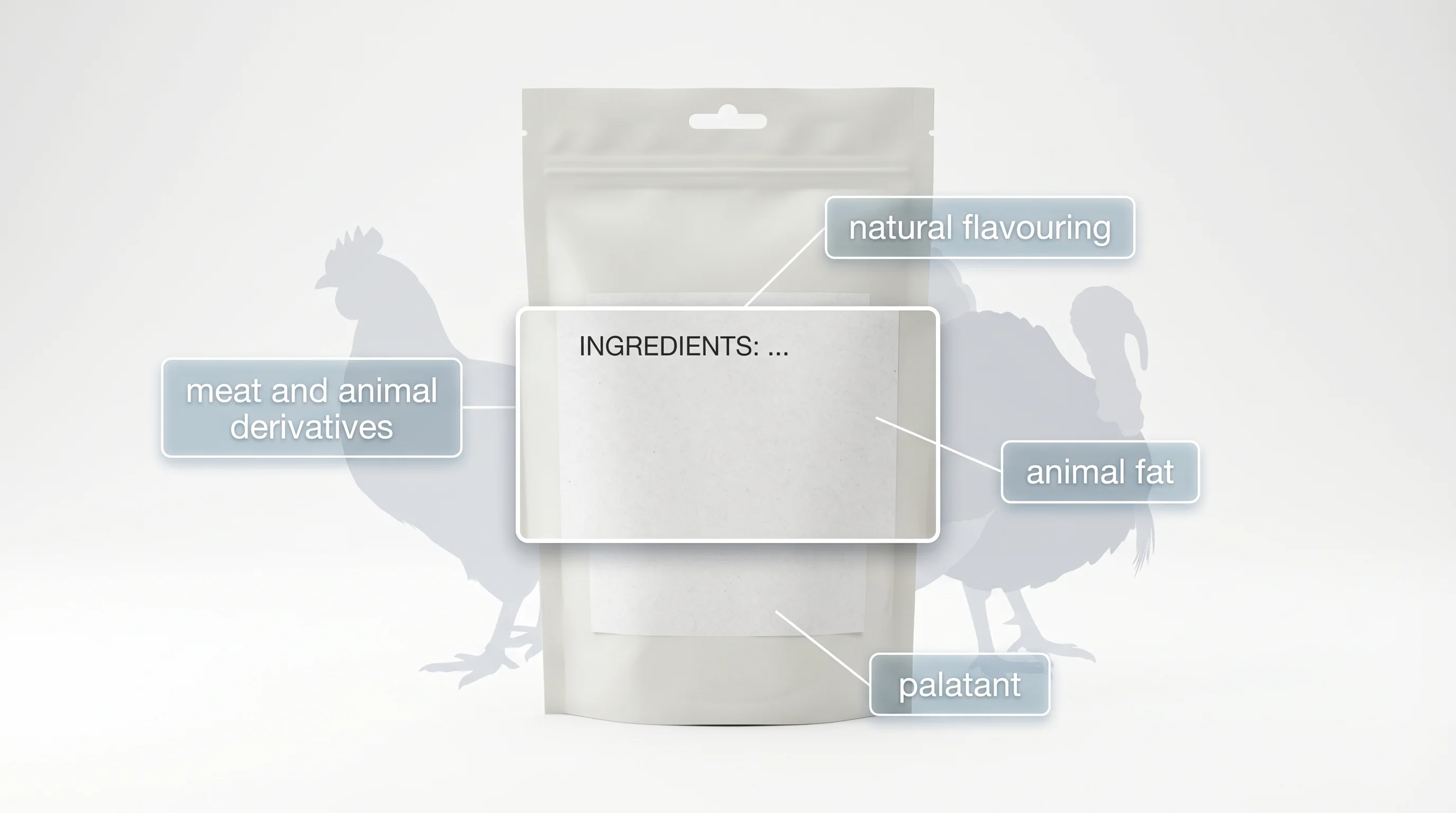
Many dog treat allergens are not obvious. Multi-species formulations, unnamed fats, palatants, and “natural flavourings” can introduce poultry or other proteins despite front‑of‑pack claims. DNA surveys have detected undeclared species in some pet foods, underscoring real-world cross-contact risks and the need for precise label scrutiny[1]. Owner surveys further show that problem ingredients may be detectable only through careful reading or manufacturer clarification, not casual scanning[3]. During strict elimination trials, guidelines emphasise that every edible exposure matters, including treats and chews, because minor lapses can confound diagnosis and prolong symptoms[2].
Link to the food allergy hub for dog owners in intro after first paragraph
For complete orientation on symptoms, diagnosis, and diet planning, start with our central guide: Food Allergies in Dogs: The Owner’s Orientation Guide. Use this article as a focused companion for label decisions.
The label-reading framework: step by step
Step 1: Confirm format and scope (treat vs complete food, country of sale)
Check if the product is a complementary treat or a complete food. Treats are not formulated for balanced nutrition and may carry looser formulation targets. Confirm the country of sale because labelling terms and permitted collective categories vary by jurisdiction, which influences how ingredients and additives are presented.
Step 2: Ingredient list order and thresholds (2% rule, compound ingredients)
Ingredients are listed in descending order by weight at mixing. In many markets, items at or below about 2% may be grouped or listed without exact percentages. Compound ingredients (e.g., “gravy”) can hide subcomponents. If a compound appears, request the sub-ingredient breakdown to assess risk accurately.
Step 3: Verify single-protein claims and spot multi-species wording
Single protein dog treats should name exactly one animal species across meat, fat, gravy, stock, and palatants. Watch for “poultry,” “meat meal,” “animal fat,” or “assorted proteins,” which signal multi-species risk. If chicken sensitivity is suspected, avoid generic “poultry” designations and consider resources on safer alternatives (chicken sensitivity overview).
Step 4: Decode ‘animal derivatives’ and ‘meat and animal derivatives’
Understand the animal derivatives meaning. These umbrella terms allow mixed or unspecified species and variable tissues. For elimination diets or known allergies, this ambiguity is problematic. Evidence and guidelines support choosing named single-species ingredients to reduce uncertainty during trials[2].
Step 5: Analytical constituents: what crude protein, fat, fibre, ash and moisture suggest
Analytical constituents dog food style panels describe macronutrient proportions, not specific proteins. High protein with moderate fat suggests a lean jerky, while high fat may not suit dogs with low fat tolerance. Elevated ash can indicate more mineral-rich tissues. These figures help predict digestibility and texture but cannot identify allergens[2].
Step 6: Additives and processing flags (colourants, flavourings, glycerin, smoke)
Review colourants, flavourings, humectants (e.g., glycerin), sugars, and smoke. Unspecified “natural flavouring” introduces ambiguity and may include animal sources. During elimination, guidelines favour ingredient minimalism and transparency; avoid non-essential additives that obscure species origins or complicate reaction tracking[2].
Step 7: Allergen red flags in common botanicals and binders (grains, yeast, legumes)
Check for wheat, maize, soy, pea protein, chickpea flour, yeast, and rice. These plant binders can complicate elimination diets and may trigger sensitivities in some dogs. If evaluating hypoallergenic dog treats, prefer simpler, grain-free formulas with named single-species proteins and no added plant binders where feasible.
Quick decision guide
If the first ingredient is your dog’s known safe protein, consider trial
When a named safe species leads the list, with no other animal fats or stocks from different species, it may suit a cautious test. Validate no “poultry fat,” “gravy,” or “derivatives” are present.
If label states ‘meat and animal derivatives’ without species, avoid
Unspecified derivatives increase ambiguity and batch-to-batch variability. For strict elimination or confirmed allergies, avoid umbrella terms and choose a product listing a single named species and, ideally, the specific tissue.
If there is ‘may contain’ or ‘assorted proteins’, avoid for strict elimination
“May contain” and “assorted” signals multi-line manufacturing or blended materials. That creates uncertainty about trace proteins. During elimination, pick formulations with dedicated species and minimal processing aids from other animals.
If glycerin, sugars, or flavourings are high in list, choose simpler option
Humectants and added flavourings can mask species sources and alter palatability. While not always harmful, they reduce transparency. Prefer single-ingredient or limited-ingredient treats without colourants or unspecified flavour systems.
If plant binders (wheat, maize, soy, pea protein) are present, avoid if suspected
When plant allergens are suspected, exclude common binders. If binders are necessary, ask the manufacturer for specifics. For strict elimination diets, select unbound, whole-part or dehydrated single-protein treats.
If analytical ash is unusually high for jerky, suspect mixed tissue; reconsider
Jerky made primarily from lean muscle typically has moderate ash. Elevated ash may indicate more bone or mineralised tissue content. This can signal less predictable sourcing or mixed anatomical parts.
If single-ingredient whole-part treat (e.g., buffalo ear) is listed, prefer for clarity
Clearly named whole-part items reduce ambiguity and often need no binders or flavourings. They help you verify species and part at a glance, simplifying allergy risk assessment during trials.
Monitoring: what to track after switching treats
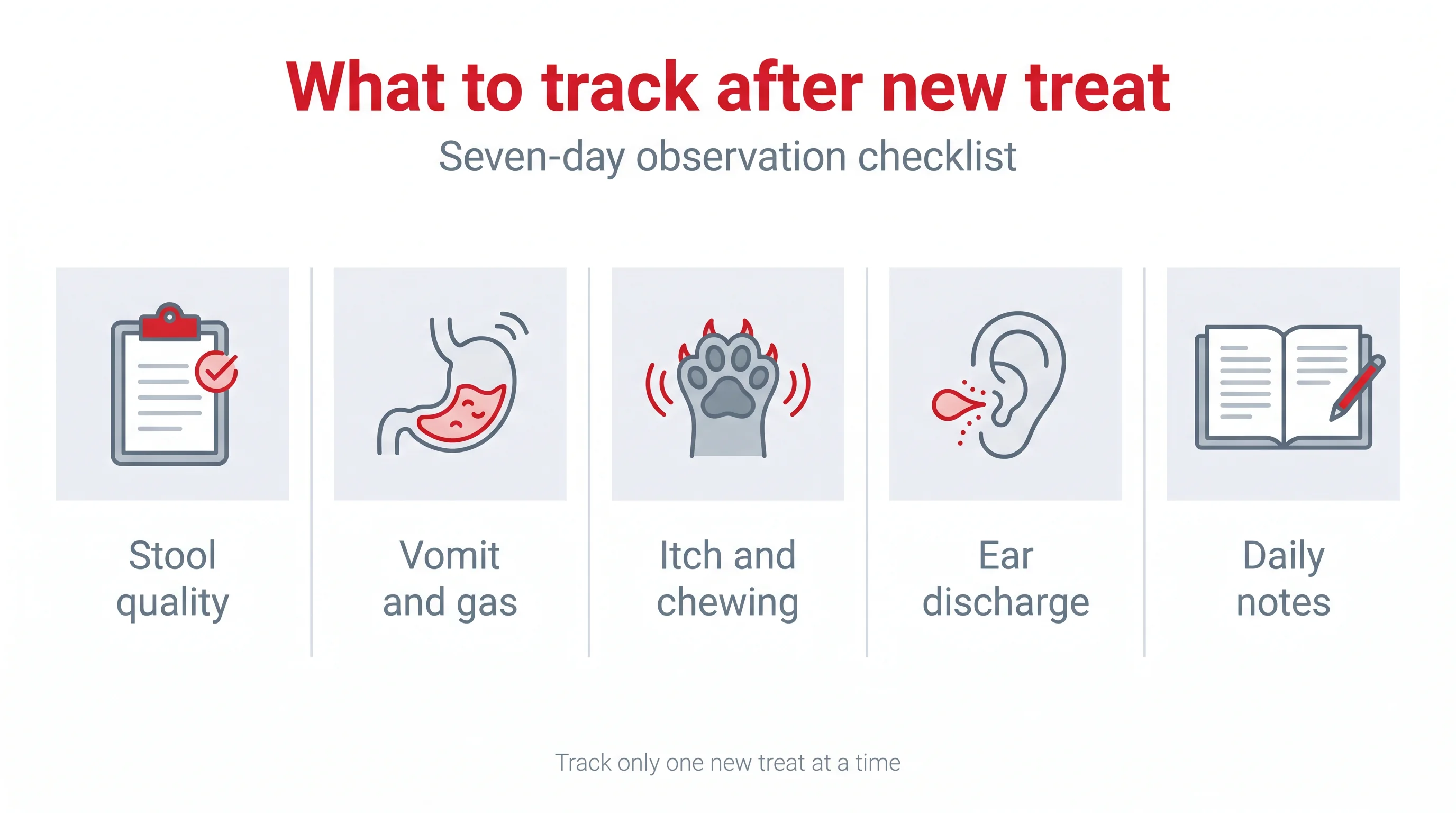
7–14 days: stool quality, itch intensity, ear/skin flare frequency, GI signs
Track stools, flatulence, vomiting, itch intensity, paw chewing, and ear discharge. Keep notes daily. Introduce only one new treat at a time to isolate effects. Guidance for strict elimination phases is outlined here: how to run a vet-supervised elimination diet[2].
4–8 weeks: body condition, coat quality, recurrence patterns, elimination diet integrity
Assess body condition, coat gloss, lesion recurrence, and pruritus trends. Sustained control suggests compatibility. For next steps, see advice on staged food challenges in reintroduction after the elimination diet[2].
How to log exposures (one new treat at a time, fixed portion, consistent timing)
Use a simple log: product name, species, portion size, time fed, and observed signs. Keep timing and portion fixed for comparability. For treat selection guardrails, refer to safe treats during an elimination trial.
Practical safety boundaries for allergic dogs
Single new treat introduction protocol (quantity, frequency, isolation)
Introduce one treat only, once daily for 3–5 days, at a modest portion suited to size and fat tolerance. Hold other variables steady. Many products list daily piece counts, but use clinical judgment[4].
Cross-contact minimisation (storage, scoops, bowls, hands)
Prevent cross-contact by separating storage, scoops, bowls, and preparation surfaces. Wash hands between foods. Avoid bulk bins or mixed treat jars. Ask manufacturers about dedicated lines or clean‑down procedures if risk is high[1].
Portion guidance by size and fat tolerance; water and chew supervision
Match portions to your dog’s size and fat tolerance indicated by analytical constituents. Provide fresh water and supervise chews to manage gulping risks. For additional tips on safe sizing, see safe treats during an elimination trial.
When to pause and seek vet advice (vomiting, diarrhoea, facial swelling, hives)
Stop the new treat and contact your vet if you observe vomiting, diarrhoea, facial swelling, hives, collapsing episodes, or persistent ear/skin flares. For differential insights, review itch or gut trigger patterns during assessment.
Evidence status: what is known and where caution applies
Evidence suggests named single-species ingredients reduce ambiguity
Guidelines consistently favour explicit species naming for elimination and long-term control because it reduces interpretive gaps and supports reproducibility during reintroductions and challenges. Detailed labels simplify clinical decision-making and owner compliance[2].
‘Animal derivatives’ can vary by batch; transparency may reduce risk
Umbrella categories like “meat and animal derivatives” can conceal batch variation and cross-contact risks. Evidence of undeclared species in some products supports a cautious approach favouring transparent, single-species sourcing and verified facilities[1].
Analytical constituents indicate macronutrient profile, not specific allergens
Crude protein, fat, fibre, ash, and moisture are nutritional descriptors. They help tailor fat load and texture but cannot reveal allergenic proteins or trace contamination. Use these values alongside explicit ingredient scrutiny[2].
Additives and colourants may correlate with sensitivity in some dogs; data are mixed
Owner reports and clinical caution guide avoidance of unspecified flavourings, smoke, and colourants during elimination trials. The evidence base is mixed, so minimal‑ingredient, species‑named options remain the pragmatic default until tolerance is proven[3].
Applying the framework to natural buffalo treats
What clear single-ingredient labels look like
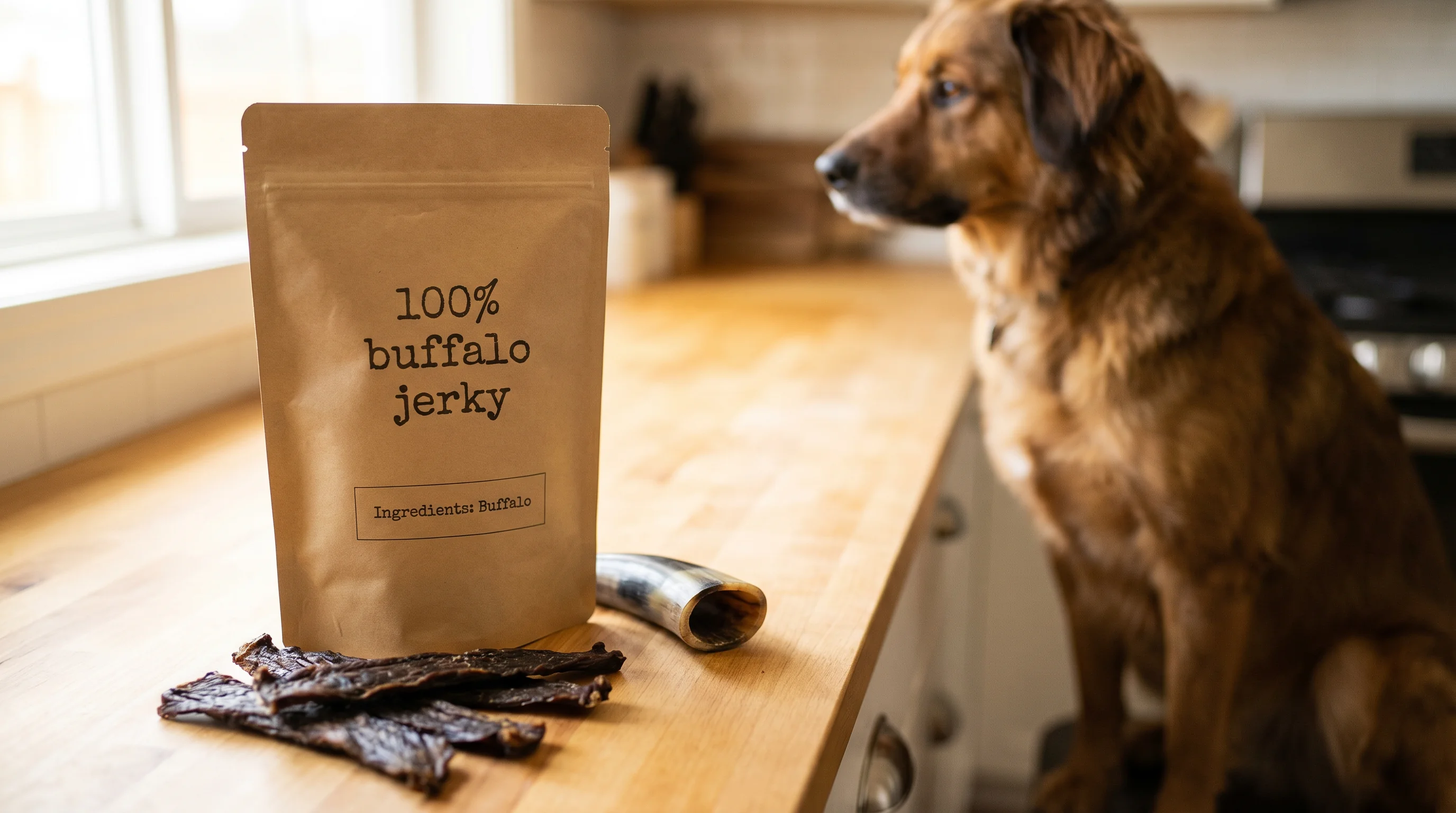
Look for labels reading “100% buffalo [part],” listing only “buffalo” as the animal source, without poultry fat, flavourings, or derivatives. Whole-part items such as buffalo ears or a named strip may deliver maximal species clarity for sensitive dogs.
How to compare jerky vs chews using constituents and additives
Jerky should show high protein, low-to-moderate fat, modest ash, and no added flavourings or glycerin for maximal transparency. Chews may show higher ash from cartilage or horn. As a practical example, many owners trial single-ingredient jerky such as Buffalo Meat Jerky - Dog Treats during reintroductions, while monitoring stool and itch patterns.
Examples of compliant phrasing vs vague formulations
Compliant: “Ingredients: Buffalo meat (100%). Additives: None.” Vague: “Meat and animal derivatives, flavourings.” When evaluating novel proteins, see is buffalo a good novel protein for dogs with food allergies? for strategic context on species choice and trial sequencing.
Frequently Asked Questions
Does ‘meat and animal derivatives’ mean multiple species?
Often yes. This EU/UK-allowed term can include mixed or unspecified species. For allergy management, evidence suggests choosing products that name the exact species and part.
Is a ‘single-protein’ claim enough for allergic dogs?
Check the full ingredient list to confirm only one animal species is named and there are no poultry fat, gravy, or stock from other animals. Cross-contact risk may still exist in mixed facilities.
Do analytical constituents show if a treat is safe for allergies?
They describe protein, fat, fibre, ash, and moisture levels, which may guide fat tolerance and texture expectations. They do not identify specific allergens or cross-contact.
Are natural flavourings or smoke a problem?
They may introduce ambiguity if the source is not specified. For strict elimination trials, many owners avoid unspecified flavourings and choose single-ingredient options.
How long should I trial a new treat for allergy safety?
Many vets suggest introducing one new treat at a time and observing for 7–14 days for immediate reactions, and up to 4–8 weeks to assess patterns during elimination diets.
Clear, repeatable label-reading habits help allergic dogs live more comfortably. Focus on named single-species ingredients, minimal additives, and transparent analytical panels. Combine careful selection with structured monitoring and veterinary guidance to build a reliable treat list, then expand methodically during reintroductions while protecting your dog’s progress.
References
- W Biel et al. (2022). Detection of chicken DNA in commercial dog foods. BMC veterinary …. View article
- J Miller et al. (2023). 2023 AAHA management of allergic skin diseases in dogs and cats guidelines. Journal of the …. View article
- A Yu (2019). Assessment of dog owners' knowledge relating to the diagnosis and treatment of canine food allergies. 2019 - academia.edu. View article
- R Grimes et al. (2024). Consumer Preference of a Novel Canine Treat in a Texas University Community. Pets. View article