

Is Buffalo a Good Novel Protein for Dogs with Food Allergies?
Is Buffalo a Good Novel Protein for Dogs with Food Allergies?
Choosing the right protein can make or break an allergy trial. Buffalo offers a lean, less common option that many owners have not yet considered.
This matters because correct protein selection reduces guesswork and flare-ups. In this guide, you will learn when buffalo truly counts as novel, potential benefits, and how to run a safe, measurable trial.
When Buffalo Counts as a Novel Protein
What “novel protein” means in practice
Novel protein means a meat source your dog has never eaten, even in trace amounts. It must be the only protein offered across meals, treats, and supplements.
In an evidence-based elimination approach, novelty reduces immune stimulation while you observe symptoms with care. The most reliable method is a strictly controlled, single-protein plan supervised by your vet, with clear reintroduction steps afterward[4].
For a novel protein dog diet, keep all treats aligned as single protein dog treats from the same source. This supports consistent tracking and clearer conclusions.
When buffalo may not be novel (cross‑reactivity and past exposure)
Buffalo may not be novel if your dog has eaten it before, or if food labels included “red meat” blends without detail. Past exposure, even brief, reduces novelty.
Cross-reactivity is another factor. Immune systems can recognise similar proteins across related species. Research in canine allergies shows cross-reactivity within some insect proteins, which illustrates the general risk across new protein sources[2].
Buffalo and beef are distinct species, but some sensitive dogs may still react. Treat buffalo as potentially novel, but introduce with caution and structured monitoring.
Potential Benefits and Nutrition Snapshot
Why buffalo may suit sensitive dogs (digestibility and fat profile)
Buffalo treats are typically lean, making them useful low fat high protein dog treats during weight control and elimination phases. Lean formats may be easier on digestion.
Because buffalo is less common in UK diets, it can serve as a novel option for many dogs. Lean, air-dried pieces often have fewer additives, which may reduce confounders in allergy trials.
As always, novelty and simplicity matter more than hype. Select plain, single-ingredient buffalo dog treats for allergies to limit variables.
Reading labels: confirming single‑protein, grain‑free options
Confirm the ingredient list states buffalo as the only animal protein. Avoid “meat and animal derivatives.” Check for added poultry oils, flavourings, or binding agents.
Choose grain-free if grains are under review in your plan. Scrutinise glycerine, smoke flavours, and mixed fats. For a deeper checklist approach, see How to Read Dog Treat Labels for Allergy Safety.
Traceability and simple compositions support your trial. Consistency across batches helps you maintain clear records and reduce accidental exposures.

Quick Decision Guide
If X, then Y: 6 common allergy scenarios and next steps
- If your dog has never eaten buffalo, consider a buffalo-based single protein treat trial for 6–8 weeks.
- If your dog reacts to beef, introduce buffalo cautiously. Monitor closely for any cross-reactive signs.
- If symptoms are severe or systemic, start only under veterinary supervision and document each change carefully.
- If your current treats list “meat derivatives,” replace with verified single-ingredient buffalo immediately.
- If gut symptoms dominate, start with lighter, air-dried formats and smaller portions to reduce digestive load.
- If skin flares are intermittent, keep buffalo consistent while you remove all other variables and track flare timing.
How to Trial Buffalo Treats Safely
Set‑up: elimination basics with a single protein
Run the trial as you would any food allergy elimination diet dogs protocol. Pick one protein, one carbohydrate (if used), and remove all extras for 6–8 weeks.
All treats, toppers, and chews must match the chosen protein. Coordinate with your vet for dosing, adjunct therapies, and baseline scoring methods. For a structured process, see How to Run a Vet‑Supervised Elimination Diet for Your Dog.
Record prior exposures. Note medications, probiotics, and parasite control to understand confounders during the trial period.
Portions and formats: ears, lung, trachea, jerky
Start small. Offer 1–2% of daily calories from buffalo treats only, then adjust based on stool and itch response. Lighter options include buffalo lung pieces and thin jerky strips.
Moderate-density options include trachea rounds, which add natural chondroitin. Heavier chews like ears require supervision and portion control. Many owners find Buffalo Meat Jerky - Dog Treats practical for precise, repeatable portions.
As a starting point, 5–10 g of jerky per 10 kg body weight, once daily, may be appropriate. Adjust gradually, considering activity, stool quality, and body condition.
Transition timeline and what to log daily
Day 0–3: Introduce a single buffalo treat format. Keep main diet stable if not running a full elimination diet. Log stool, itch, and energy.
Day 4–14: If stable, maintain the same format and portion. Avoid new chews. Record ears, paws, belly redness, and sleep quality. Photograph skin weekly.
Week 3–8: If signs improve, consider adding a second buffalo format. Change only one variable at a time and keep daily notes for reliable comparisons.
Monitoring: 7–14 Days and 4–8 Weeks
Short‑term checkpoints (skin, stool, itching, ears)
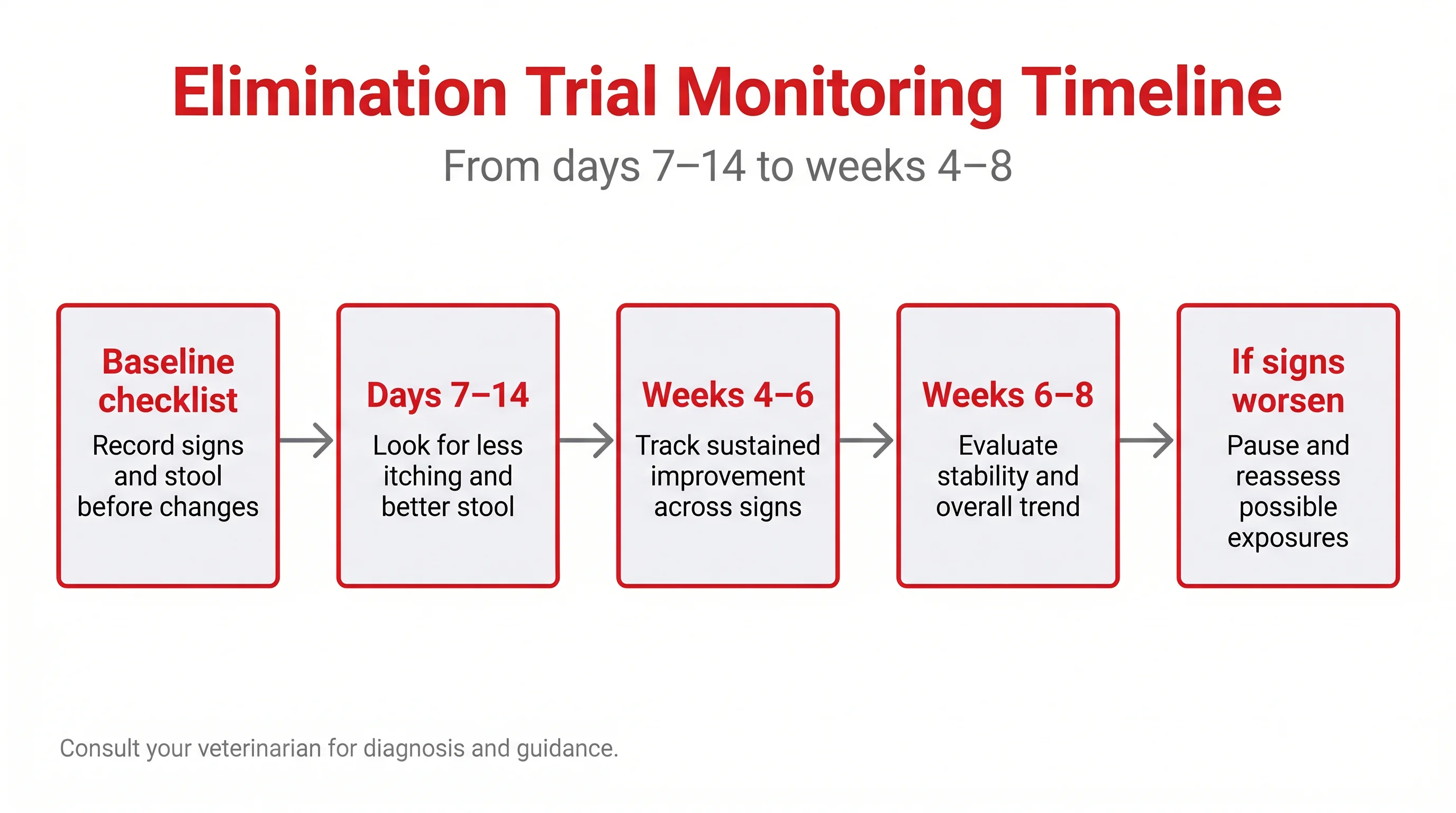
Within 7–14 days, watch for fewer ear shakes, less paw licking, and reduced nighttime scratching. Stool should be formed, with minimal mucus and gas. Transit time should normalise.
If signs worsen, pause and reassess exposures. Compare findings against a structured list of clinical signs to keep interpretation consistent. Use our Symptoms Checklist: Is Your Dog Showing Signs of a Food Allergy? for reference.
Short-term improvements do not confirm causality yet. They simply indicate the trial is on the right track.
Longer‑term markers (flare frequency, weight, stool consistency)
Across 4–8 weeks, evaluate flare frequency, hotspot recurrence, and ear debris volume. Stable, well-formed stools and a steady body weight indicate better tolerance.
Case reports show that tightly controlled dietary changes can positively affect allergic signs, underscoring the value of strict single-protein trials[1].
At eight weeks, perform a deliberate re-challenge to confirm the diagnosis. Random snack exposures make conclusions unreliable.
Practical Safety Boundaries
Chew safety (size, supervision, dental considerations)
Match chew size to your dog’s jaw and chewing style. Offer pieces larger than the muzzle width to reduce gulping. Always supervise chewing sessions.
For sensitive or worn teeth, avoid very hard chews. Air-dried strips and lung pieces are gentler. If your routine includes daily oral care, select compatible textures and avoid over-chewing sessions that irritate gums.
Remove small end bits to prevent choking. Provide fresh water and rest periods to reduce excitement-related gulping.
When to pause, swap formats, or seek veterinary input
Pause immediately if vomiting, diarrhoea, lethargy, or hives occur. Resume only under veterinary guidance once stable. Consider smaller, leaner formats when restarting.
If itching intensifies, reassess all exposures, including supplements or flavoured medications. Veterinary oversight helps distinguish food reactions from environmental triggers and supports safe adjustments[4].
Whenever you add or change formats, record dates, amounts, and any reactions. Evidence builds from precise notes.
Evidence Status and What We Know So Far
Where evidence is stronger (elimination diet method)
The elimination diet with controlled reintroduction remains the most reliable way to identify food allergens in dogs. Its strength lies in systematic variable control and measured outcomes[4].
In practice, this means single-ingredient treats, restricted food lists, and careful monitoring. When followed rigorously, it can distinguish food allergy from intolerance or unrelated skin disease.
Buffalo fits within this framework as one possible single, novel protein if the dog has no prior exposure.
Where evidence is emerging (protein‑specific advantages)
Evidence directly comparing buffalo to other proteins in allergic dogs is limited. However, case data on alternative proteins show clinical improvement when diets are tightly controlled[1].
At the same time, novelty can erode as markets expand. Research in insects highlights both potential benefits and sensitisation risks, reminding us that “novel” does not guarantee non-allergenicity[2][3].
Therefore, base decisions on exposure history, strict single-protein control, and outcome monitoring rather than protein reputation alone.
How Buffalo Compares to Other Novel Proteins
Cost, availability, palatability, and sustainability factors
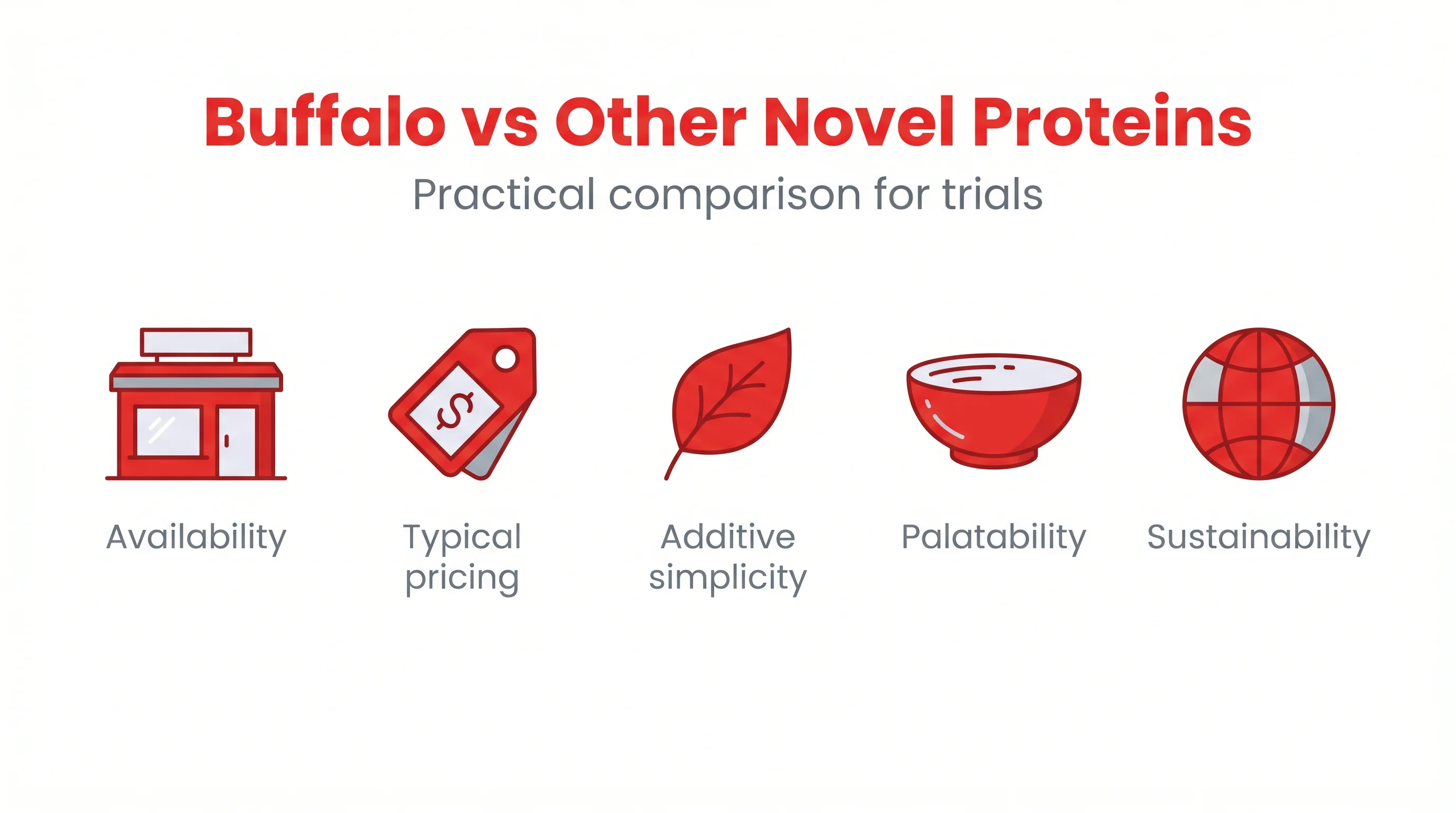
Buffalo is generally more available than rarer game meats, offering a practical balance between novelty and access. Pricing varies, but lean, air-dried formats are typically competitive.
Most dogs find buffalo palatable, especially in jerky or lung textures. Sustainability profiles may be favourable when sourcing prioritises responsible farming and recyclable packaging, which aligns with eco-conscious routines.
For owners avoiding poultry or common red meats, buffalo can slot into a controlled plan while maintaining treat variety and chew engagement.
Next Steps and Further Reading
Link back to your main food allergy framework
If you suspect a dietary trigger, build a structured plan using our main food allergy guide. For granular oversight, align your treat protocol with the vet-led steps outlined in How to Run a Vet‑Supervised Elimination Diet for Your Dog.
To refine your shopping skills during trials, review How to Read Dog Treat Labels for Allergy Safety, and track signs systematically with Symptoms Checklist: Is Your Dog Showing Signs of a Food Allergy?.
Frequently Asked Questions
Is buffalo suitable for an elimination diet in dogs?
It can be suitable if the dog has had no prior exposure to buffalo and if all foods are restricted to a single protein source. Confirm with a vet for dogs with severe symptoms.
How long should I trial buffalo treats for allergies?
Many elimination trials run 6–8 weeks. Early signs may appear in 7–14 days, but sustained improvement is usually needed to draw conclusions.
What buffalo treat format is best for sensitive dogs?
Single‑ingredient, air‑dried options such as lung or jerky may be gentler starters. Introduce one product at a time and monitor stool and skin.
Could my dog react to buffalo if they react to beef?
Some dogs with beef allergy may tolerate buffalo, but cross‑reactivity is possible. Introduce cautiously and monitor closely, ideally under veterinary guidance.
What should I watch for during a buffalo trial?
Track itching, ear debris, paw licking, stool quality, and any gastrointestinal upset. Pause the trial and consult a vet if symptoms worsen.
Conclusion
Buffalo novel protein for dogs offers a practical path when true novelty and simplicity are upheld. The key is not the label alone, but your process.
Rely on single-ingredient formats, cautious introductions, and disciplined monitoring. Use structured logs and veterinary guidance to validate changes and avoid confounders.
With a precise plan, buffalo dog treats for allergies may support clearer answers and calmer skin—while keeping your routine lean, traceable, and sustainable.
References
- CGL Cesar et al. (2024). An assessment of the impact of insect meal in dry food on a dog with a food allergy: A case report. Animals. View article
- B Premrov Bajuk et al. (2021). Insect protein-based diet as potential risk of allergy in dogs. Animals. View article
- KI Lee et al. (2021). Clinical application of insect-based diet in canine allergic dermatitis. Korean Journal of …. View article
- D Matias et al. (2026). Food Allergy in Companion Animals: Integrating Traditional Diagnostics with Emerging Approaches. Applied Sciences. View article