

Itch or Gut? Telling Food Allergies from Seasonal and Environmental Triggers in Dogs
Itch or Gut? Telling Food Allergies from Seasonal and Environmental Triggers in Dogs
Your dog is itching again, and the timeline feels familiar. You wonder if food is the culprit, or if spring pollen is back. The uncertainty is stressful.
Correctly separating dog food allergies vs environmental triggers saves time, discomfort, and cost. This guide offers a clear differential checklist and safe first steps. You will learn quick rules of thumb, targeted trials to run, and when specialist input becomes essential.
What you’re deciding: Is it food or the environment?
Typical patterns: age, seasonality, and symptom clusters
Food reactions may arise at any age, including in older dogs with new signs. Environmental triggers often start young as canine atopy vs food allergy unfolds over time. Dog seasonal allergies typically flare spring to autumn. Food-driven issues may appear year-round without seasonal gaps. Gut changes such as soft stools, flatulence, or vomiting, alongside itch or ear problems, raise suspicion for diet involvement.
Body map: where the itch appears first matters
Food reactions often target ears, face, paws, and the rump, but patterns can overlap with atopy. Pollen-linked itch frequently involves paws, muzzle, periocular regions, and ears. Flea allergy dermatitis signs start around the tail base and hindquarters. Contact dermatitis dogs often show belly, armpit, or groin involvement where skin touches grass, chemicals, or fabrics.
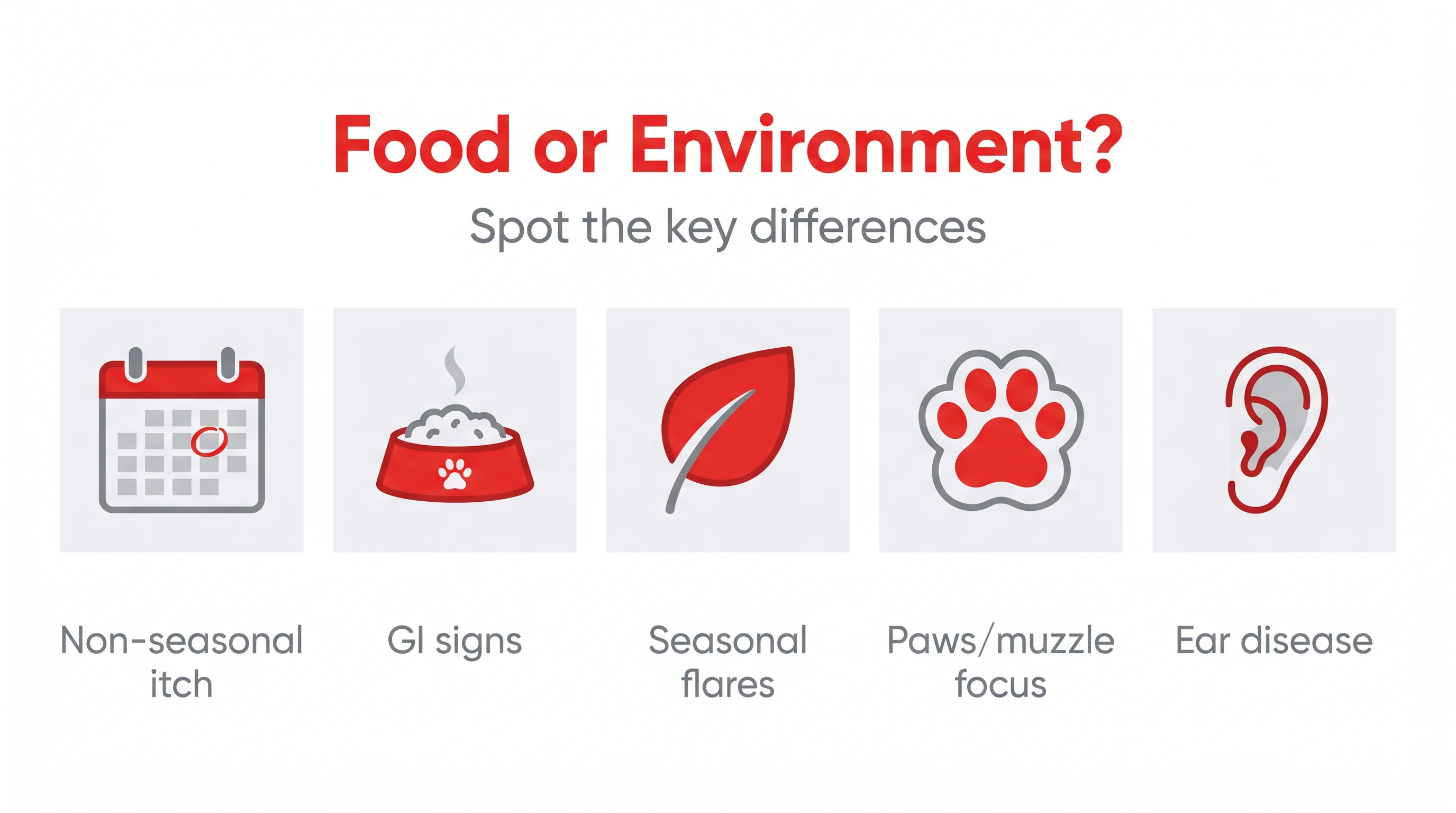
Quick decision guide: if X, then Y
Checklist: 5–7 rapid rules of thumb to act on today
- If itch peaks in spring or summer and settles in winter, prioritise environmental controls and pollen management before diet change.
- If severe tail base chewing appears, run strict flea control for 8–12 weeks before concluding food involvement.
- If soft stools, flatulence, and chronic ear debris accompany itch, consider a vet‑supervised elimination diet as an early step.
- If paw licking and facial rubbing worsen after walks, rinse paws and trial contact avoidance before dietary shifts.
- If night-time flares are pronounced indoors, suspect dust mite allergy dogs and improve bedding hygiene and air quality.
- If antibiotics or ear treatments help but signs return quickly, address the primary allergy driver before repeating medications.
- If signs persist year‑round without clear seasonality, evaluate both food and indoor allergens in a structured sequence.
Deep-dive differentials: food vs pollen, dust mites, fleas, contact
Food-driven signs: gut changes plus chronic itch hotspots
Adverse food reactions often combine non-seasonal itch with gastrointestinal change and recurrent ear disease. Some dogs show skin signs alone. Evidence suggests adverse food reactions rank behind flea hypersensitivity and atopy in overall frequency, but remain a key differential in chronic cases[3]. Elimination diets remain the most reliable diagnostic tool when implemented rigorously[1].
Seasonal/inhalant triggers: paws, muzzle, eyes and ear flares
Dog seasonal allergies typically present with paw chewing, facial rubbing, and flares of ear inflammation during high pollen periods. Improvement with indoor time or after rainfall may support inhalant drivers. Overlap with food reactions occurs, so careful monitoring is essential.
Flea allergy dermatitis: tail base focus and flea control response
Flea allergy dermatitis signs often concentrate over the tail head, rump, and hind legs. Even minimal bites may trigger major reactions. Rigorous, vet‑recommended flea prevention should precede elimination diets. A clear response to flea control strongly supports the diagnosis.
Dust mites and indoors: perennial itch with night-time flares
Year‑round itch that worsens indoors, particularly at night or on bedding, suggests dust mites. Paw and face involvement are common. Mattress covers, hot laundering, and dehumidification may reduce allergen load, aiding differential clarity.
Contact dermatitis: belly, armpits, groin after known exposures
Contact dermatitis dogs often present with sudden redness on sparsely haired skin after grass, detergents, or floor cleaners. Protect skin with barriers, rinse after exposure, and switch to fragrance‑free products. Rapid improvement after avoidance supports this category.
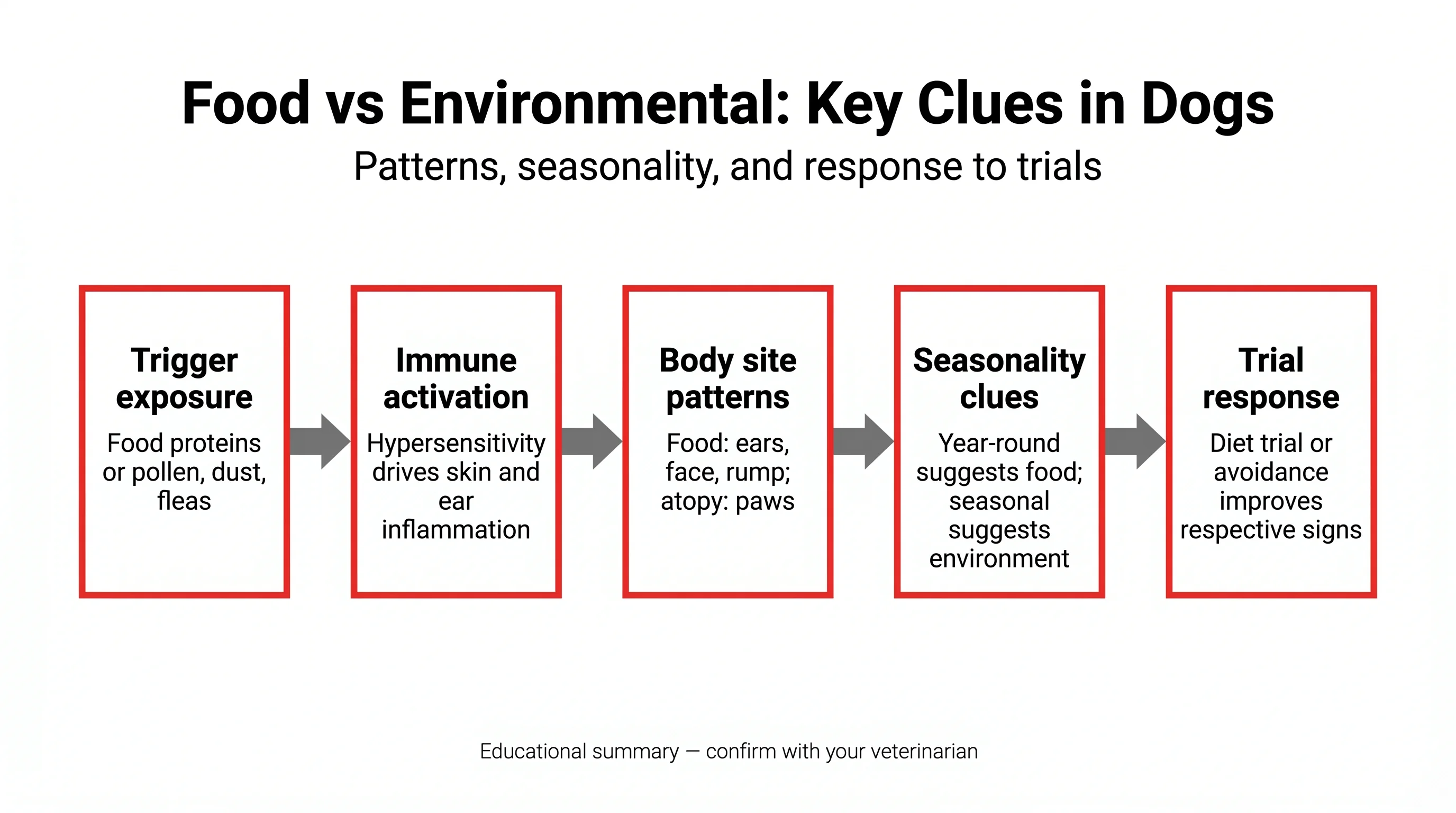
What to try first (low-risk steps before elimination diets)
Rule out fleas meticulously
Use a prescription-grade adulticide plus insect growth regulator for at least 8–12 weeks. Treat all pets in the household and the environment. Vacuum frequently and wash bedding hot. Do not rely on visible flea dirt; hypersensitive dogs may react to few bites.
Tidy up secondary infections and ear disease
Address bacterial or yeast overgrowth before interpreting trials. Infections amplify itch and mask responses. Ask your vet for cytology-guided therapy and ear canal cleaning. Reassess signs only after discharge and odour have resolved sustainably.
Reduce common environmental loads
Rinse paws after walks, keep sleeping areas dry and clean, and consider HEPA filtration during high pollen counts. Use gentle, fragrance‑free shampoos and avoid fabric softeners. When training or rewarding during trials, choose strict single‑ingredient treats and verify labels; see our guide on reading constituents in How to Read Dog Treat Labels for Allergy Safety.
Monitoring guidance: 7–14 days and 4–8 weeks
Short window: signs that suggest environment
Within 7–14 days, pollen or contact avoidance may reduce paw licking, facial rubbing, and eye irritation. Night-time itch may settle with bedding hygiene. Rapid improvement after strict flea control leans away from a primary food driver.
Long window: signs that suggest food response
Food responses typically require 4–8 weeks of a tightly controlled diet. Expect gradual declines in ear debris, chewing, and general pruritus. Even partial improvement merits structured challenge testing to confirm dietary causality under veterinary guidance.
Practical safety boundaries
When to stop and seek veterinary dermatology input
Stop DIY changes and seek specialist input if there is progressive hair loss, skin thickening, recurrent hot spots, persistent ear pain, weight loss, or any ulceration. Immediate veterinary review is also warranted if appetite drops or vomiting persists.
Safe elimination diet basics without nutrient gaps
Work with your vet to select either a hydrolysed diet or a truly novel protein and carbohydrate for 6–8 weeks. Keep the plan consistent and avoid flavourings or table scraps. For structure and timelines, see How to Run a Vet‑Supervised Elimination Diet for Your Dog. If your chosen trial protein is buffalo and your vet permits controlled rewards, some owners use Buffalo Meat Jerky - Dog Treats to maintain single‑protein integrity. Confirm ingredient lists against your trial rules.
Evidence status: what we know and where it’s uncertain
Prevalence and overlap of food and atopic disease
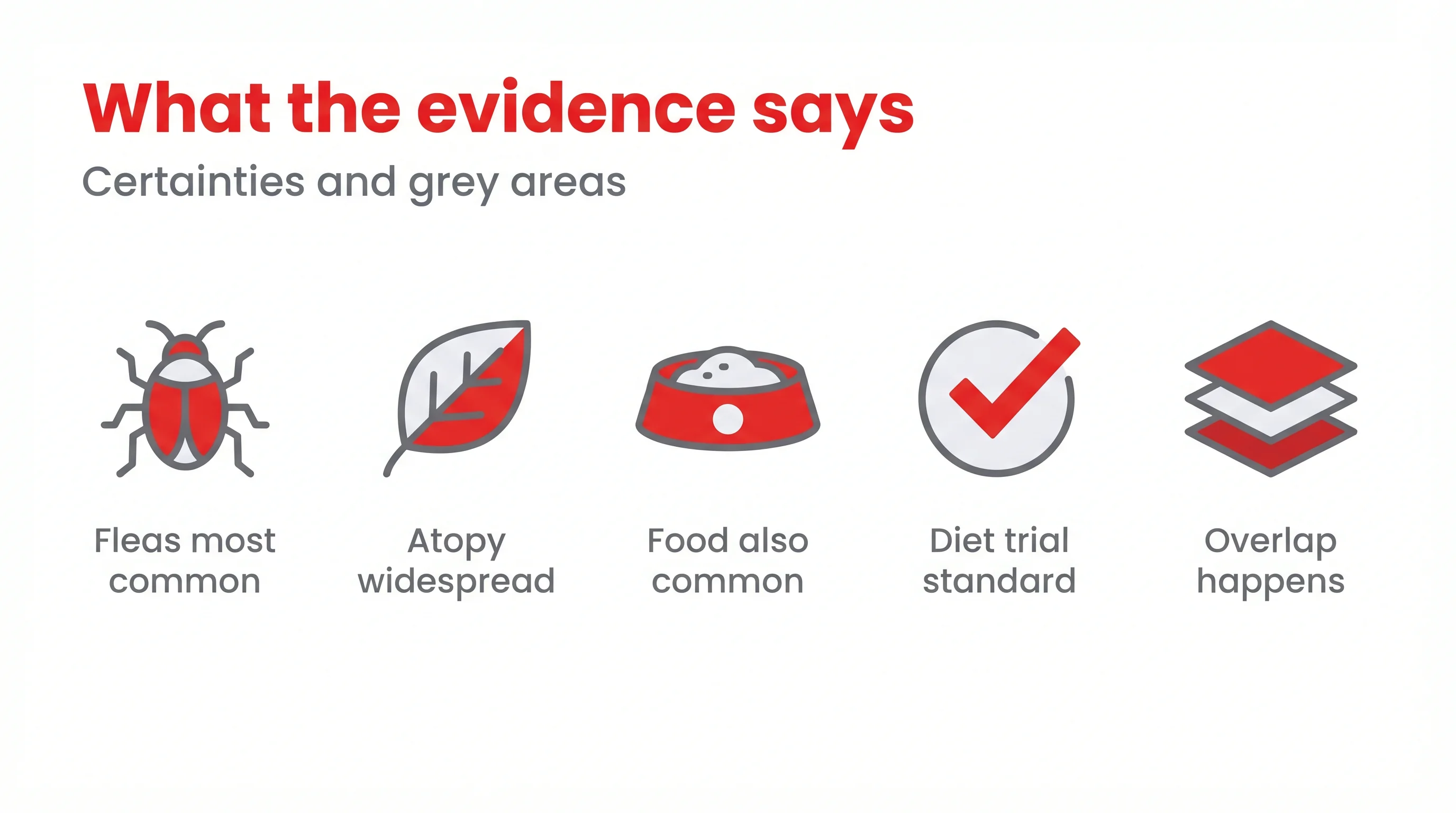
Evidence indicates adverse food reactions are a common contributor, but typically trail flea bite hypersensitivity and canine atopy in prevalence. Many dogs experience overlap, complicating attribution without structured trials[3]. Distinguishing true food allergy from non‑immune food intolerance is equally important, as intolerances may be more frequent and have different management implications[4].
Elimination diet as reference standard and pitfalls
The elimination‑challenge diet remains the diagnostic reference standard for canine food allergy, provided it is strict, complete, and correctly challenged afterward[1][3]. Emerging tools, such as immunotherapy approaches or novel assays, show promise but require further validation before routine use in food allergy workups[2].
Frequently Asked Questions
Do food allergies in dogs always cause diarrhoea?
No. Some dogs show only skin signs like chronic ear infections, paw chewing, or face rubbing. Gastrointestinal signs such as soft stools or flatulence may occur but are not required.
Are seasonal symptoms a sign it isn’t food?
Seasonal flares suggest environmental triggers like pollen. However, some dogs have both conditions, so a careful history and response to controlled trials are useful.
How long should I trial an elimination diet?
Evidence suggests 6–8 weeks of a strictly controlled novel-protein or hydrolysed diet. Any extras, including treats, can confound results, so keep the plan consistent.
Can dust mites cause year-round itching?
Yes. Indoor allergens like dust mites can drive perennial itch, often with paw and face involvement. Cleaning routines and bedding hygiene may reduce the overall load.
If flea dirt isn’t visible, can it still be fleas?
Yes. Dogs with flea allergy dermatitis can react to very few bites. A rigorous, vet-recommended flea control protocol may still be warranted to rule this out.
Summary and next steps
When sorting dog food allergies vs environmental triggers, start with flea control, tidy infections, and reduce contact, dust, and pollen loads. If signs persist, plan a disciplined elimination‑challenge diet with your veterinary team. For a comprehensive diagnostic roadmap, see our dog food allergy guide. To choose and verify single‑ingredient options during trials, review label literacy in How to Read Dog Treat Labels for Allergy Safety, and if buffalo is under consideration as a novel protein, explore suitability in Is Buffalo a Good Novel Protein for Dogs with Food Allergies?.
References
- HA Jackson (2023). Food allergy in dogs and cats; current perspectives on etiology, diagnosis, and management. Journal of the American Veterinary Medical …. View article
- D Matias et al. (2026). Food Allergy in Companion Animals: Integrating Traditional Diagnostics with Emerging Approaches. Applied Sciences. View article
- E Maina et al. (2024). An overview of adverse food reactions in dogs. Royal Canin Veterinary Focus. View article
- JM Craig (2019). Food intolerance in dogs and cats. Journal of Small Animal Practice. View article