

Plaque vs tartar in dogs: what’s causing the smell and how to reduce it
Plaque vs tartar in dogs: what’s causing the smell and how to reduce it
Dog bad breath often begins long before you see visible deposits. The source is usually microscopic. It starts with a living film on the teeth that traps odour.
Understanding plaque vs tartar helps you act early and safely. You will learn how biofilm becomes hard calculus, how chew texture and angle assist, and which at‑home steps may help.
Why plaque smells different from tartar
Biofilm 101: how plaque forms and traps odour
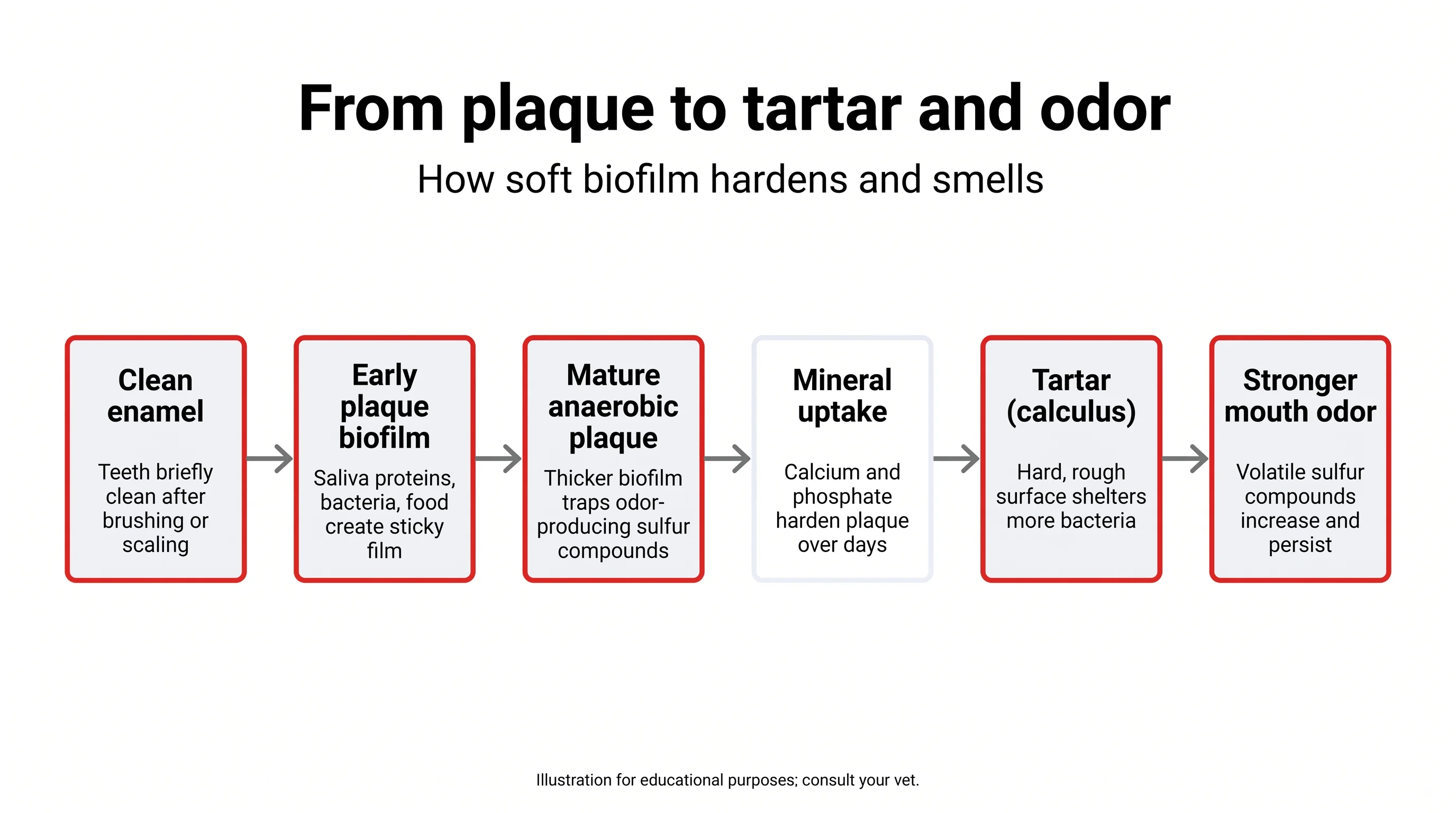
Plaque is a soft, sticky biofilm built from saliva proteins, bacteria, and food debris. It forms within hours after cleaning and anchors to tooth enamel. This biofilm holds volatile sulphur compounds, which intensify dog bad breath. Because plaque remains moist and oxygen-poor near the gumline, anaerobic bacteria flourish and release pungent gases. Early plaque is invisible or pale yellow and feels slippery. It wipes away with brushing or gauze, but returns quickly if not removed.
When plaque mineralises into tartar (and why smell can worsen)
Left undisturbed, plaque absorbs calcium and phosphate from saliva and begins to mineralise. This hardens into tartar, also called calculus, which is rough and porous. Roughness attracts more plaque, creating a self-perpetuating cycle of dog tartar buildup and odour. Tartar commonly starts along the gum margin of molars and premolars. As gums become irritated, crevices deepen and trap debris. This environment can heighten malodour and increase the risk of periodontal inflammation.
Texture and chewing angle: how mechanics help
Ridges, hardness and saliva flow
Textures that flex slightly, with ridges or nubs, may mechanically disrupt soft dog dental plaque. Moderate hardness increases contact time without excessive tooth stress. Chewing boosts saliva flow, which helps flush food particles. Moisture and movement loosen biofilm before it calcifies. Overly smooth or crumbly items offer brief cleaning, while extremely hard items risk fractures. Aim for a chew that presses against tooth surfaces and deforms just enough to scrub.
Targeting back molars vs front teeth
Real gains occur when chews reach the back teeth. Molars collect the thickest plaque because of broad chewing surfaces and food packing. Choose sizes that require side chewing, not nibbling with incisors. Angled shapes that encourage molar engagement may improve plaque disruption where it matters most. If a chew is too small, dogs grip it with front teeth, reducing effectiveness and increasing gulping risk.
Practical cleaning options that may help
Daily brushing: tools, paste and technique
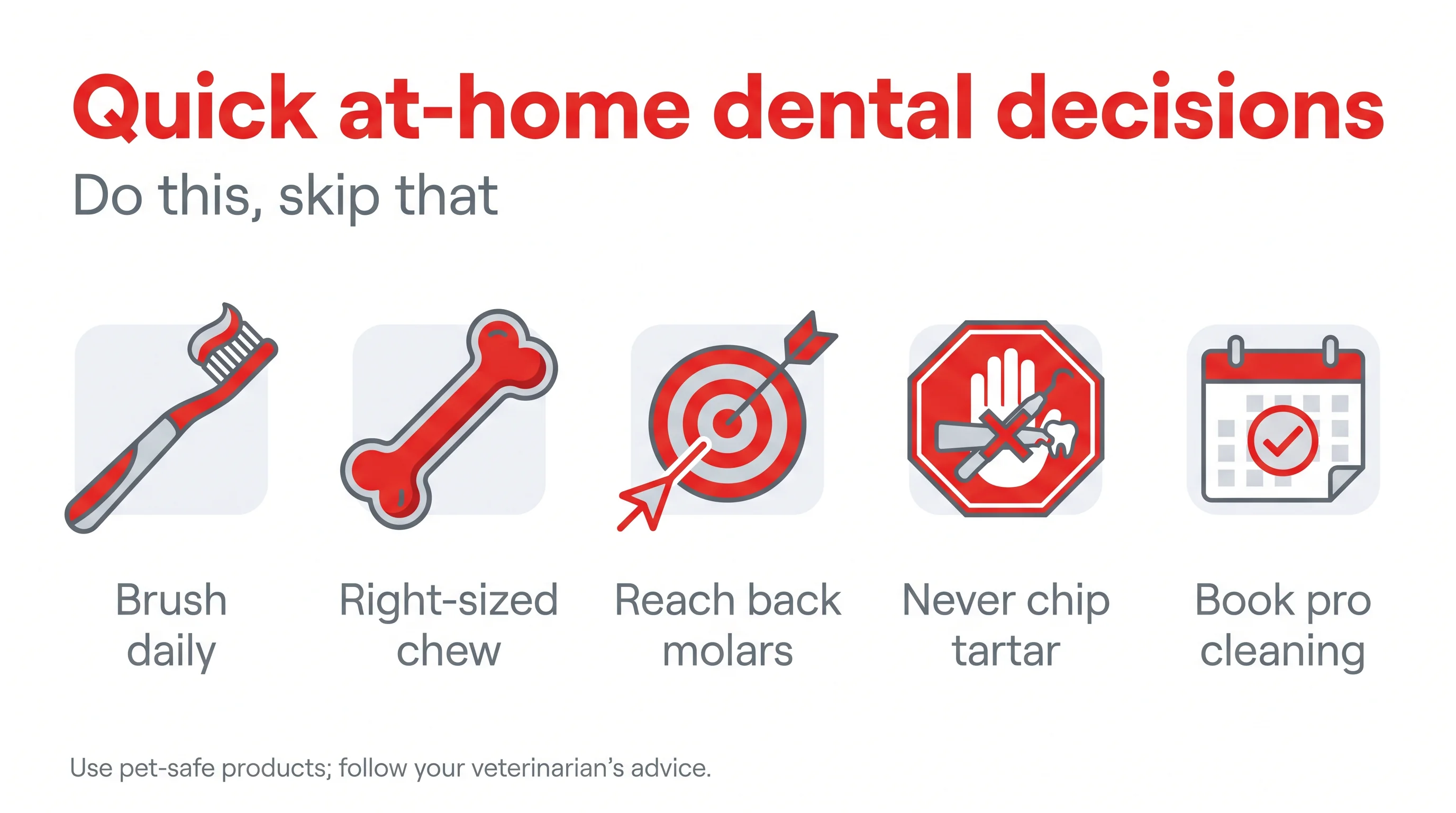
Dog teeth cleaning at home starts with brushing. Use a soft-bristled dog toothbrush or finger brush and a pet-safe enzymatic toothpaste. Position the brush at a 45-degree angle to the gumline. Focus on the outer surfaces of premolars and molars where buildup accelerates. Start with 15–30 second sessions and build to one to two minutes daily. Daily brushing remains the most reliable home method to manage plaque accumulation and support gum health[3]. For routine structure, see how to build a daily dental routine.
Dental treats and natural chews: choosing shape, size and density
Natural dog chews for teeth can complement brushing by disrupting soft plaque. Select chews with controlled density and surface texture, sized to promote side chewing. Evidence suggests certain dental chews may reduce plaque indices and improve breath scores when used consistently alongside brushing[1]. Many pet owners find Gently Dently- Chicken Dental Treats helpful for this task. For material comparisons and safer choices, explore natural chews versus synthetic sticks.
Water additives and wipes: where they fit
Wipes help when teeth are sensitive, or as a bridge to brushing. Aim for gentle circular strokes at the gumline. Some water additives and oral supplements target odour-producing bacteria. Trials of specific probiotics and postbiotics indicate potential benefits in halitosis reduction within days, though results vary by formulation and protocol[4][2]. If your dog has a sensitive stomach or allergies, consider guidance on freshening breath safely.
When a professional scale and polish is appropriate
Home care cannot remove established tartar. If you see hard, brown calculus or gum redness, seek a veterinary dental assessment. Professional ultrasonic scaling under anaesthesia allows calculus removal below the gumline and polishing to slow new plaque attachment. This step may be essential when pockets, inflammation, or pain are present. For potential warning signs, read about bad breath red flags.
Quick decision guide
If there is soft yellow film that wipes off → prioritise brushing and textured chews
Use daily brushing plus a suitably sized textured chew to disturb soft plaque. Focus on molars. Expect breath improvement as biofilm reduces. Reinforce gentle handling and reward calm behaviour.
If there is hard brown calculus that won’t budge → book a vet dental check
Do not attempt to chip tartar at home. Sharp edges risk enamel damage and gum injury. Schedule a professional evaluation and cleaning before resuming a home maintenance plan.
If breath smells sweet, metallic, or foul suddenly → seek veterinary assessment
Sudden odour changes can signal infections, oral injuries, metabolic disease, or foreign bodies. Prompt veterinary advice protects comfort and health while preventing deeper periodontal issues.
If your dog ignores the chew or only uses front teeth → change size/shape to reach molars
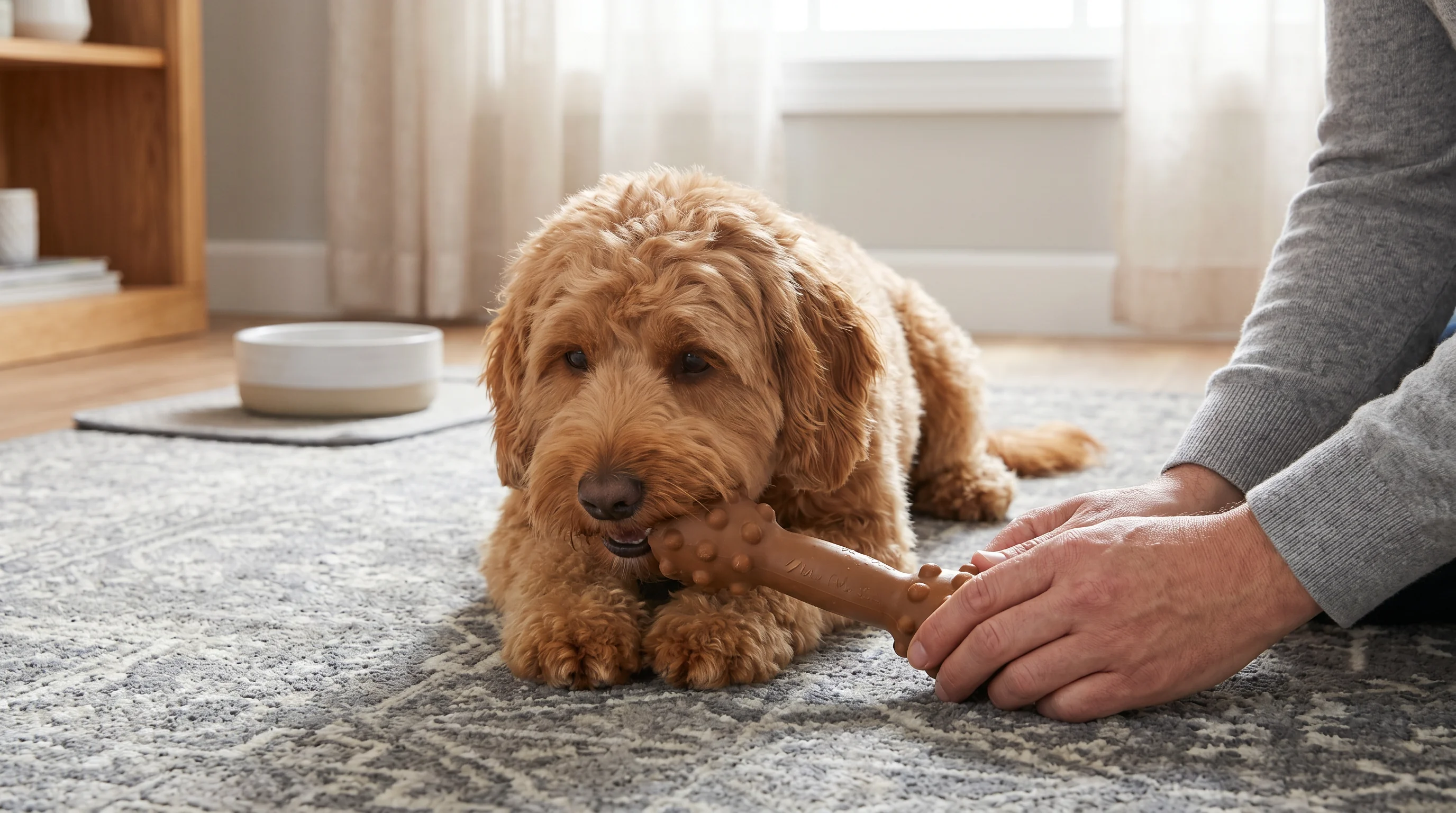
Choose a larger or differently shaped chew that encourages side chewing. Hold one end briefly to guide molar engagement. Replace items that are too small to avoid gulping or choking.
If gums look red or bleed with gentle brushing → use a softer brush, reduce pressure and consult a vet
Scale back intensity while maintaining frequency. Short, daily sessions are gentler than long, occasional scrubs. Persistent bleeding or pain warrants a professional oral examination.
If your dog has cracked teeth or is a power chewer → avoid overly hard chews and choose controlled‑density options
Prevent fractures by selecting chews with slight flex and visible give. Avoid bones, antlers, or rocks. Supervise sessions and discontinue any product that causes tooth wear or discomfort.
Monitoring: what to look for in 7–14 days and 4–8 weeks
7–14 days: breath change, plaque softness, gum comfort
Notice whether dog bad breath softens and whether plaque wipes away more easily at the gumline. Look for calmer gums, fewer red margins, and improved tolerance for brief brushing sessions. Use a simple log or the 7‑day fresh‑breath plan for structure.
4–8 weeks: visible tartar edge recession, chewing efficiency and tolerance
Observe whether the plaque line near gums appears thinner and whether small tartar edges look less prominent after professional cleaning. Monitor how effectively your dog chews on molars and maintains comfortable, daily brushing.
Safety boundaries to protect teeth and gums
Hardness rules and size selection
As a guide, avoid items you cannot indent with a thumbnail. The chew should be larger than the width of your dog’s muzzle to deter swallowing whole. Replace worn, sharp, or splintering pieces promptly.
Supervision, session length and hydration
Supervise every chew session. Offer 5–10 minute sessions for beginners, progressing to 10–20 minutes as tolerated. Provide fresh water before and after chewing to support saliva flow and debris clearance.
Special cases: puppies, seniors, brachycephalics and dental disease
Puppies with erupting teeth need softer textures and brief sessions. Seniors may prefer gentler options and shorter durations. Short-nosed breeds with crowded teeth benefit from brushing-first plans. Active dental disease requires veterinary oversight before chews.
Evidence status: what research suggests
Brushing frequency and plaque control
Systematic review evidence indicates daily brushing is the most dependable at‑home strategy for controlling plaque accumulation and supporting gingival health in dogs. Even several times weekly is better than none[3].
Texture and chewing on calculus reduction
Clinical trials of specific dental chews report improvements in plaque, calculus indices, and halitosis scores when used as directed, though effects vary by design, shape, and formulation[1]. Select chews proven to engage molars and provide sustained mechanical contact.
Limitations: when home care is unlikely to shift tartar
Home measures struggle against established tartar and subgingival deposits. Studies underscore that professional scaling is often required before maintenance can be effective, especially in moderate to severe cases[3]. Be realistic and safety‑first.
How this fits with an overview of causes and next steps
This article focused on biofilm mechanics and practical disruption. For systemic causes, red flags, and a stepwise action plan, read our overview of causes and next steps to position dental care within broader health considerations.
Frequently Asked Questions
How can I tell plaque from tartar on my dog’s teeth?
Plaque is a soft, sticky film that may wipe off with a fingernail or gauze. Tartar is hard, yellow‑brown mineral build‑up that does not scrape off easily and often sits near the gumline.
Can natural chews help reduce dog breath odour?
Evidence suggests appropriately sized, textured chews may reduce soft plaque and food debris, which can lessen odour. They work best alongside daily brushing and regular dental checks.
How often should I brush my dog’s teeth?
Daily brushing is widely considered the most effective home measure for plaque control. Even 3–4 times per week may support improvements compared with no brushing.
When do I need a professional dental clean?
If you see hard tartar, red or bleeding gums, loose teeth, or persistent bad breath despite home care, a veterinary assessment is appropriate. Professional scaling may be needed.
Are hard chews risky for teeth?
Very hard items may increase fracture risk, especially for power chewers. Choose chews with some give, size them to encourage molar use, supervise sessions and stop if there is tooth wear or discomfort.
Conclusion
Plaque is a living, soft biofilm that traps odour early. Tartar is the hardened result that anchors more plaque and often worsens smell. Disrupt soft plaque daily with brushing, then add safe, textured chewing to reach molars. Monitor breath, gum comfort, and plaque softness over weeks. If hard calculus persists or odour escalates, schedule a professional clean. A calm, consistent routine delivers the most reliable results for fresher breath and healthier gums.
References
- PM Oba et al. (2024). Effects of a novel dental chew on oral health outcomes, halitosis, and microbiota of adult dogs. Journal of animal …. View article
- A Sordillo et al. (2025). A novel Postbiotic reduces canine halitosis. Animals. View article
- E Barbosa et al. (2023). Strategies to improve the home care of periodontal disease in dogs: A systematic review. Research in Veterinary …. View article
- KH Do et al. (2019). Effects of Weissella cibaria CMU on Halitosis and Calculus, Plaque, and Gingivitis Indices in Beagles. … veterinary dentistry. View article