

Puppy Bad Breath: Teething Troubles and Safe Fresh‑Breath Fixes
Puppy Bad Breath: Teething Troubles and Safe Fresh‑Breath Fixes
Puppy breath is adorable until it is not. Teething often brings surprising smells that worry new owners. You are right to ask what is normal and what needs action.
Understanding puppy teething bad breath helps you keep gums comfortable and habits safe. This guide explains likely causes during tooth loss and gentle ways to freshen. You will learn safe puppy chews, simple hygiene routines, and clear red flags.
Why teething can cause bad breath in puppies
Normal vs. concerning odours in the teething window (3–7 months)
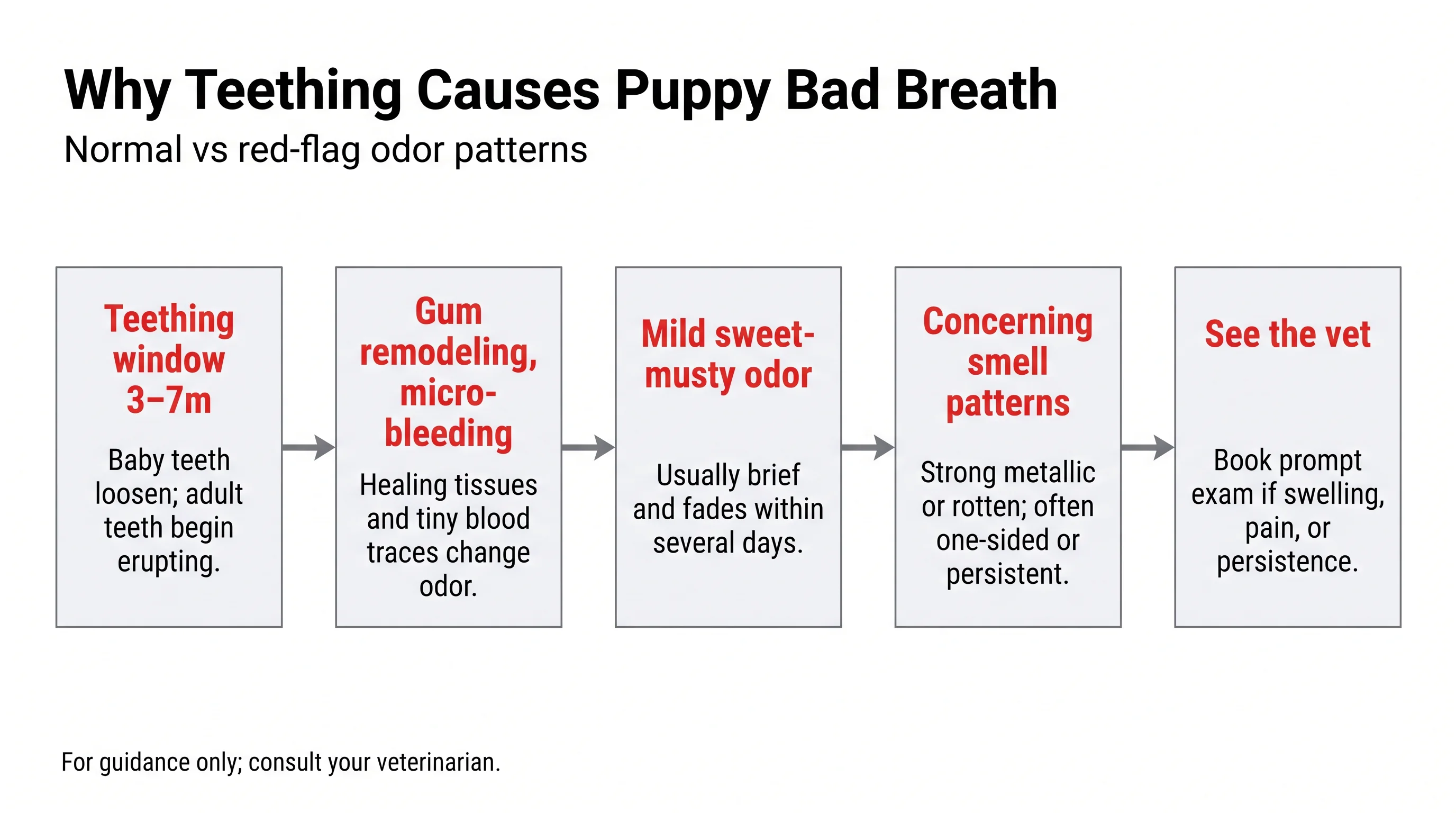
The 3–7 month window is when baby teeth loosen and adult teeth erupt. Mild, sweet‑musty odour may appear briefly as gums remodel and tiny blood traces oxidise. Short spells of “puppy funk” can be normal if appetite and energy remain steady.
Concerning smells are strong, metallic, or rotten, and persist beyond several days. Odour that localises to one side, or coincides with facial swelling or obvious pain, deserves prompt veterinary assessment. Watch trends over days, not minutes. Track whether the smell eases with gentle cleaning and suitable chew choices.
Common contributors: plaque, trapped food, puppy gingivitis and tummy upsets
Oral malodour usually originates from bacteria in plaque producing volatile sulphur compounds. Plaque film builds quickly on newly erupted teeth, especially along the gumline. Evidence shows daily oral care best controls these odour‑causing compounds in dogs[2].
Teething puppies also trap food between mixed dentitions, which may inflame gums. Mild puppy gingivitis can follow. Occasional tummy upsets, diet changes, or nibbling non‑food items may further sour breath. Distinguish temporary shifts from a consistent, worsening smell that suggests deeper oral or gastrointestinal issues.
Safe textures and sizes: choosing chews that may support fresher breath
What to look for: size, hardness, texture, and digestibility
Choose chews larger than your puppy’s muzzle to prevent gulping. Aim for moderate firmness that yields to a thumbnail. Excessively hard items increase tooth risk during eruption. Textured surfaces can gently abrade soft plaque as puppies gnaw and reposition their bite.
Digestibility matters. Young stomachs are sensitive, so keep ingredients simple and avoid heavy additives. Research indicates that appropriate dental chews may reduce plaque and perceived halitosis in adult dogs, suggesting similar mechanical benefits for supervised puppies[3]. Dogs are naturally motivated to chew, and constructive chewing can support welfare and oral maintenance when managed thoughtfully[1]. For broader context on materials, see our guide to natural chews versus synthetic sticks.
Examples and age‑fit: gentle sticks, soft jerky, and moderated long‑lasting chews
Early in teething, offer gentle sticks and soft jerky that flex under pressure to massage gums safely. As adult teeth erupt, introduce moderately firm, ridged chews for short, supervised sessions. Reserve long‑lasting chews for calmer periods, and rotate to prevent overuse.
Size up as your puppy grows. Replace any chew that can be fully mouthed or wedged behind molars. Prioritise safe puppy chews with simple, high‑quality ingredients and clear digestibility guidance. Always supervise and provide water throughout sessions.
Gentle cleaning habits for young mouths
A 2–3 minute routine: finger brush, soft brush, or dental wipe
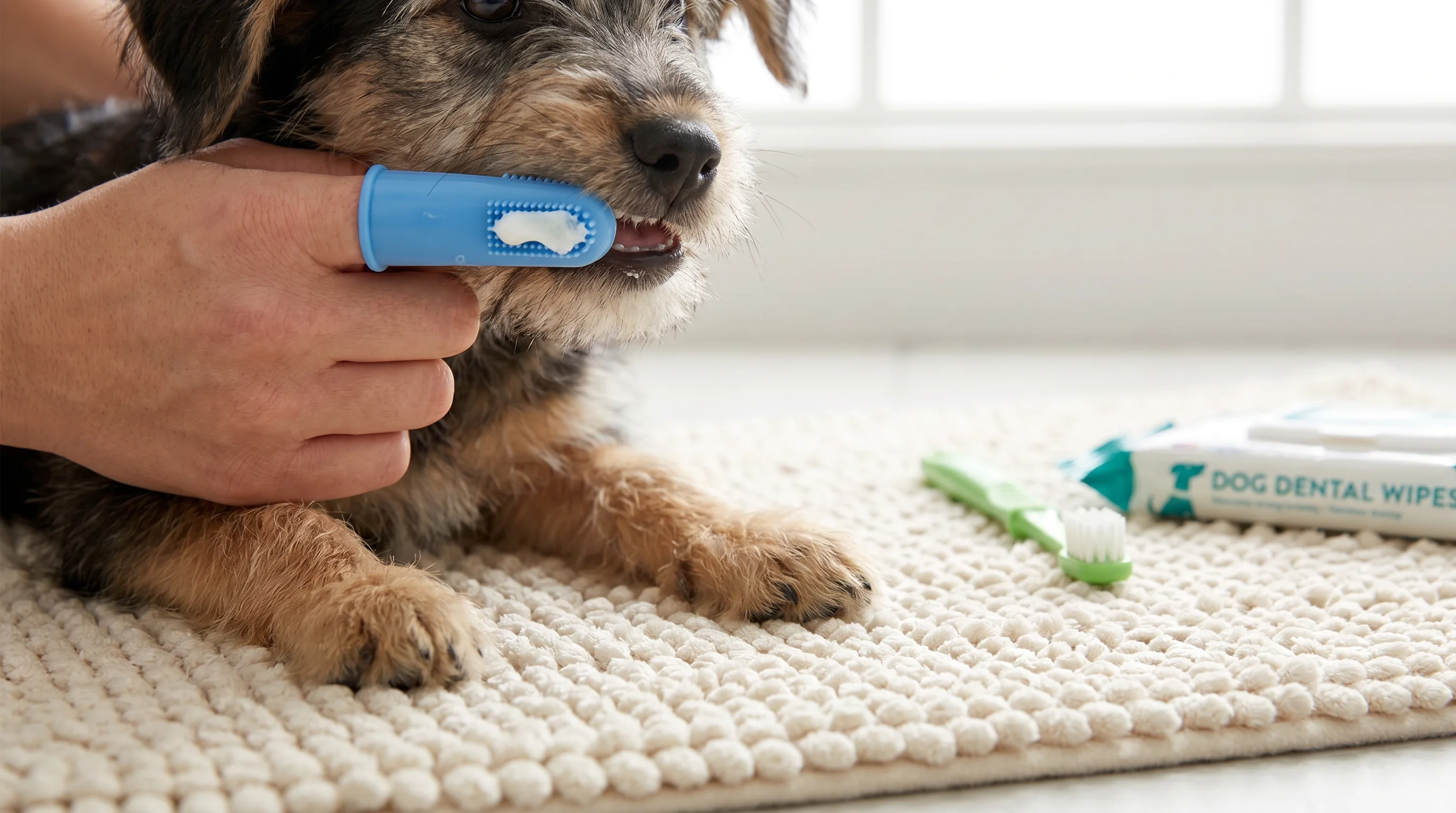
Adopt a brief, positive routine. Start with one minute, pausing if your puppy fusses. Use a silicone finger brush, a soft‑bristled puppy brush, or a dental wipe. Stroke the outer surfaces of back teeth where plaque first accumulates.
Increase to two or three minutes as tolerance improves. Evidence suggests daily brushing most effectively reduces plaque and odour, with even partial routines delivering benefits as puppies learn handling[2]. These early habits underpin adult care; when you are ready, explore how to build a daily dental routine.
Fresh‑breath helpers: water, parsley/mint in treats, and feeding order
Hydration supports saliva flow that naturally buffers odour. Offer water before and after meals and chew times. Some owners like natural dental treats for puppies that include parsley or mint for temporary freshness.
Professional groomers often recommend products like Gently Dently- Fresh Breath Mint Dental Treats. Feed main meals first, then chews or dental treats, so mechanical action can address residual food particles. Adjust quantities to maintain a stable growth curve.
Quick decision guide
If the smell is ‘metallic’ or rotten, then…
Stop chews temporarily and check the mouth for stuck material. A metallic or rotten smell suggests bleeding, infection, or decay. Arrange a prompt veterinary check, especially if swelling, pain, or fever appear.
If there’s mild ‘puppy funk’ during tooth loss, then…
Adopt gentle brushing or wipes for 2–3 minutes daily. Offer moderate, textured chews for short sessions. Track smell over 7–14 days. Expect fluctuation that eases as gums settle.
If breath worsens after specific chews, then…
Discontinue that item and switch to a simpler, more digestible option. Re‑introduce later only if stools and breath remain steady. Keep sessions shorter and review ingredient lists for rich fats or additives.
If stools are loose with smelly breath, then…
Pause rich chews and prioritise hydration and bland meals as advised by your vet. Review diet fit and allergens. See our guide to fresh-breath strategies for sensitive stomachs for cautious adjustments.
If gums look very red or bleed, then…
Limit chew force immediately. Use soft wipes instead of brushes until tenderness resolves. If bleeding persists beyond two days, seek veterinary advice to rule out retained baby teeth or infection.
If the puppy resists mouth handling, then…
Scale back to very short, reward‑based touches. Try a wipe over incisors only. Pair with a calm, low‑arousal time of day. Rebuild tolerance gradually before resuming full brushing.
If you’ve tried hygiene for 14 days with no change, then…
Book a veterinary assessment to check for retained teeth, ulcers, or foreign bodies. Persistent odour despite hygiene warrants a deeper look at oral and gastrointestinal contributors.
Monitoring: what to observe at 7–14 days and 4–8 weeks
Short‑term checks (7–14 days): smell trend, gum comfort, chew tolerance
Log the smell as improving, stable, or worsening. Note gum colour, bleeding, and willingness to chew. If odour decreases and gums look calmer with routine brushing, continue. If pain, swelling, or appetite changes emerge, call your vet.
Medium‑term checks (4–8 weeks): plaque line, tartar spots, diet fit and weight
Inspect the gumline for a soft, creamy plaque band and early tartar grains. Consistent brushing may limit both, while poor routines may raise later calculus risk[4]. Confirm your diet supports growth without digestive upsets. Adjust chew calories to maintain an ideal body condition.
Practical safety boundaries for teething puppies
Chew size relative to muzzle and bite force
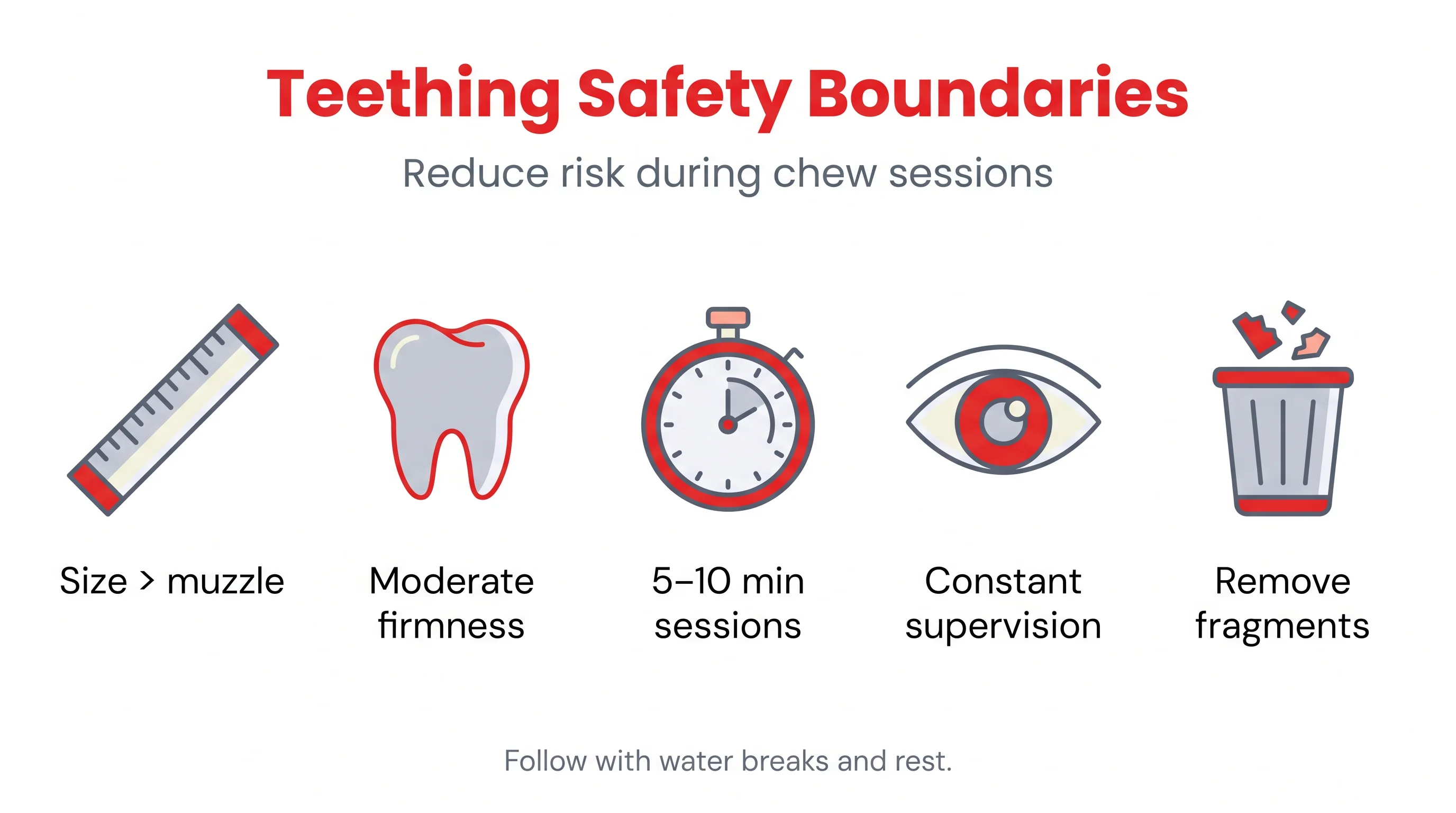
Select chews longer than your puppy’s muzzle and wider than the rear molar gap. Avoid small pieces that can lodge behind erupting premolars. Choose moderate density to limit fracture risk during the vulnerable eruption phase.
Session length, supervision, and water access
Keep early sessions to 5–10 minutes, increasing as adult teeth appear. Supervise continuously to manage intensity and remove worn fragments. Offer fresh water throughout to support saliva and comfort.
When to retire or rotate chews
Retire chews once they can be fully engulfed, show sharp edges, or shrink below a safe width. Rotate textures to avoid overworking one area. Replace with a fresh item if your pup chews too aggressively.
Evidence status: what research suggests vs. what’s uncertain
Mechanical abrasion from textured chews may reduce soft plaque
Studies in adult dogs show that specific dental chews may reduce plaque accumulation and perceived halitosis compared with controls, indicating value when paired with supervision and appropriate sizing[3]. Chewing also aligns with dogs’ natural motivations and may support welfare when thoughtfully managed[1].
Daily brushing has the strongest support; treats are complementary
Systematic evidence indicates daily toothbrushing offers the most reliable plaque and odour control in dogs. Chews and rinses may complement, not replace, brushing in a complete puppy dental care plan[2].
Herbal breath aids (e.g., mint, parsley) have emerging, limited evidence
Natural ingredients like mint or parsley may offer short‑term freshness. Robust, puppy‑specific trials remain limited, so treat these as adjuncts. Prioritise brushing, appropriate chews, hydration, and a balanced diet for sustained results.
When to contact your vet
Red flags: one‑sided swelling, pus, persistent bleeding, foreign‑body breath, failure to thrive
Seek veterinary care if you notice one‑sided facial swelling, visible pus, or persistent bleeding. Odour resembling decomposing material or chemicals can indicate a foreign body or toxin. Rapid weight loss, lethargy, fever, or marked pain also warrant prompt attention.
Retained baby teeth, fractured enamel, or oral ulcers occasionally accompany teething. Early intervention reduces long‑term risk, including undue plaque retention and malocclusion later in life. Trust your observations, especially if hygiene steps fail to improve odour.
How this fits within wider dog breath care
Teething care builds the foundation for lifelong fresh breath for puppies. Keep routines brief, gentle, and consistent. Combine daily brushing attempts with safe textures, measured sessions, and simple ingredients. As adult teeth settle, expand gradually.
For a broader perspective on causes and prevention beyond the teething window, read our complete guide to bad breath in dogs. As your puppy matures, continue your brushing schedule and refine chew choices as jaw strength changes. Strong routines now reduce future plaque challenges and support comfortable, healthy mouths.
Frequently Asked Questions
Is bad breath normal in teething puppies?
A mild, temporary odour can occur during 3–7 months as baby teeth fall out and gums remodel. Watch for trends; strong rotten or metallic smells merit a vet check.
What chews are safest for teething puppies’ breath?
Moderately firm, textured chews sized larger than the muzzle may help clean without excessive hardness. Avoid very hard items that could risk tooth damage.
How often should I brush a puppy’s teeth?
Evidence suggests daily brushing offers the best plaque control. Start with 3–4 gentle sessions per week and build to daily as your puppy accepts handling.
Can dental treats replace brushing for puppies?
Dental treats may support fresher breath and reduce soft plaque, but brushing remains the primary method. Use treats as a complement, not a replacement.
When should I worry about my puppy’s breath?
Seek vet advice if odour is sudden and severe, metallic, or persists beyond two weeks with redness, bleeding, facial swelling, pain, or appetite/weight changes.
References
- R Quinn et al. (2025). Functional significance and welfare implications of chewing in dogs (Canis familiaris). Frontiers in Veterinary …. View article
- JM Croft et al. (2022). Effectiveness of oral care interventions on malodour in dogs. BMC veterinary …. View article
- MQ Carroll et al. (2020). Effects of novel dental chews on oral health outcomes and halitosis in adult dogs. Journal of animal …. View article
- MBM Hemida et al. (2025). Modifiable early life risk factors for dental calculus in dogs: a retrospective cross-sectional study in Finland. BMC Veterinary …. View article