

Reintroduction After the Elimination Diet: Building a Long‑Term Plan
Reintroduction After the Elimination Diet: Building a Long‑Term Plan
Your elimination diet worked. Symptoms settled. Now comes the careful part that locks in long‑term success.
Reintroducing foods confirms triggers and expands choice without undoing progress. This guide shows a structured, low‑risk approach to food challenges in dogs. You will learn the order of reintroduction, pacing rules, monitoring cues, and practical treat boundaries to keep your plan safe and sustainable.
Why reintroduction matters and how this guide fits your diagnosis
Context: from elimination success to structured food challenges
Finishing an 8–12 week elimination plan is a major milestone. The next step is a disciplined food challenge protocol dogs can follow at home with veterinary oversight. A measured approach reduces confusion and helps isolate true dietary triggers that drive flares.
Read first: our core guide to food allergies in dogs
If you are still clarifying diagnosis, start with our orientation hub. Read the core guide to food allergies in dogs to understand elimination principles, hydrolysed options, and rule‑out steps before attempting reintroduction.

The focused scenario: your dog finished an 8–12 week elimination diet and is symptom‑free
Goal: confirm specific triggers and build a stable, enjoyable menu
With symptoms resolved, your objective is twofold. First, pinpoint proteins that consistently trigger reactions. Second, stabilise a varied but controlled menu your dog enjoys. This post covers dog elimination diet reintroduction logistics, not diagnosis. Always loop your vet into key decisions for food allergy management in dogs.
Step‑by‑step reintroduction protocol (one protein at a time)
Challenge order and sourcing (single‑ingredient, clearly labelled)
Start with proteins least likely to overlap with prior diets. Many owners pick a novel protein trial first, especially if poultry was previously fed. Source single‑ingredient items with transparent supplier information to avoid hidden mixes and flavourings. Cross‑contact in some “limited ingredient” products has been documented, so scrutinise labels and suppliers carefully.[4]
Portion, pacing and washout intervals
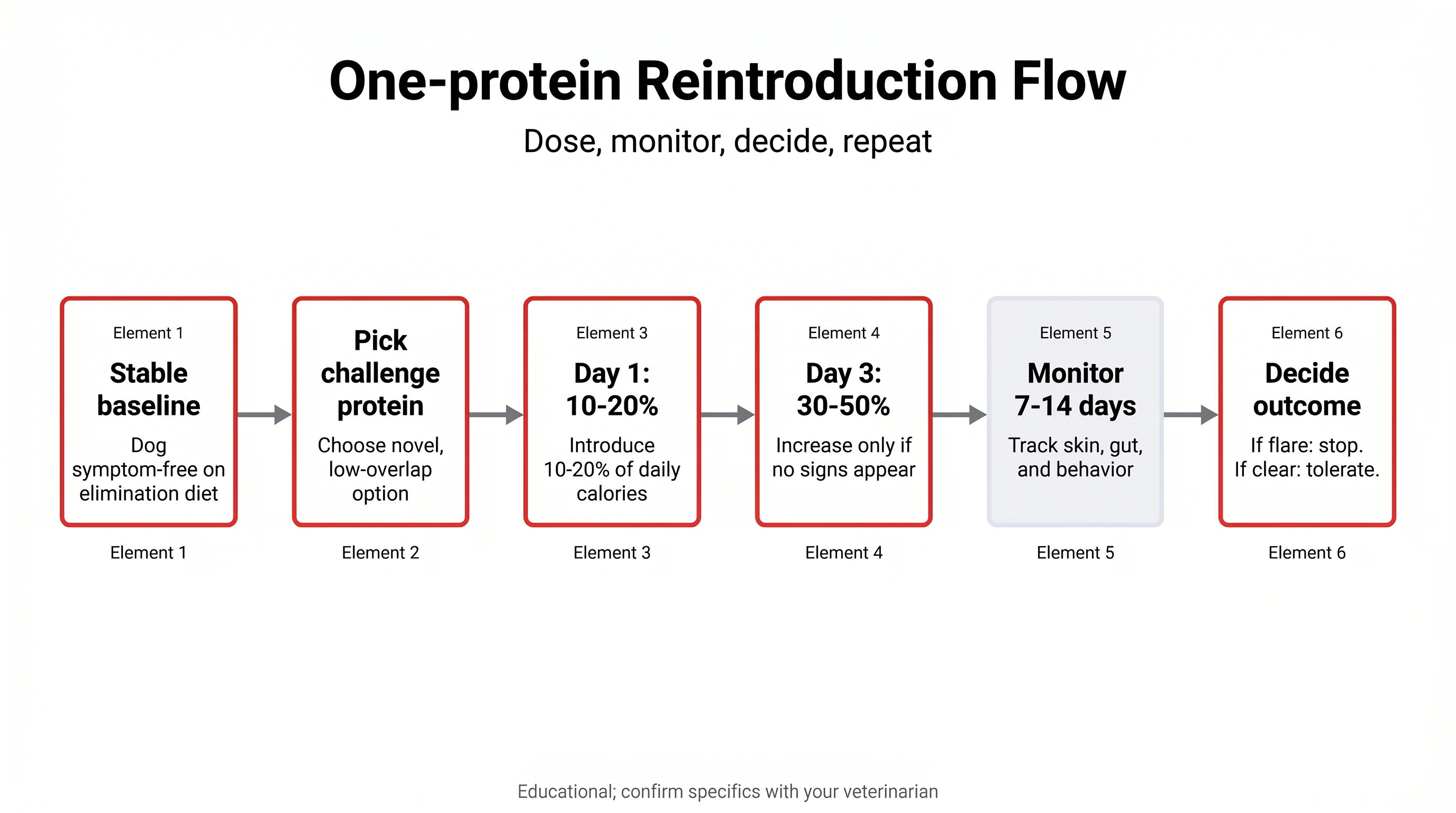
Introduce the challenge protein at 10–20% of daily calories on day one, then increase to 30–50% by day three if no signs appear. Maintain exposure for 3–7 days. If signs occur, stop immediately and return to the safe baseline for 3–5 days before testing another protein.
How to record signs: a simple challenge diary template
Keep entries objective and brief. Note protein name, brand, batch, portion, stool score, itch level, and any behavioural change. Record timing of onset and resolution of signs. This supports pattern recognition and cleaner decisions with your veterinarian.
Quick decision guide: if X, then Y
5–7 rapid rules for common outcomes
- If mild itching starts within 24–72 hours, stop the challenge and return to the safe diet for 3–5 days.
- If gastrointestinal signs emerge (loose stools, vomiting), stop immediately and hydrate; resume the baseline diet.
- If no signs after 7 days, tentatively mark the protein as “tolerated” and schedule a retest in 4–8 weeks to confirm.
- If signs appear after increasing portion size, note a dose‑response and classify as “suspect” for future avoidance.
- If mixed proteins were fed unknowingly, discard the result and repeat with a verified single‑ingredient product.
- If flares persist beyond 72 hours off the protein, consult your vet to rule out environmental or seasonal triggers.
Monitoring guidance: what to watch after 7–14 days and 4–8 weeks
Short‑term markers (skin, stools, behaviour)
Across 7–14 days, track pruritus intensity, ear debris, paw licking, stool consistency, gas, and vomiting. Behavioural shifts such as restlessness or decreased appetite can signal discomfort. For label literacy that prevents accidental exposures, see our guide on how to read treat labels.
Medium‑term markers (weight, coat quality, flare frequency)
Over 4–8 weeks, monitor weight trend, coat shine, dandruff, and the interval between any flares. Evidence suggests elimination trials followed by challenges can clarify food‑responsive disease and support diet‑based control strategies.[2]
Practical safety boundaries for reintroduction and treats
Ingredient control and cross‑contact
Choose foods with one declared animal protein and no ambiguous “meat derivatives.” Production lines may handle multiple meats, so ask suppliers about segregation practices. DNA studies have found undeclared species in some diets, reinforcing strict sourcing checks.[4]
Portion size, chew hardness and fat levels
Keep challenge portions modest at first to limit dose‑related flares. Select chews that match jaw strength and dental status. Excess fat can aggravate stools, so prefer leaner options during trials to reduce confounding digestive effects.
When to pause and seek veterinary input
Pause challenges for severe gastrointestinal signs, secondary skin infection, or rapid weight loss. Your vet may recommend hydrolysed or elemental options to regain control before further testing, then step back to whole‑food trials later.[1]
Building a long‑term menu and treat rules post‑diagnosis
Core diet with 1–2 confirmed safe proteins
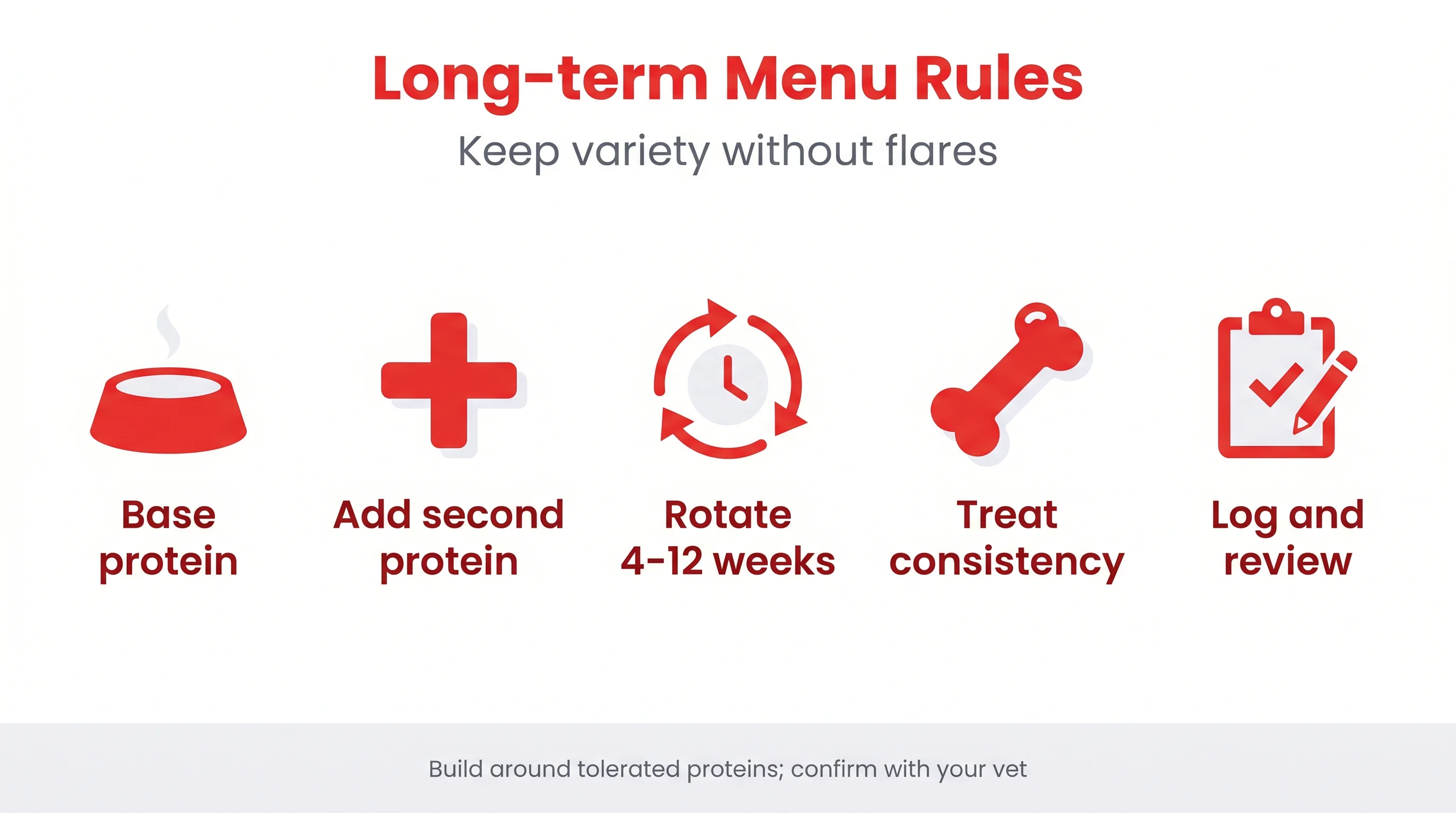
Establish your daily menu around one fully tolerated protein, then add a second once stability is proven. Evidence from chronic enteropathy cases suggests diet consistency may support remission, though individual response varies.[2]
Rotation without re‑sensitising: cadence and variety
Rotate tolerated proteins every 4–12 weeks to maintain interest and nutritional breadth without chaotic shifts. Keep new items rare, deliberate, and well‑documented. For novel options like buffalo, review our perspective in Is Buffalo a Good Novel Protein for Dogs with Food Allergies?
Treat framework: training, dental, and durable chews
Set clear treat rules. Training rewards should match a confirmed safe protein and represent under 10% of daily calories. For allergy‑safe chewing, single‑ingredient options with transparent sourcing may help. Many owners find Buffalo Meat Jerky - Dog Treats useful because it is lean and simply formulated.
Evidence status: what research supports and where uncertainty remains
What elimination diets clarify
Elimination and rechallenge remain the practical standard for diagnosing adverse food reactions in dogs. Nutritional management texts and trials consistently frame this approach as central to identifying food‑responsive disease.[2]
What challenge protocols suggest
Protocols vary, but many confirm a trigger when signs recur during controlled exposure and resolve on withdrawal. Elemental or hydrolysed phases may help stabilise difficult cases before whole‑protein testing resumes.[1]
Areas needing more robust data
Real‑world contamination risks and optimal rotation schedules require stronger evidence. Limited reports suggest some unconventional proteins, including insects, may be tolerated in select dogs, but data are preliminary and case‑based.[3]
Templates and tools
7‑day challenge diary example
| Day | Protein & Source | Portion | Skin Signs | GI Signs | Notes |
|---|---|---|---|---|---|
| 1 | Buffalo, Brand A, Batch 123 | 15% daily kcal | Itch 0/10 | Stool 3/5 | Energy normal |
| 2 | Buffalo, Brand A, Batch 123 | 20% daily kcal | Itch 1/10 | Stool 3/5 | No gas |
| 3 | Buffalo, Brand A, Batch 123 | 30% daily kcal | Itch 1/10 | Stool 2/5 | Coat normal |
| 4 | Buffalo, Brand A, Batch 123 | 40% daily kcal | Itch 2/10 | Stool 3/5 | Slept well |
| 5 | Buffalo, Brand A, Batch 123 | 50% daily kcal | Itch 2/10 | Stool 3/5 | Ear clean |
| 6 | Buffalo, Brand A, Batch 123 | 50% daily kcal | Itch 1/10 | Stool 3/5 | No licking |
| 7 | Buffalo, Brand A, Batch 123 | 50% daily kcal | Itch 1/10 | Stool 3/5 | No flare |
Ingredient audit checklist for labels and supplier info
- Confirm single‑protein ingredient list with no ambiguous “meat” terms.
- Verify flavourings and coatings do not contain other animal proteins.
- Request batch and facility segregation details to minimise cross‑contact.
- Check analytical constituents for fat and fibre that suit your plan.
- Retain receipts, labels, and batch numbers for your diary and vet review.
- Prefer brands that publish sourcing and use fully recyclable packaging for transparency and sustainability.
Frequently Asked Questions
How long should I wait between reintroducing new proteins?
Many clinicians suggest 3–7 days of exposure per protein followed by a 3–5 day washout if signs appear. Evidence suggests spacing helps isolate triggers while reducing overlap.
What signs indicate a failed food challenge in dogs?
Common signs include itching, ear irritation, soft stools or diarrhoea, vomiting, and increased licking. If signs return within 72 hours, consider that protein suspect and stop the challenge.
Can I use treats during the reintroduction phase?
Yes, if they match the exact challenge protein and are single‑ingredient with transparent labels. Avoid mixed proteins and flavourings to minimise cross‑contact risk.
When can I add a second safe protein to my dog’s long‑term plan?
After confirming the first safe protein over 2–4 weeks without flares, you may trial a second protein using the same protocol, ensuring clear labelling and separate preparation.
Do hydrolysed diets remove the need for challenges?
Hydrolysed diets may reduce reactions during diagnosis, but challenges can still be useful to identify tolerated whole‑food proteins for a sustainable long‑term plan.
Two final pointers strengthen outcomes. First, if a protein repeatedly fails, sidestep it and consider alternatives aligned with your history; see our guidance on Chicken Sensitivity in Dogs: Hidden Sources and Safer Alternatives. Second, if uncertainty persists about initial diagnosis or execution, revisit How to Run a Vet‑Supervised Elimination Diet for Your Dog and validate your baseline before new trials.
Reintroduction after the elimination diet rewards precision. A structured protocol, careful monitoring, and disciplined treat rules create a safe, enjoyable menu. Together with your veterinarian, build a rotation of confirmed proteins, apply clean sourcing, and document results. This measured approach may reduce flares, improve quality of life, and keep your dog’s diet both simple and satisfying.
References
- J Tinsley et al. (2024). An open‐label clinical trial to evaluate the efficacy of an elemental diet for the diagnosis of adverse food reactions in dogs. Veterinary …. View article
- AJ Rudinsky et al. (2018). Nutritional management of chronic enteropathies in dogs and cats. Journal of the American …. View article
- R Gałęcki et al. (2025). Long-Term Clinical Remission of Food-Responsive Enteropathy in a Dog Fed a Yellow Mealworm-Based Diet: A Case Report. 2025 - europepmc.org. View article
- LA Fossati et al. (2019). Determination of mammalian DNA in commercial canine diets with uncommon and limited ingredients. … medicine and science. View article