

Safe Treats During an Elimination Trial: What’s In, What’s Out
Safe Treats During an Elimination Trial: What’s In, What’s Out
Elimination trials live or die on strict food control. Tiny slip-ups can blur the picture and keep your dog itching or uncomfortable. Clarity demands discipline.
This matters because one wrong treat can prolong symptoms and delay a confident diagnosis. In this article, you will learn treat rules that protect data integrity, how to avoid cross-contamination, and practical single-protein options that may suit trials.
Why treats make or break an elimination trial
How even tiny exposures can skew results
Elimination diets depend on exclusive feeding. Even trace exposures to non‑trial proteins may trigger symptoms and confuse interpretation of results. Hydrolysed protein diets are designed for exclusive use, including treats, to minimise antigen exposure[4]. If a dog’s diet is “almost” right, diagnosis can become unreliable, because inadequate dietary control is a known reason for trial failure[2]. Owners often underestimate risk from incidental sources such as food rewards from others, crumbs in pockets, or residue on bowls.
What counts as a ‘treat’ during the trial
A treat is anything not expressly part of the prescribed trial diet. That includes training rewards, dental chews, pill pockets, table scraps, stock cubes, gravies, and flavoured toothpastes. With careful selection that matches the trial protein, treats may still be feasible without compromising outcomes[1]. Ask your vet to confirm compatibility before introducing any new item.
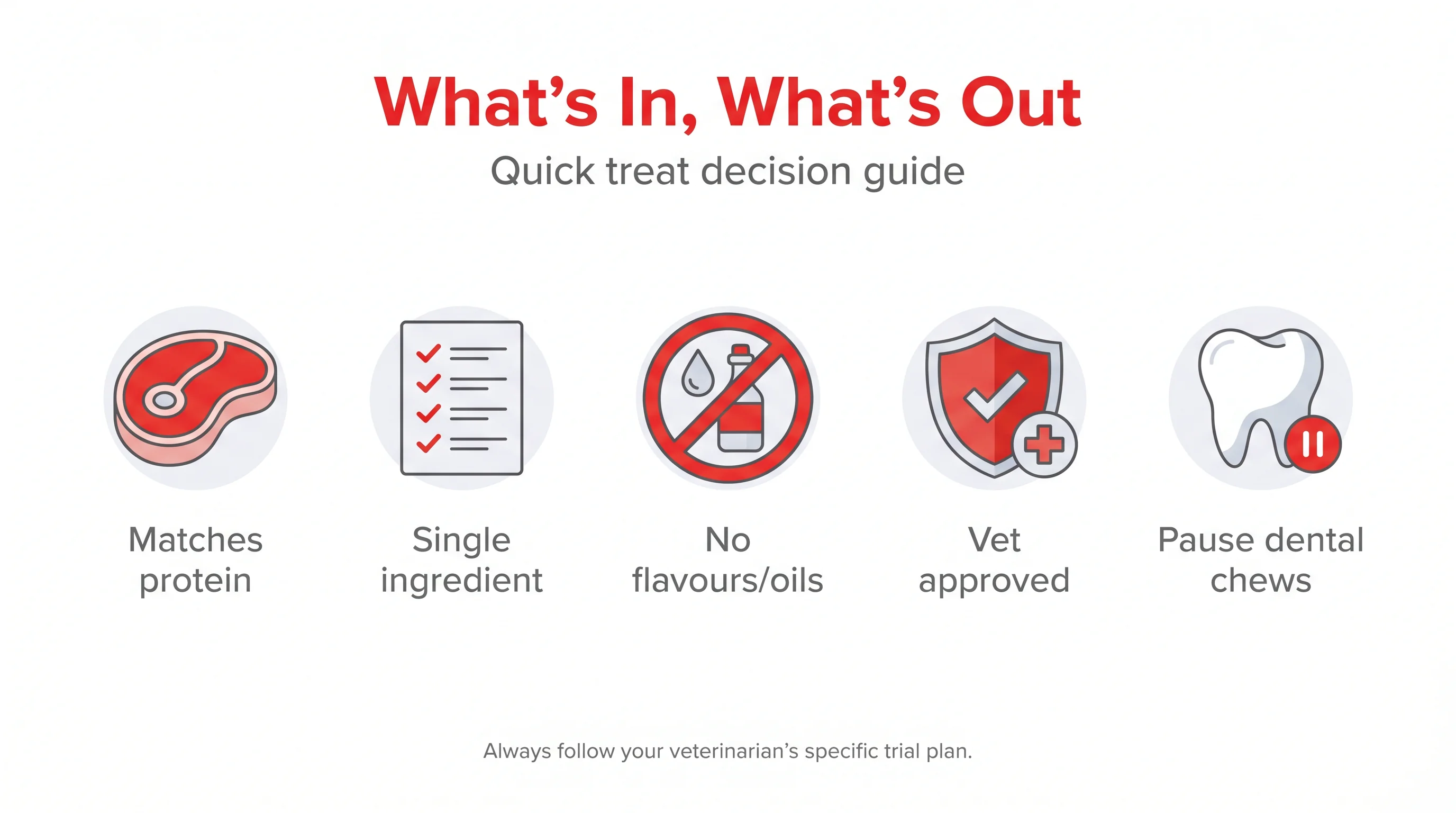
Quick decision guide: what’s in, what’s out
If X situation, then Y action (5–7 practical scenarios)
- If your dog is on a hydrolysed veterinary diet, then use only the same diet as treats or manufacturer‑matched hydrolysed treats. Avoid all other items[4].
- If your trial uses a novel protein, then choose single‑ingredient treats from that exact protein and avoid mixed meats or flavourings.
- If a medication is flavoured, then request an unflavoured tablet, capsule, or a gelatin capsule wrap. Avoid savoury pastes and cheese.
- If training outside, then pre‑portion approved treats in a clean, dedicated pouch. Politely decline handouts from others.
- If there are other pets in the home, then feed separately and store foods in sealed containers to reduce cross‑contamination dog food risks.
- If stools soften or itch worsens after adding a treat, then stop the treat and wait three to five days before reassessing.
Approved treat frameworks: single‑protein and minimally processed
Single‑protein options that align with common trials
For most food trial for dogs protocols using a novel protein, the safest treats follow one rule: single‑protein, single‑ingredient, and minimally processed. Examples may include air‑dried buffalo lung, venison strips, rabbit ears, or pure fish skins. When buffalo is your chosen novel protein, its low prevalence in standard diets can be advantageous for sensitive dogs. Learn more about suitability in Is Buffalo a Good Novel Protein for Dogs with Food Allergies?. Many owners use light, airy pieces as high‑frequency training rewards, keeping total volume modest. For example, some opt for air‑dried buffalo lung slices like Buffalo Lung Steaks - Dog Treats for single protein dog treats in trials.
Reading labels: ingredients, additives and analytical constituents
Dog elimination diet treats should list a single named protein and no added flavours, stock, oils, cereals, or binding agents from other sources. Avoid vague terms such as “meat and animal derivatives,” which obscure protein origin. Check “analytical constituents” to monitor fat and fibre. Higher fat may affect stool quality during trials. Evidence suggests that poor label scrutiny is a common pitfall that undermines trial accuracy[2]. For step‑by‑step label triage, read How to Read Dog Treat Labels for Allergy Safety.
Avoiding cross‑contamination at home and on walks
Storage, preparation and handling protocol
Cross‑contamination dog food issues can arise from open bags, shared scoops, or treat “dust” settling on surfaces. Store the trial diet and approved treats in sealed, labelled containers on a separate shelf. Use dedicated measuring cups and cutting boards. Wash hands before handling food and between pets. Do not prepare trial treats near other pet foods. On walks, keep pre‑portioned treats in a sealed pouch reserved solely for the trial.
Utensils, bowls and training pouches: reduce residue risk
Use a dedicated set of bowls, slow‑feeders, and training pouches during the trial. Wash bowls, scissors, and chews holders with hot water and detergent after each use. Clean fabric pouches inside and out to remove crumbs. Replace porous chews toys that may harbour food residues, and avoid communal treat jars at training venues.
Portioning and frequency: how much is safe?
Guidance by dog size and trial phase
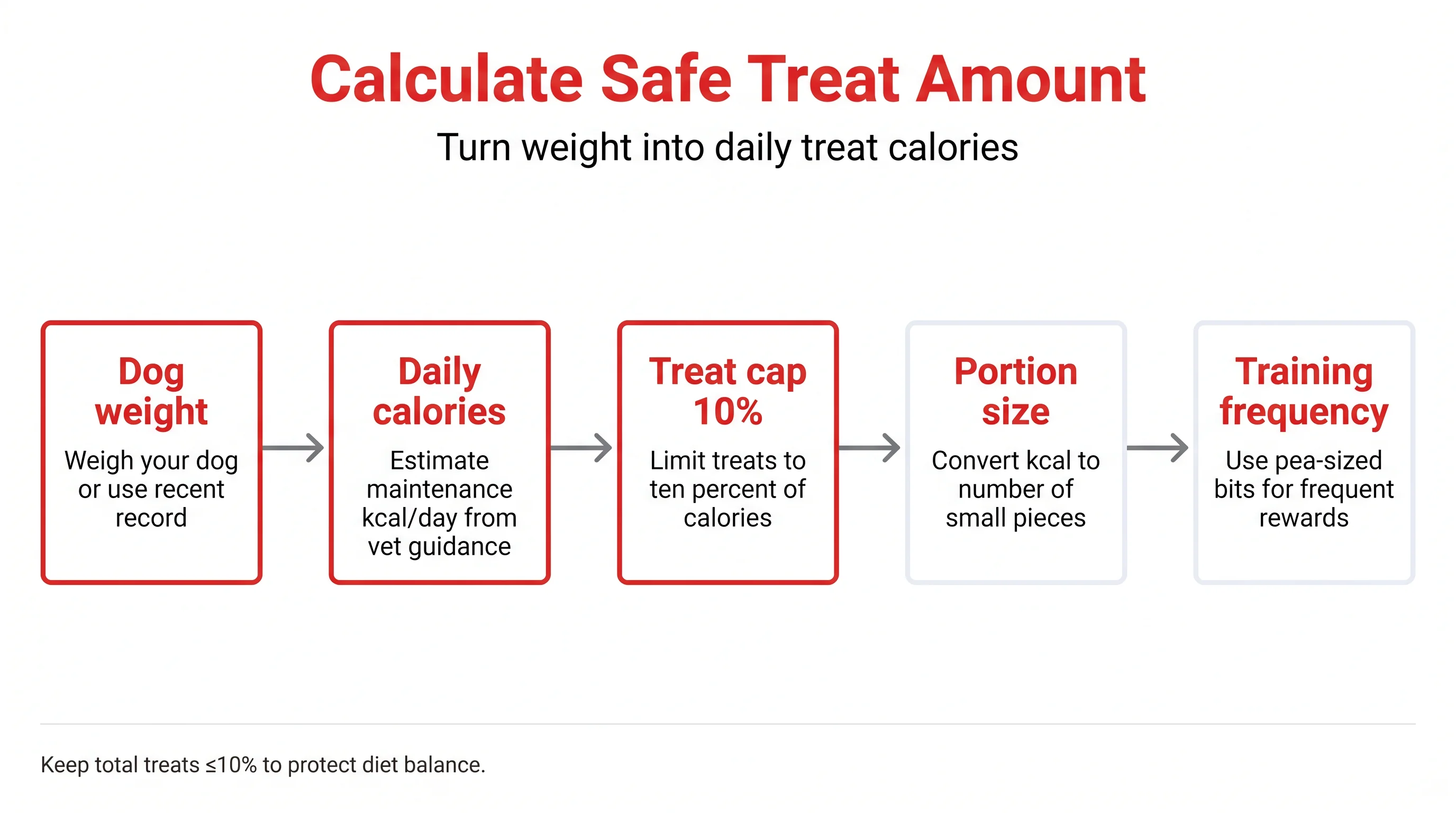
Keep total treats at or below 10% of daily calories to preserve the nutrient balance of the trial diet. For small dogs (5–10 kg), target 20–60 kcal/day from approved treats. For medium dogs (10–25 kg), 40–120 kcal/day is a reasonable ceiling. For large dogs (25–40 kg+), 60–200 kcal/day may be suitable. In the first 7–14 days, be extra conservative. Increase modestly only if skin and gut signs remain stable.
Training rewards vs. boredom‑busting chews
Training rewards work best as small, low‑crumb pieces from the approved protein. Break larger items into pea‑sized bits for frequent reinforcement without calorie overload. Reserve boredom‑busting chews for structured downtime. Pick light, lower‑fat items that are easy to portion and monitor. Air‑dried lung or pure fish skins often fit these criteria better than dense, fatty chews.
Monitoring: what to watch at 7–14 days and 4–8 weeks
Short‑term signs to track
In the first two weeks, observe itch intensity, ear discharge or odour, facial rubbing, licking, and stool consistency. Note any vomiting or flatulence. Consistent logs help identify patterns and reactions. Use our Symptoms Checklist: Is Your Dog Showing Signs of a Food Allergy? to structure observations. If a new treat correlates with a flare, withdraw it and record the change.
Longer‑term patterns and when to pause
Across four to eight weeks, expect gradual stabilisation if the diet is truly exclusive. If progress stalls, reassess for accidental exposures or hidden ingredients. Trials commonly require 6–8 weeks for dermatologic signs, and longer for some gastrointestinal cases[2]. For dogs on hydrolysed diets, any non‑approved treat may necessitate restarting the clock[4]. If signs worsen, pause all treats and consult your vet.
Practical safety boundaries
Choking, GI tolerance and hydration
Choose treats sized appropriately for your dog’s jaw and chewing style. Avoid excessively hard weight‑bearing bones during trials. Introduce one new treat at a time and monitor stools for 48–72 hours. Provide fresh water at all times. If your dog gulps, select softer, airy pieces rather than dense chews, and supervise until you understand their chewing behaviour.
When to contact your vet
Contact your vet if vomiting, diarrhoea, or marked itch persists beyond 24–48 hours after stopping treats. Seek veterinary advice if you suspect accidental exposure to a known allergen. Dogs with concurrent conditions may require stricter protocols and closer follow‑up. Your vet may adjust the plan or recommend pausing all treats until stability returns.
Evidence status: what research suggests
Allergen exposure and trial accuracy
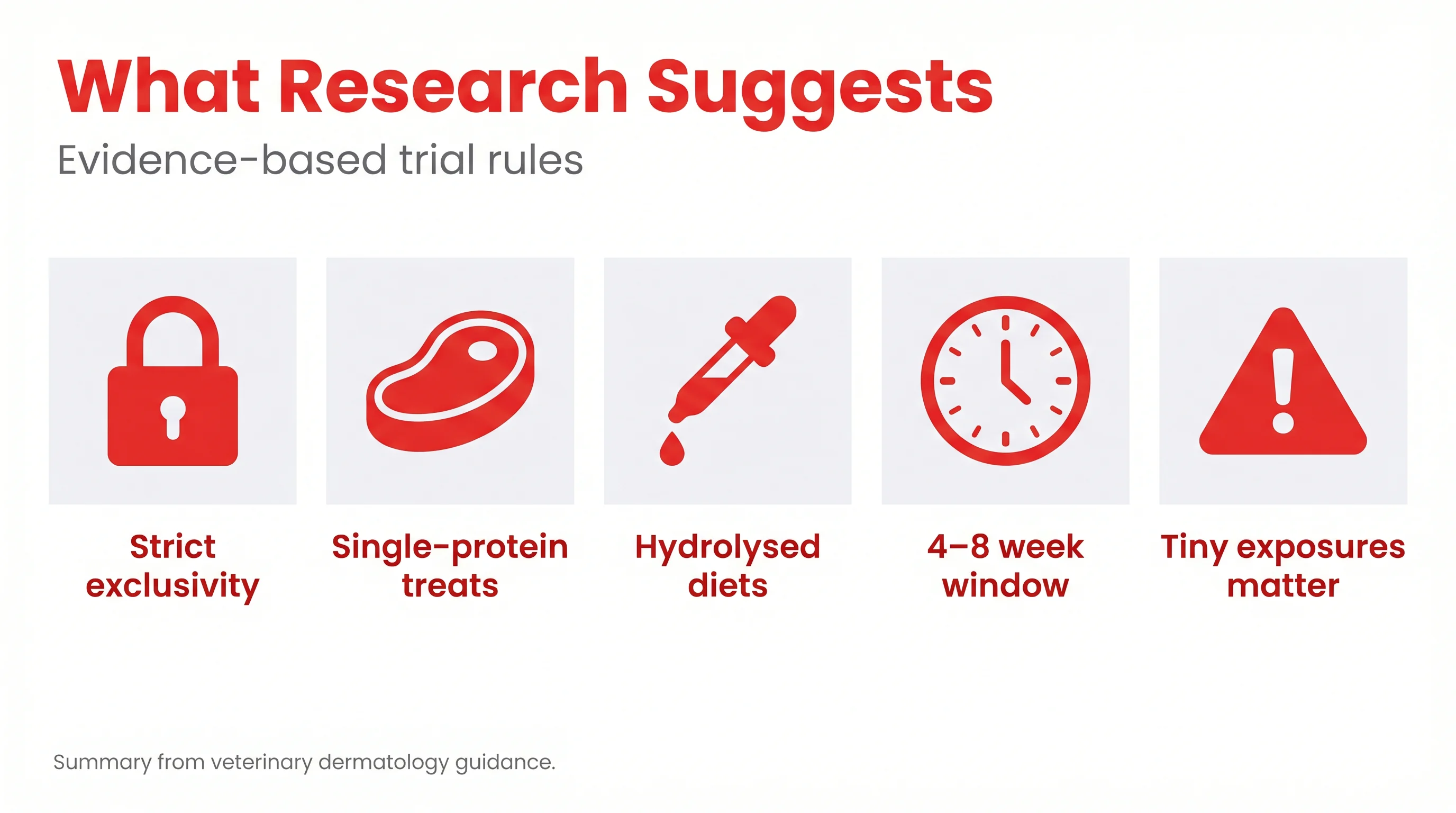
Veterinary guidance emphasises exclusivity during elimination trials, including treats, because even small allergen exposures may compromise diagnostic accuracy[4]. Inadequate diet selection or hidden ingredients can lead to inconclusive outcomes and extended trial durations[2]. Well‑chosen treats can be compatible with trials when protein sources are controlled and documented[1].
Single‑protein and limited‑ingredient rationale
Single‑protein, limited‑ingredient choices aim to reduce antigenic load and simplify monitoring. Hydrolysed formulas and even elemental diets are tools within veterinary protocols, though current evidence does not conclusively show elemental diets outperform all alternatives for diagnosis[3]. Overall, evidence supports cautious, exclusive feeding rather than specific brand allegiance[4].
Examples that may fit common trial designs
If trial protein is novel (e.g., buffalo or venison)
For novel protein trials, consider single‑ingredient options that match the chosen meat. Air‑dried buffalo lung, venison strips, rabbit ears, or goat paddywack are typical candidates. Avoid mixed‑meat jerky, flavour‑sprayed chews, or starch‑bound bites. Hypoallergenic dog treats should disclose full composition, processing method, and country of origin.
If using hydrolysed veterinary diets
For hydrolysed diets, keep treats simple: use the kibble itself as training rewards or manufacturer‑approved hydrolysed treats. Do not mix in novel‑protein treats, even if single‑ingredient. This exclusive approach may reduce confounding reactions and protect trial accuracy[4].
Frequently Asked Questions
Can I give dental sticks during an elimination trial?
Only if the product matches the trial’s protein and has no added flavours that could introduce other proteins or grains. If unsure, pause dental sticks until the challenge phase.
How many treats can my dog have on a food trial?
Keep total treats to around 10% or less of daily calories to avoid replacing the trial diet. Smaller, frequent rewards from the approved protein are usually easier to control.
Are single‑ingredient chews safe for trials?
They may be suitable if they match the trial protein and contain no additives. Check labels for hidden ingredients and monitor stool quality and skin signs after introduction.
What about training rewards when outside the house?
Pre‑portion approved treats in a clean pouch used only for the trial. Avoid shared treat jars and well‑meaning handouts from others to reduce contamination risk.
Do I need separate bowls and utensils?
Using dedicated bowls and washing with hot water may reduce residue transfer. Store treats in sealed containers away from other pet foods.
Summary and next steps
Re‑introductions after the challenge phase
When you finish the strict phase, reintroduce foods methodically, one at a time. Keep a diary and allow several days between items. If signs return, remove the suspect and report findings to your vet for a long‑term plan.
Where to learn more on allergies and trials
For a structured overview of triggers, trials, and decision‑making, start with our complete guide to dog food allergies. If you are choosing a novel protein, review label details carefully and lean on your vet’s guidance to maintain a clean, conclusive trial.
References
- E Groves (2022). Diet in canine dermatology part 2: management of cutaneous adverse food reactions. The Veterinary Nurse. View article
- C Villaverde (2024). Dietary options for diagnosis of cutaneous adverse food reactions. Companion Animal. View article
- J Tinsley et al. (2024). An open‐label clinical trial to evaluate the efficacy of an elemental diet for the diagnosis of adverse food reactions in dogs. Veterinary …. View article
- J Churchill (2020). " Eliminate" the pitfalls of a diet trial.. 2020 - cabidigitallibrary.org. View article