

Senior dogs with bad breath: gentle dental care and risk checks
Senior dogs with bad breath: gentle dental care and risk checks
Bad breath in a senior dog is more than an inconvenience. It is a comfort, health, and safety signal. Older mouths change. Routines should change with them.
This supporting post focuses on age-specific risks and gentle solutions. You will learn what to check first, how to choose softer options, and where safety lines sit. You will also learn when to pause home care and call your vet.
Why older dogs develop bad breath (and what’s different with age)
Common age‑linked causes: periodontal disease, loose teeth, oral masses
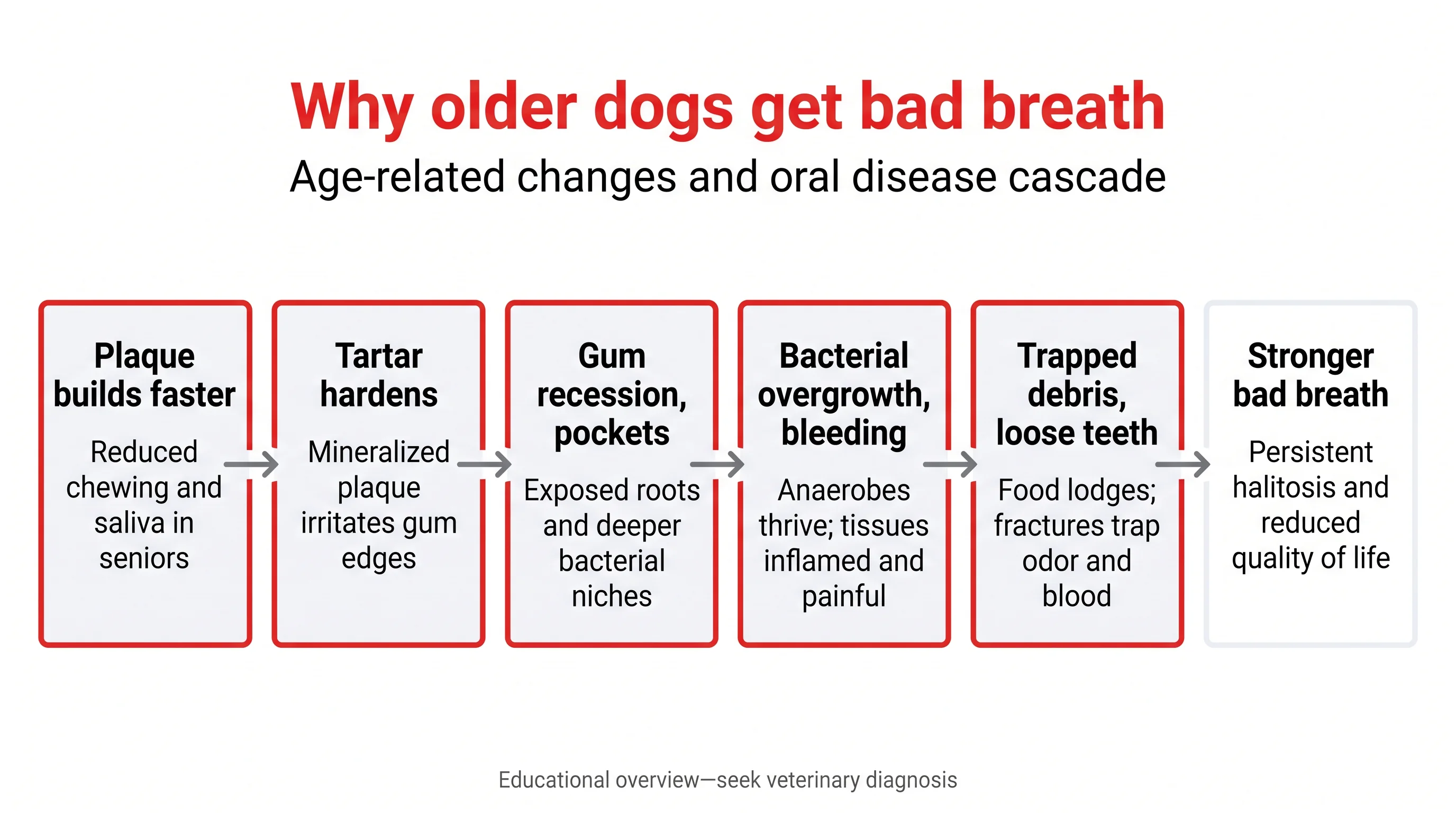
In senior dogs with bad breath, periodontal disease is the leading cause. Plaque hardens to tartar, gums recede, and pockets deepen. Bacteria flourish and odour rises.
Loose or fractured teeth may trap debris and bleed easily. That worsens smell and comfort. Oral masses in dogs, including benign growths and cancers, also alter breath and chewing habits. Early veterinary checks are important for any new lump or persistent ulceration.
Age magnifies small problems. Years of minor plaque lead to advanced periodontitis, especially in small breeds. Professional guidance can prioritise pain relief and hygiene in frail patients.[4]
Comfort and safety considerations in senior mouths
Older mouths may be drier and more sensitive. Exposed dentine and gum recession increase pain from pressure or cold. Biting force can be lower, and tooth roots may be fragile.
Chewing styles change too. Many older dogs prefer licking, nibbling, or gradual gnawing. Respecting this shift protects confidence and prevents injuries. Choose gentle dental care for dogs, not a “power-chewer” path.
Assess comfort each session. If chewing pace slows or your dog withdraws, stop immediately. Comfort-first routines usually build better hygiene compliance in the long run.
Quick decision guide: what to do right now
If X, then Y actions for 5–7 typical senior scenarios
- If breath is suddenly foul with drooling or facial swelling, book a veterinary visit within 24–72 hours. Pause all chews until examined.
- If there is visible loose tooth movement, avoid all chews. Request a dental assessment soon to address pain and infection.
- If bad breath is moderate, gums are pink, and chewing seems comfortable, start a soft-texture dental routine with close supervision.
- If you feel a mouth lump or see an ulcer that does not heal within two weeks, seek a prompt vet check for oral masses in dogs.
- If your dog coughs when drinking or shows reflux, discuss GI or aspiration risks with your vet before adding treats or gels.
- If your dog takes medications that dry the mouth, ask about saliva support strategies. Use very soft chews and gentle, short brushing.
- If plaque is mild and there is no pain, introduce brushing three to five days weekly, plus a single daily, soft chew session.
Gentle dental routines that respect senior mouths
Soft‑texture options and how to size them safely
Prioritise soft chews for senior dogs. Pick pliable, air‑dried textures that indent under your thumbnail. Avoid very hard antlers, weight‑bearing bones, or rigid nylon.
Choose lengths that exceed the width of your dog’s mouth by at least 1.5 times to discourage gulping. Hold one end initially to moderate pace. Stop if your dog shows lip‑licking, pawing, or flinching.
Many owners find Gently Dently- Fresh Breath Mint Dental Treats helpful because the gentle profile suits older mouths while providing light gum massage. Keep sessions short and supervised.
Toothbrushing, gels and water additives: what evidence suggests
Brushing remains the most reliable at‑home method for plaque control. Daily is ideal, but three to five times weekly still helps. Enzymatic toothpastes may support results when brushing is light.
Evidence suggests dental chews can reduce plaque and halitosis in adult dogs, though effects vary by design and diet.[1] Trials in toy breeds also report improvements in plaque and malodour with specific chew formulations.[3]
Recent research on structured, honeycomb‑style chews indicates meaningful reductions in calculus, plaque, gingivitis, and malodour when used daily.[2] Start gently, assess tolerance, and combine with soft brushing where accepted. For broader routine building, see how to build a daily dental routine for dogs.
Practical safety boundaries for elderly dogs
Chew hardness rules and duration
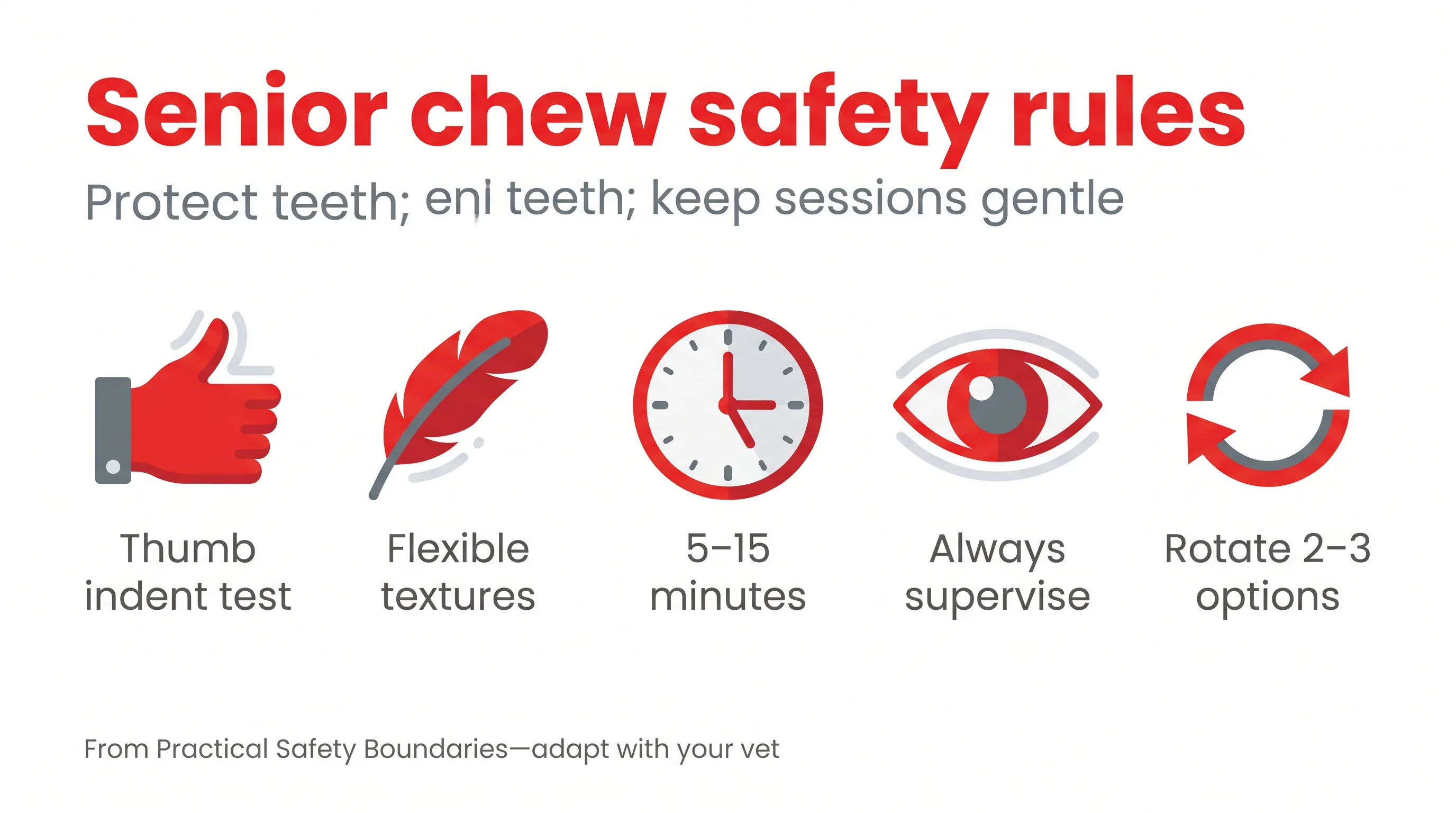
Follow a simple rule: if you cannot indent a chew with your thumbnail, it is likely too hard for senior teeth. Favour flexible textures that bend or compress under pressure.
Limit chew time to 5–15 minutes once daily. Stop earlier if the chew softens into swallowable pieces. Supervise every session. Rotate two to three gentle options across the week to reduce repetitive strain.
Monitor stools and hydration. A sudden diet change or heavy chew intake can upset digestion. Integrate small, predictable sessions into your dog’s normal mealtime rhythm.
When to pause all home care and seek a vet
Pause immediately if you see gum bleeding, pawing at the mouth, jaw chatter, persistent drooling, or food drop. Call your vet if breath worsens despite care over two to four weeks.
Any fractured tooth, loose tooth, or oral mass warrants professional assessment. Painful mouths need relief first, hygiene second. Learn the warning signs in our red‑flag checklist for dog bad breath.
After extractions or a dental procedure, follow your vet’s texture and timing guidance precisely. Resume at‑home care only when cleared.
Risk checks you can do at home (and red flags for the vet)
Simple look‑smell‑touch checklist
Look under bright light. Lift the lips and inspect gum lines for redness, swelling, or grey tartar. Check for broken teeth, ulcers, or growths. Note any side your dog avoids.
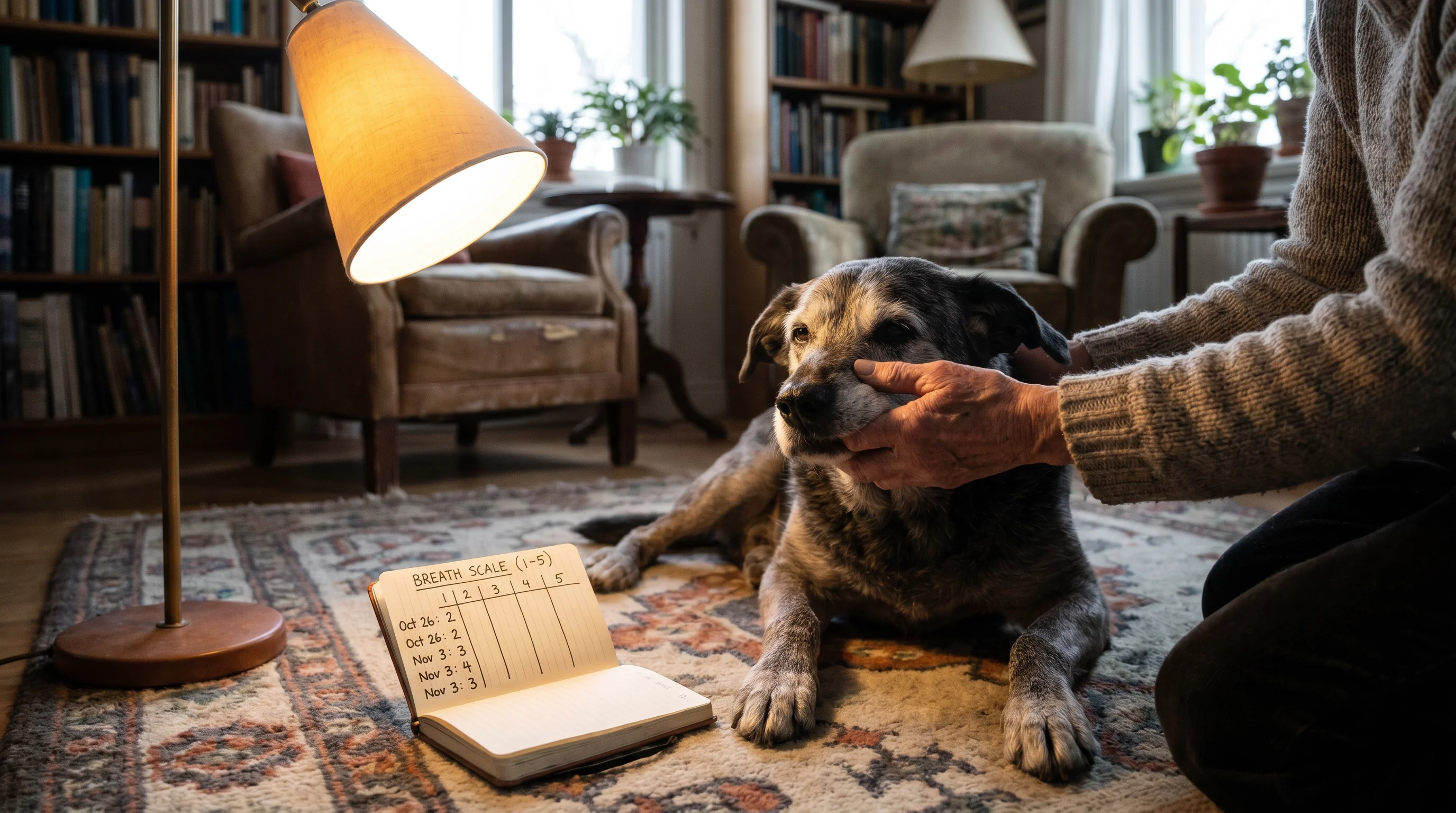
Smell gently from a short distance. Record odour strength weekly. A “rotten” or metallic scent signals infection or bleeding. Touch the muzzle and jawline briefly to assess tenderness without prying the mouth open.
If plaque or tartar are visible, adjust your plan. For clarity on deposit types, see our guide to plaque versus tartar in dogs. Choose gentle textures and consider natural, high‑protein chew formats.
Medication, kidney or GI factors that can influence breath
Dog bad breath in older dogs is not always dental. Kidney disease may produce a urine‑like smell. Uncontrolled diabetes can smell sweet or fruity. GI reflux may create sour odour with lip‑licking.
Some medications reduce saliva and worsen plaque. Others upset the stomach, elevating regurgitation risk. Discuss interactions with your vet. Align chew timing with meals and water to reduce reflux triggers.
Persistent vomiting, weight loss, or severe lethargy alongside halitosis requires prompt veterinary evaluation. Rule out systemic causes before intensifying dental routines.
Monitoring: what to look for after 7–14 days and 4–8 weeks
Short‑term comfort and breath changes
Within 7–14 days, look for easier chewing, fewer lip‑licks, and less drooling. Breath may moderate by one to two “steps” on your personal scale. Tolerance to brushing should improve slightly each session.
If your dog resists more with time, stop and reassess texture, duration, and frequency. Reduce pressure and shorten sessions. Align expectations with your dog’s comfort first.
For system‑level planning and alternatives, consult our central bad breath guide. It provides a structured hygiene pathway alongside vet check triggers.
Medium‑term plaque, weight and chewing confidence
At 4–8 weeks, target less visible soft plaque at the gum margin and steadier breath. Weight should remain stable. Chewing confidence may rise, with smoother, regular gnawing on soft options.
If tartar persists, or breath does not improve, schedule a dental examination. Consider professional cleaning to reset the baseline. Rebuild with softer textures after recovery, using short, supervised sessions.
Hydration supports oral comfort, especially after dental procedures. Offer fresh water in multiple locations and encourage calm, frequent drinks across the day.
Evidence status: what we know, what’s emerging
Professional dental cleaning and periodontal outcomes
For established periodontal disease in senior dogs, professional cleaning under anaesthesia remains the standard of care. It addresses subgingival plaque, calculus, and infected pockets that home routines cannot reach.[4]
Outcomes depend on disease stage, tooth stability, and follow‑up hygiene. Frail patients may need modified anaesthetic protocols. Your vet will balance risks against the benefits of infection control and pain relief.
Chew texture, chlorhexidine and enzymatic aids
Chew texture matters. Studies report that appropriately designed dental chews can reduce plaque, calculus, gingivitis, and halitosis when used routinely.[1][2][3]
Chlorhexidine in gels or rinses may limit bacterial regrowth. Enzymatic toothpastes may add benefit when brushing is light. Use cautiously in seniors, prioritising comfort and avoiding aspiration risk.
Herbs and breath fresheners: limited evidence caveats
Herbal additives and “breath fresheners” may mask odour temporarily. Robust trials remain limited. Avoid xylitol and harsh essential oils. Introduce one product at a time, watch stools and appetite, and discontinue if irritation occurs.
How this fits with your wider plan for bad breath
Linking age‑specific care to the central bad breath guide
Your senior plan should blend veterinary oversight with practical home routines. Use soft textures, short sessions, and careful monitoring. For sequencing, decision points, and daily habits, visit our central bad breath guide.
If your dog has a sensitive stomach or allergies, adapt ingredients and formats. Explore safe adjustments in our guide to freshening breath with sensitive stomachs or allergies.
When to consider specialist dentistry
Seek a veterinary dentist if pockets are deep, teeth are mobile, or suspected oral masses persist. Advanced imaging and staged therapy may be appropriate in complex cases. Quality‑of‑life and pain relief remain the priority.
Discuss pre‑anaesthetic screening, analgesia plans, and post‑procedure texture guidelines. A specialist can tailor protocols for fragile patients while targeting measurable periodontal improvements.
Frequently Asked Questions
Is bad breath in senior dogs always a sign of dental disease?
Often, yes, periodontal disease is common in older dogs, but breath changes can also relate to oral masses, GI issues or kidney disease. Persistent or worsening odour warrants a veterinary check.
What chew types are safer for elderly dogs with sensitive teeth?
Softer, air‑dried or pliable chews sized to prevent gulping may be more comfortable. Avoid very hard items if teeth are worn, loose or painful.
Can dental treats alone fix my older dog’s bad breath?
They may help reduce odour and soft plaque, but established periodontal disease usually needs a professional dental assessment and cleaning. Combine treats with gentle brushing where tolerated.
How quickly should I expect breath to improve?
Minor improvements may show in 1–2 weeks with consistent care. If there is no change by 4–8 weeks, or if pain, bleeding or swelling is present, seek veterinary advice.
Are water additives safe for senior dogs?
Many are considered safe when used as directed, but efficacy varies. Check ingredients, start slowly, and consult your vet if your dog has kidney, liver or GI conditions.
Conclusion
Dog bad breath in older dogs is often dental, but the right response is gentle, methodical, and safety‑aware. Prioritise comfort, choose softer textures, and monitor changes over weeks, not days.
Evidence suggests that brushing plus appropriately designed chews may support fresher breath, while veterinary care remains essential for established disease. With patient routines and clear safety boundaries, senior dogs can enjoy cleaner mouths and more confident chewing.
References
- MQ Carroll et al. (2020). Effects of novel dental chews on oral health outcomes and halitosis in adult dogs. Journal of animal …. View article
- SE Crowder et al. (2025). Effectiveness of a daily honeycomb-shaped dental chew in reducing calculus, plaque, gingivitis and malodor in dogs. Journal of …. View article
- A Mateo et al. (2020). Evaluation of efficacy of a dental chew to reduce gingivitis, dental plaque, calculus, and halitosis in toy breed dogs. Journal of Veterinary …. View article
- J Gawor et al. (2021). Dentistry through life: Pediatric and geriatric dentistry. The Veterinary Dental Patient: A …. View article