

Symptoms Checklist: Is Your Dog Showing Signs of a Food Allergy?
Symptoms Checklist: Is Your Dog Showing Signs of a Food Allergy?
Food reactions in dogs often hide in plain sight. Patterns can be missed during busy weeks. A simple log transforms guesswork into evidence your vet can use. It helps target diet changes quickly.
This focused dog food allergy symptoms checklist keeps your observations precise. You will track itching, ear infections, paw licking, soft stools, and the timing relative to meals. Expect clear steps to record, review, and discuss with your vet.
What a food allergy may look like (and how to use this checklist)
True food allergies often present as persistent, non-seasonal itch, recurrent ear problems, and localized paw irritation. Gastrointestinal signs such as soft stools or gas may accompany skin issues. Food reactions are among common canine allergy presentations, but they can overlap with other conditions.[1]
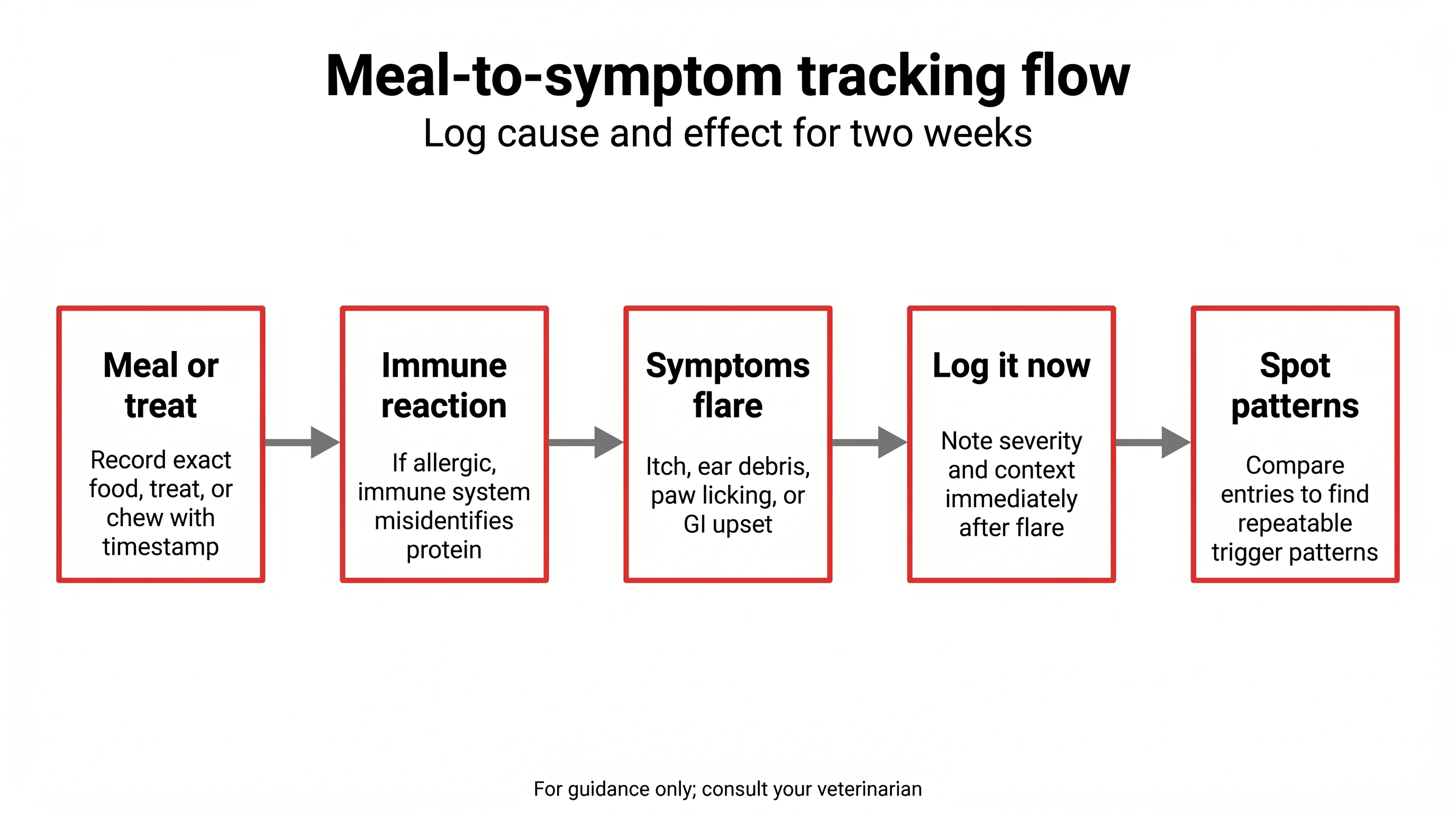
Use this checklist as a running diary for two weeks. Record exact times of meals, treats, chews, and symptom flares. Keep notes consistent, and avoid diet changes mid‑week. For broader context and owner training, see our food allergies orientation guide.
Key patterns to track for two weeks
Document five anchors daily: what was eaten, when it was eaten, where symptoms appear, how intense they are, and how long they last. Track itch scores, paw‑licking episodes, ear discharge, stool consistency, and any medications or cleaners used.
Link symptoms to meals, treats and chews
Time-stamp reactions. Note clusters of dog itching after eating within 30–180 minutes. Some food intolerances can emerge hours or even a day later, so maintain careful notes across 24–48 hours.[2] Log every treat and chew by brand and protein source.
Quick decision guide: what to do in common scenarios
If X, then Y actions for the next 7–14 days
- If you notice dog itching after eating dinner, then keep breakfast unchanged and simplify dinner to one protein and one carbohydrate. Pause all treats. Log timing precisely for 7–14 days.
- If soft stools appear after new chews, then stop the chews for 14 days. Record stool scores daily. Re‑introduce a single chew later, one at a time, with timing notes.
- If dog ear infections food allergy is suspected due to recurring ear discharge, then see your vet for cytology and treatment. Track flare timing versus meals. Record ear cleaning products.
- If paw licking in dogs spikes in the evening, then examine whether it follows dinner or nighttime walks. Hold one factor steady for 7–14 days while changing the other.
- If no clear pattern emerges after a week, then sharpen your log. Add exact timestamps, portion sizes, and environment notes such as grass exposure or wet weather.
- If symptoms escalate rapidly, then pause all treats and contact your vet. Note any facial swelling, hives, or vomiting as potential red flags.
The checklist: log symptoms, timing and triggers
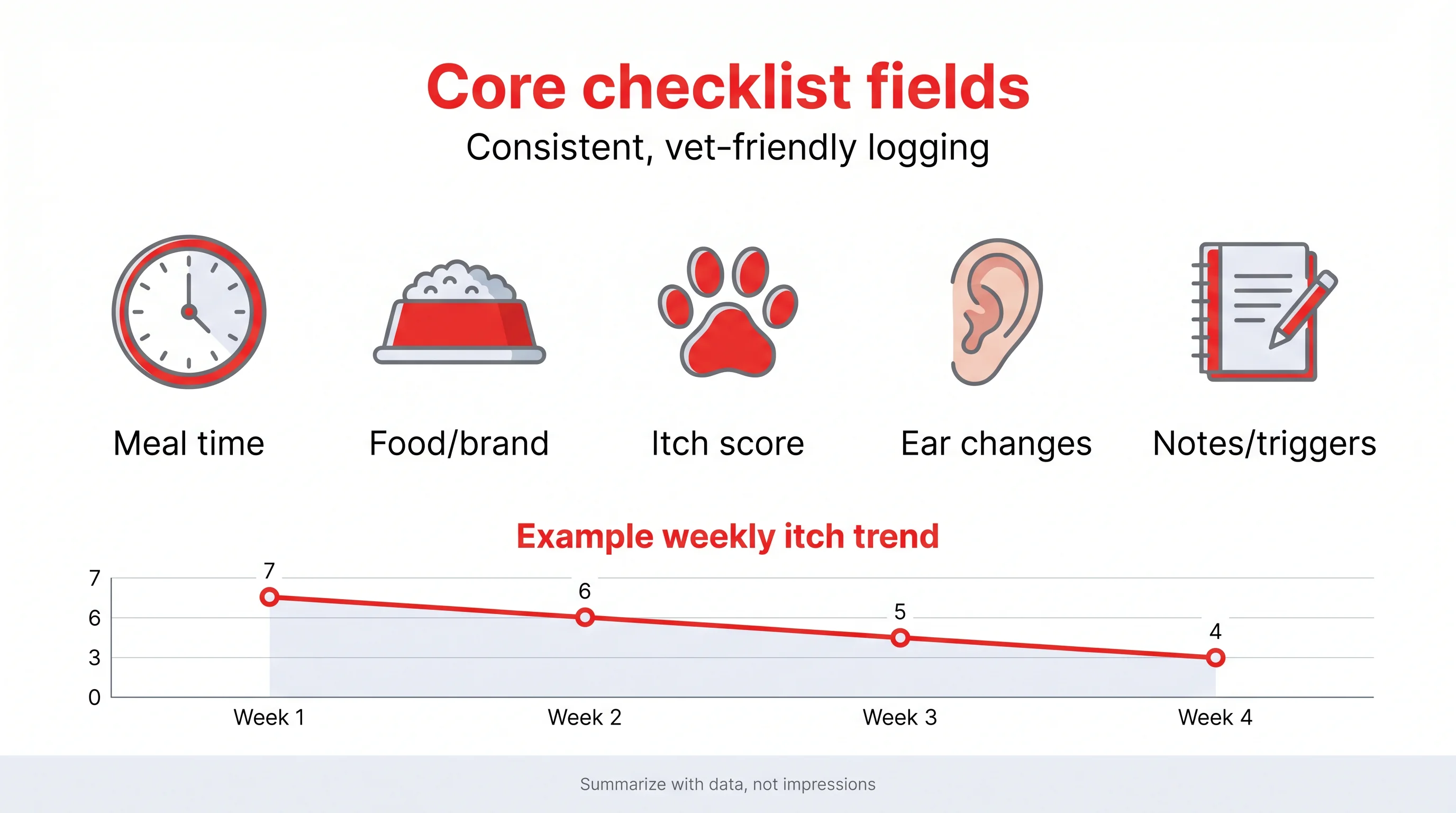
Use concise fields and consistent scales. The goal is a repeatable, vet‑friendly record. Below are the core elements of a practical dog food allergy symptoms checklist that captures signs of food allergies in dogs alongside meal timing.
Skin and coat signs
- Overall itch score (0–10) at morning, afternoon, and evening.
- Scratching episodes: count or approximate minutes per hour.
- Body map of hotspots: ears, paws, armpits, belly, groin, face.
- Redness, bumps, hot spots: location, size, and any oozing.
- Hair loss or dandruff: describe pattern and rate of change.
- Response to bath or medicated wipes: product used and timing.
Ears, paws and GI notes
- Ears: head shaking counts, ear scratching, odour, wax colour, moisture.
- Paws: minutes of licking per hour; paw chewing; staining between toes.
- GI: stool score (1–7), flatulence, burping, nausea, vomiting.
- Timing: link flares to meals, treats, or chews within 30–180 minutes.
- Medications: ear drops, antibiotics, steroids; dose and start date.
Diet, treats and environment log
- Base diet: brand, exact protein and carbohydrate sources, batch/lot.
- Treats/chews: name, protein, additives, batch/lot, amount given.
- Preparation controls: separate bowls, cutting boards, and storage.
- Environment: grass, wet walks, cleaners, grooming products, bedding changes.
- New exposures: daycare, training treats, table scraps, supplements.
- Notes: stressors, activity level, and sleep changes that may confound observations.
Monitoring guidance: what to expect over time
Evidence-based timelines help set expectations while keeping the plan realistic. Keep your logs tight and avoid multiple changes at once unless your vet advises otherwise.
After 7–14 days
Look for directional change rather than perfection. You may see modest reductions in itch score, paw licking minutes, or ear debris. If patterns remain unclear, consider starting a vet-guided structured diet trial and lock down all non‑essential variables.
After 4–8 weeks (with a structured diet trial)
Evidence suggests many dogs improve within 4–8 weeks of a controlled elimination diet, though some require longer. Confirmation usually involves re‑challenge with the suspected trigger under veterinary guidance.[3] If no improvement occurs, discuss alternative diagnoses, including intolerances or environmental factors.[2]
Practical safety boundaries
Clear boundaries protect your dog during investigations. When in doubt, ask your vet. Keep logs current and photo-document changes to ears, paws, and rashes.
When to seek urgent veterinary help
- Facial swelling, hives, widespread welts, or breathing difficulty.
- Repeated vomiting, bloody diarrhoea, or profound lethargy.
- Severe ear pain with head tilt, loss of balance, or neurological signs.
- Rapidly spreading skin lesions, hot spots, or suspected infection.
- Any sudden deterioration during diet changes or medication use.
Safe use of treats and chews during trials
- Only use treats that match the exact trial protein and carbohydrate, with no flavourings or mixed proteins. See guidance on safe treats during an elimination trial.
- Confirm labels and batch consistency. Avoid “meat and animal derivatives.” Keep preparation areas free from cross‑contact.
- Weigh treats. Cap treats at under 10% of daily calories during trials unless your vet specifies otherwise.
- Rotate a single chew at a time and track timing of any flare.
- For single-protein buffalo options, many owners find Buffalo Meat Jerky - Dog Treats helpful when aligning treats with trial proteins and clean labels.
Evidence status: what research suggests
Current literature offers practical direction, but individual responses vary. Use this section to frame discussions with your veterinarian.
Allergy vs intolerance
Food allergy is an immune-mediated hypersensitivity, while intolerance is a non‑immune reaction. Intolerances and dietary indiscretions may be more common in dogs than true allergies.[2] For definitions and quick clues, review allergy vs intolerance to shape your logging strategy responsibly.[3]
Elimination diets and re‑challenge
Diagnosis generally relies on a restricted elimination diet followed by a controlled re‑challenge to confirm the trigger. Owner adherence and precise logging significantly influence outcomes and interpretation.[3]
Role of single‑protein treats
Single‑protein, clearly labelled treats may support cleaner trials by reducing unintended exposures. Novel proteins can be useful where prior proteins fail; emerging data include insect proteins in selected cases, though results may vary.[4]
Frequently Asked Questions
How do I tell if my dog’s itching is from food or the environment?
Food-related itching may persist year‑round and cluster after meals or specific treats. Environmental triggers often vary by season or location. A vet‑guided elimination diet helps separate these factors by controlling diet while observing patterns.
How long does a dog food elimination diet take to show changes?
Evidence suggests many dogs show improvements within 4–8 weeks. Some cases need longer, especially with secondary infections. A structured log and veterinary guidance are crucial, and re‑challenge with the suspected allergen helps confirm the link.
Can I give treats during an elimination diet?
Only treats that exactly match the trial protein and carbohydrate, or vet‑approved hypoallergenic options. Even small deviations may confound results. Keep labels, lot numbers, and weights recorded to preserve diagnostic clarity during the trial.
Are ear infections linked to food allergies in dogs?
Recurrent otitis externa can be associated with food allergies. Track flare‑ups against meals, note discharge changes, and work with your vet. A structured diet trial and careful logging often clarify whether diet contributes to ear disease.
Is paw licking a sign of a food allergy?
Paw licking can relate to allergies, yeast, contact irritants, or anxiety. If it clusters after meals or particular treats, document timing. Discuss results with your vet, especially when paired with ear changes or soft stools.
Downloadable/printable checklist fields
Daily log template
| Time | Meal/Treat Details | Itch Score (0–10) | Paw Licking (min/hr) | Ears (odour/wax/HS) | Stool (1–7) | Notes (meds, cleaners, walks) |
|---|---|---|---|---|---|---|
| 07:30 | Breakfast: protein, carb, brand, lot | — | — | — | — | Location/weather; exposures |
| 12:00 | Treat/chew: name, protein, lot, grams | — | — | HS count today | — | Activity level; stressors |
| 18:30 | Dinner: protein, carb, brand, lot | — | — | Odour/wax colour | Score + frequency | Baths/ear clean products |
Legend: HS = head shakes. Add photos of ears, paws, and skin lesions as weekly progress markers. Keep all entries to the same scales for comparability.
Weekly summary template
| Week | Top 3 triggers suspected | Best day and why | Worst day and why | Ear trend | Skin/itch trend | Stool trend | Next steps |
|---|---|---|---|---|---|---|---|
| 1 | e.g., new chew; dinner protein; training treats | Date + reduced itch score | Date + flare after meal | Improving/stable/worse | Improving/stable/worse | Improving/stable/worse | Hold change; start diet trial; vet visit |
Summarise with data, not impressions. Convert notes into numbers wherever possible. Discuss the weekly tables with your vet to refine trials and avoid confounders.
A disciplined log can turn a confusing pattern into a clear plan. Track timing relative to meals, isolate single variables, and share your records with your vet for targeted adjustments. This approach respects your dog’s comfort, preserves diagnostic clarity, and may shorten the path to relief. With consistent methods and careful treat choices, you create the best chance of identifying triggers and building a sustainable, long‑term diet that supports your dog’s skin, ears, and gut health.
References
- E Maina et al. (2024). An overview of adverse food reactions in dogs. Royal Canin Veterinary Focus. View article
- JM Craig (2019). Food intolerance in dogs and cats. Journal of Small Animal Practice. View article
- S Tiffany et al. (2019). Assessment of dog owners' knowledge relating to the diagnosis and treatment of canine food allergies. The Canadian …. View article
- CGL Cesar et al. (2024). An assessment of the impact of insect meal in dry food on a dog with a food allergy: A case report. Animals. View article