

When Is Dog Bad Breath a Red Flag? Symptoms You Shouldn’t Ignore
When Is Dog Bad Breath a Red Flag? Symptoms You Shouldn’t Ignore
Dog breath should not make your eyes water. A sudden, foul change may be a medical warning, not just “doggy” aroma. Acting promptly can protect teeth, gums, and overall health.
This focused guide clarifies when smell changes mean urgent vet care. You will learn clear thresholds, the specific odours that raise concern, and what to report at triage for faster, safer decisions.
Why bad breath can signal more than dental dirt
Most halitosis starts in the mouth. Some smells, however, reflect infection, dental pain, or systemic issues that demand veterinary assessment rather than cosmetic cover‑ups.
Common halitosis vs. medical red flags
Everyday halitosis is usually mild, stable, and linked to plaque or diet. Red flags include a rapid odour shift, drooling, oral pain, loose teeth, bleeding gums, vomiting, or weight loss. These symptoms imply disease, not hygiene alone.
What your vet will want to know at triage
Be ready with timing of onset, severity of smell, appetite changes, water intake, urination, vomiting, coughing, chewing difficulties, and gum appearance. Photos, videos, and exact quotes like “sweet fruity dog breath” accelerate triage decisions.
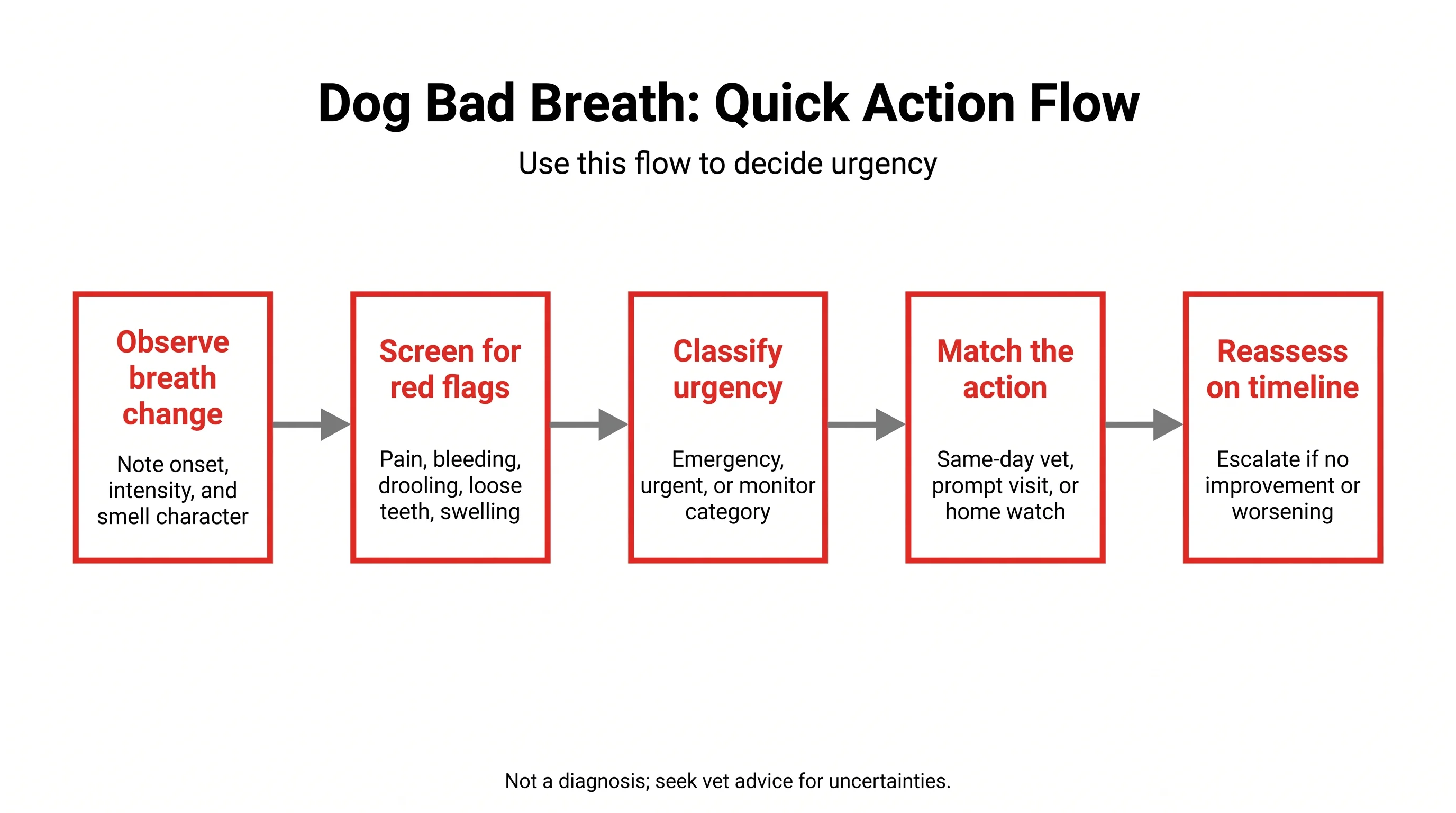
Quick decision guide: if this happens, do this
Use this as practical logic for when to see a vet for dog bad breath. It prioritises same‑day actions for “sudden bad breath dog” scenarios and clarifies safe waiting windows.
6 high‑priority scenarios and next actions
- If breath turns suddenly foul with drooling or pawing at the mouth, seek same‑day veterinary care. Behavioural signs may indicate painful oral disease or a lodged object.
- If breath is sweet/fruity with increased thirst or urination, book a prompt exam within 24–72 hours. Monitor for lethargy, accidents, or weight changes.
- If odour resembles ammonia or urine, arrange urgent assessment within 24–48 hours. Combine concern with vomiting, reduced appetite, or depression.
- If you see bleeding gums in dogs, oral swelling, or pus, request a same‑day visit. Visible blood or ulceration suggests active infection or trauma.
- If breath change comes with vomiting, diarrhoea, or weight loss, call your vet now. Multi‑system signs require rapid evaluation.
- If a loose or fractured tooth accompanies odour, avoid hard chews and schedule an exam this week. Pain control and imaging may be required.
Red‑flag smells decoded
Odour notes offer useful clues, but they are not final diagnoses. Use these descriptions to prioritise urgency and describe the smell accurately to your clinician.
Rotten/foul odour: periodontal disease or oral infection
A decomposing, sulphuric smell often indicates plaque‑driven gingivitis, periodontal pockets, or abscess. Look for drooling, gum redness, and pain while chewing. Odour gases like hydrogen sulfide commonly rise with periodontal activity and infection severity.[4]
Sweet/fruity breath: potential diabetes concerns
Sweet fruity dog breath may accompany increased drinking, frequent urination, appetite changes, or lethargy. This pattern warrants a prompt vet check with blood and urine tests to evaluate glucose control and rule out complications.
Ammonia/urine-like odour: possible kidney involvement
An ammonia or urine note suggests uremic compounds. Some owners search “uremic ammonia breath dog” after noticing this smell. Pair concern with vomiting, reduced appetite, or mouth ulcers. Seek timely evaluation to protect kidney function.
Fishy/metallic notes: bleeding gums or oral lesions
Metallic or fishy tones can accompany bleeding gums in dogs, ulceration, or lesions collecting bacteria. Examine gently for redness or sores if safe. If blood is visible or persistent, book a same‑day appointment.
What to tell your vet (and why it matters)
Clear, structured information shortens the path to diagnosis and appropriate treatment. Prepare concise notes before calling or visiting.
Symptom checklist and timing
Record onset date, rate of change, exact smell descriptors, drooling, pawing at the mouth, gum bleeding, loose teeth, choking episodes, vomiting, coughing, appetite, thirst, urination, and weight. Time‑stamped observations support clinical decision‑making.
Diet, chews and medication history
Note brand, protein sources, recent recipe changes, treats, chews, toothpaste, water additives, and medications. If diet additives might aggravate odour, see our overview on ingredients in diet and breath changes for context to discuss with your vet.
Risk factors: age, breed, prior dental work
Age increases periodontal risk. Small and brachycephalic breeds may develop earlier oral disease. Share any prior dental procedures, retained baby teeth, or extractions. These details help your vet weigh imaging and prophylaxis needs.
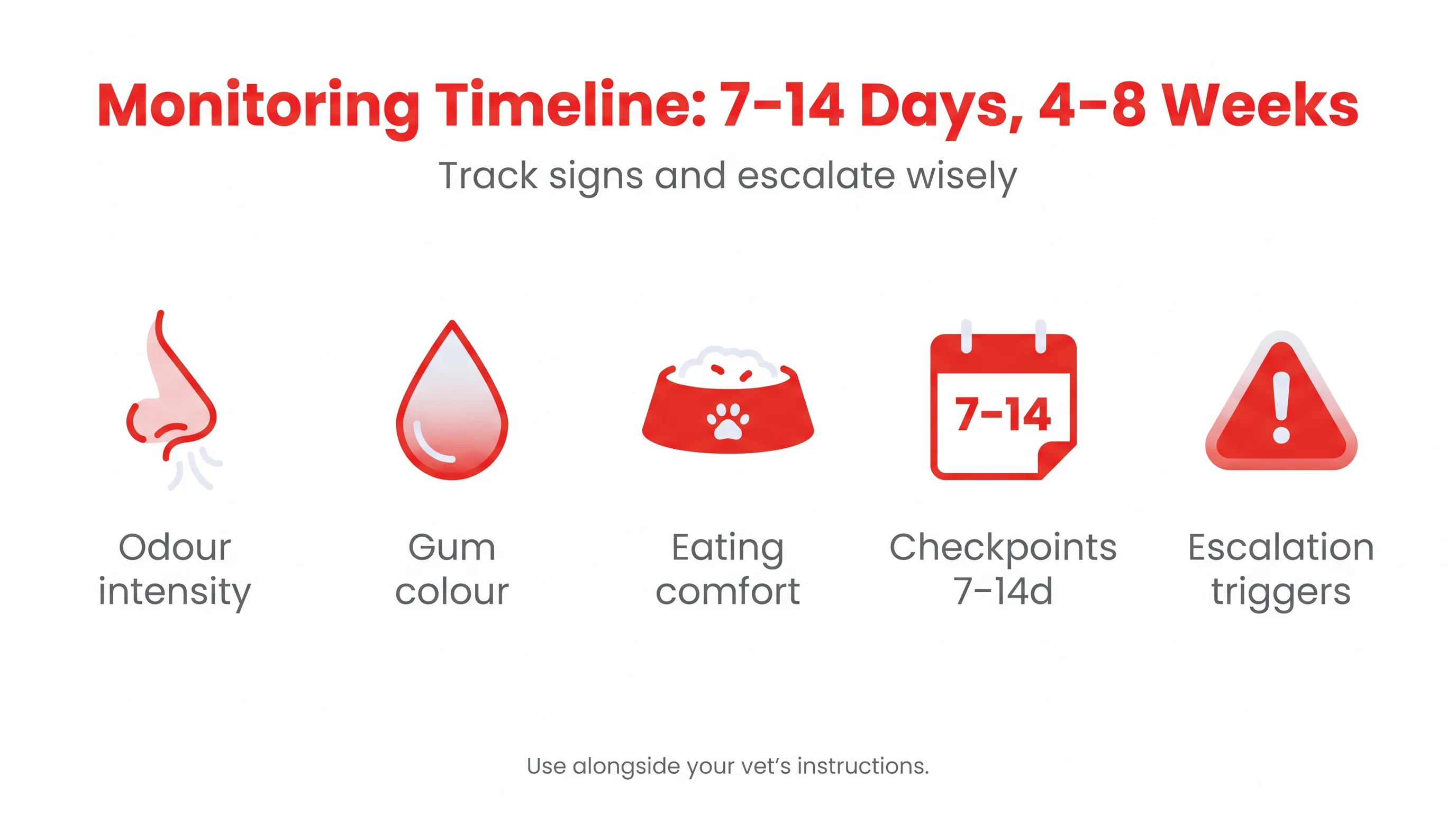
Monitoring guidance: 7–14 days and 4–8 weeks
Not every case is an emergency. However, targeted monitoring prevents slow smouldering disease from becoming a crisis. Use the timelines below after professional advice.
Short-term watchpoints (7–14 days)
Track odour intensity, drooling, gum colour, and eating comfort. Improvement after scaling or antibiotics should be noticeable within days. No change, or worsening pain, justifies recontacting your vet for reassessment or imaging.
Medium-term checkpoints (4–8 weeks)
Expect measurable progress in breath, gum tone, and chewing confidence after professional care and home hygiene. Persistent halitosis, weight loss, or recurrent bleeding warrants a structured review and possibly deeper periodontal evaluation.
Practical safety boundaries at home
Home care may support recovery, but safety comes first. Avoid techniques or products that could mask danger or worsen pain.
Handling a painful mouth safely
If your dog guards the mouth, avoid forced inspection. Use good lighting and observe without prying lips. Do not insert fingers near painful teeth. Seek professional sedation dentistry when safe examination is impossible.
Feeding, hydration and chew choices
Offer soft, nutrient‑balanced meals and cool water. Avoid very hard chews that risk fractures or gum trauma. For safer textures and material considerations, review our guidance on natural chews versus synthetic sticks before resuming chews.
When to stop home care and escalate
Stop brushing, chews, or mouth rinses if pain, bleeding, or swelling increases. Escalate if odour intensifies, appetite drops, or systemic signs appear. Unexplained fever, drooling puddles, or facial swelling deserve same‑day assessment.
Evidence status: what we know and where it’s evolving
Research supports the role of mechanical cleaning and adjuncts. Still, breath odour remains a clue, not a definitive diagnosis. Evidence is growing, with promising though varied interventions.
Periodontal disease and systemic links
Oral pathogens produce volatile sulphur compounds linked with halitosis and inflammation. Studies show that reducing plaque load may lower odour scores and gingival indices, improving overall oral health markers in controlled settings.[1]
Breath odours as clues, not diagnoses
Volatile sulphur compound changes track with disease activity, yet similar odours can arise from diverse conditions. Clinicians treat the dog, not the smell. Odour metrics guide but do not replace oral examination and diagnostics.[2]
Chew texture and oral hygiene support
Evidence suggests appropriately designed chews can reduce plaque, calculus, and halitosis when used alongside brushing. Early data on botanical or polyphenol approaches continue to emerge with encouraging anti‑odour signals in trials.[1][4][3]
Prevention basics without masking warning signs
Prevention should never hide disease. Choose routines and products that support gum health while keeping you alert to any change in smell, appetite, or comfort.
Daily oral care that may support gum health
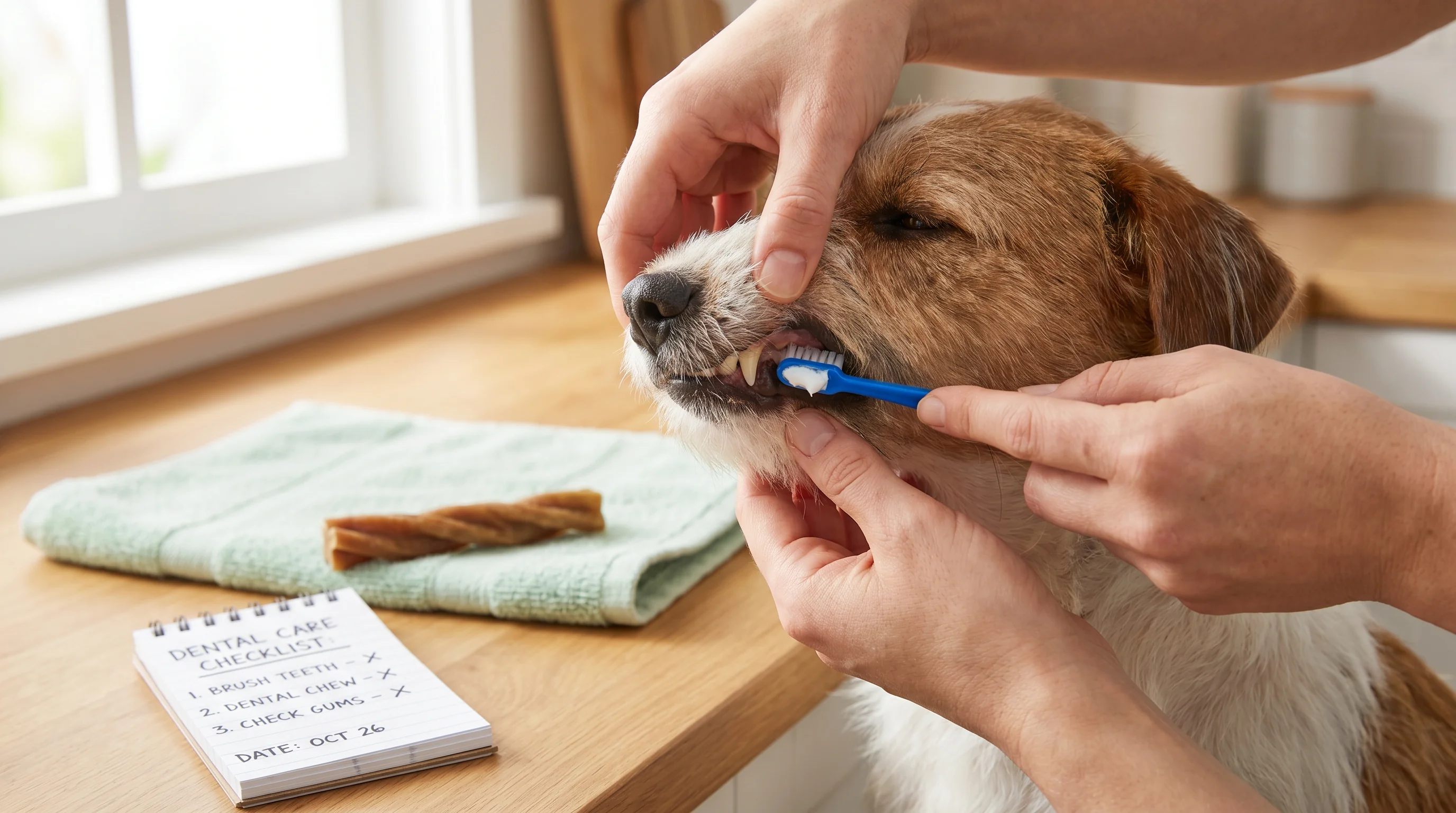
Consistent brushing, appropriate chews, and professional cleanings may lower plaque accumulation. For step‑by‑step implementation, our guide to building a daily dental routine outlines brushing frequency, technique, and safe progression after your vet’s clearance.
Choosing natural chews and dental treats responsibly
Select textures that massage gums without cracking teeth. Many pet owners find Gently Dently- Fresh Breath Mint Dental Treats helpful between brushings, once your vet rules out urgent issues. Always pause dental treats if pain, bleeding, or swelling occurs.
Frequently Asked Questions
Is sudden bad breath in dogs an emergency?
A rapid change accompanied by drooling, oral pain, bleeding, swelling, vomiting or lethargy warrants urgent vet assessment. If your dog cannot eat or seems distressed, seek same‑day care.
What does sweet or fruity dog breath mean?
A sweet or fruity smell may be associated with changes in blood sugar regulation, such as diabetes. It is a signal to book a prompt veterinary check, especially if you notice thirst, urination or weight changes.
Why does my dog’s breath smell like ammonia or urine?
An ammonia‑like odour can appear with certain metabolic issues, including reduced kidney function. Contact your vet, particularly if there’s reduced appetite, vomiting or increased drinking.
Can dental treats fix severe bad breath?
Dental treats may help reduce plaque on mild cases but will not resolve advanced periodontal disease or infections. If there are red‑flag symptoms, prioritise a vet exam before using breath‑freshening products.
What should I record before calling the vet?
Note when the smell changed, any drooling, pawing at the mouth, gum bleeding, loose teeth, vomiting, weight loss, changes in thirst or urination, current diet and chews, and any recent injuries or foreign‑object risks.
Summary: recognising urgency and next sensible steps
Key takeaways
Act quickly for sudden foul odour, drooling, oral pain, loose teeth, bleeding gums, vomiting, weight loss, or sweet/fruity or ammonia‑like smells. Document timing, behaviours, and diet changes. Prioritise examination over breath‑masking products when red flags appear.
Where to learn more in our main guide on dog bad breath
For broader causes, risk checks, and non‑urgent care steps, see our main guide on dog bad breath. If diet or treat choices contribute to odour, confirm a safe plan with your vet before adjusting routines.
References
- MQ Carroll et al. (2020). Effects of novel dental chews on oral health outcomes and halitosis in adult dogs. Journal of animal …. View article
- KH Do et al. (2019). Effects of Weissella cibaria CMU on Halitosis and Calculus, Plaque, and Gingivitis Indices in Beagles. … veterinary dentistry. View article
- H Li et al. (2026). The Control of Canine Halitosis By Sugar Cane Polyphenols: Effects and Potential Mechanisms. Journal of Agricultural and Food Chemistry. View article
- T Miyamoto et al. (2025). Bactericidal and Anti-Inflammatory Effects of Ashitaba-Extract Ameliorate the Gingivitis and Halitosis in Dogs with Porphyromonas gulae-Infected Periodontal …. Veterinary …. View article